What Is The Fatality Rate For Ziplining? What The Figures Say Before A Fiji Tour
No published fatality rate exists for commercial ziplining. Here are the real numbers from US injury studies, a challenge course death registry and industry standards, and what they mean before a Fiji zipline tour.
No fatality rate for commercial zipline tours has been published by any regulator, industry body or research group in the material covering this topic, and that gap matters more than most of the numbers floating around online. If you are weighing a Fiji course, the Sleeping Giant waterfalls and jungle safari tour is a good starting point, because that park's 7-line course and the 16-line Momi Bay course are the two rides most visitors mean when they ask the question. What follows is every solid figure that exists, where each one comes from, and what each one does and does not tell you about dying on a zipline.
| Fact | Detail |
|---|---|
| Commercial tour fatality rate | No published rate exists in the sources consulted |
| Challenge course deaths, 1986 to 2000 | 17 deaths recorded, 4 on zip line elements, mostly staff |
| US zipline injuries, 1997 to 2012 | 16,850 emergency department cases estimated |
| Share of those injuries from falls | 77.3 percent |
| Most affected age group, US data | Children, with ages 0 to 9 at 45.0 percent |
| Playground and homemade ziplines | 100 percent combined in the 2009 to 2015 pediatric study |
| Industry standards | ASTM F2959 and ANSI/ACCT 03-2019 govern commercial courses |
What Is The Fatality Rate For Ziplining?
There is no published fatality rate for commercial zipline tours. No regulator, insurer or industry body in the sources checked publishes one, and no study of commercial tour deaths exists in the form the injury studies take. The closest figure is a registry of challenge course deaths from 1986 to 2000, which recorded 17 deaths across all challenge course elements, 4 of them on zip line elements, and most of the victims were staff rather than paying guests.
That absence cuts both ways. It means nobody can hand you a reassuring number like one in a million, and it also means nobody can hand you a frightening one. What can be said with a source behind it is narrower and more useful. The 17 death registry covers challenge courses as a whole, of which zip lines are one element among many, over a fifteen year window, in an industry that was smaller then than it is now. Four of those seventeen deaths were on zip line elements specifically, and the registry's own finding was that most of the dead were staff members, people who work at height every day, rather than guests on a first ride.
Compare that with the injury picture, which is far better documented. US emergency departments treated an estimated 16,850 zipline related injuries between 1997 and 2012, according to a study in the American Journal of Emergency Medicine. That sounds alarming until you read the breakdowns: a later pediatric study of 2009 to 2015 found 45.9 percent of zipline injuries happened on homemade ziplines and 54.1 percent on playground ziplines, neither of which involves a guide, a briefing, a harness inspection or a commercial operator at all.
So the answer to the title question has three parts. First, no rate exists to quote. Second, the only death registry available is old, small and dominated by staff incidents. Third, the large injury counts come overwhelmingly from backyard ropes and playground rigs, not the guided tours sold in Fiji. For a fuller walk through the injury side, see the zipline injury rate explained, and for the specific question of falling, what happens if you fall off a zipline covers the mechanics.
None of this makes ziplining risk free, and no tour operator in Fiji claims it is. It means the question "how often do people die" cannot be answered with a number, and the better questions are about what causes serious incidents and what safeguards exist against each cause. Those two questions have real, sourced answers, and the rest of what follows works through them.
What The US Injury Studies Actually Count
The headline injury figures come from three US datasets, and every one of them counts emergency department visits, not deaths. The largest review, covering 2000 to 2024, estimates 46,572 zipline injuries in total, of which 7,962, or 17.1 percent, were lower extremity injuries. The 1997 to 2012 study estimated 16,850 cases with falls as the mechanism in 77.3 percent. Deaths barely appear in any of them.
Start with the study most often quoted out of context. Research published in the American Journal of Emergency Medicine, the American Journal of Emergency Medicine study page, estimated 16,850 zipline related injuries treated in US emergency departments from 1997 through 2012. Children aged 0 to 9 made up 45.0 percent of those cases. Fractures accounted for 46.7 percent, the upper extremities were the most injured body region at 44.1 percent, and falls were the mechanism in 77.3 percent. The same paper reports an annual rate of 11.64 injuries per million population in 2012, up 52.3 percent from 2009, which tracks the spread of backyard kits and playground installations as much as commercial tours.
The pediatric study sharpens the picture. Covering 2009 to 2015, it estimated 9,397 zipline injuries among US children and found 45.9 percent occurred on homemade ziplines and 54.1 percent on playground ziplines. Fractures made up 49.8 percent of cases and ages 5 to 9 were the most affected group. Read together, those two percentages cover the entire dataset: commercial tour operations, the thing you would actually book in Fiji, are not where these injuries concentrate.
| Dataset | Period | Estimated injuries | Key finding | Where deaths appear |
|---|---|---|---|---|
| American Journal of Emergency Medicine | 1997 to 2012 | 16,850 | Falls caused 77.3 percent; ages 0 to 9 were 45.0 percent | Not the subject of the count |
| Journal of Pediatric Surgery | 2009 to 2015 | 9,397 | Homemade 45.9 percent, playground 54.1 percent | Not the subject of the count |
| Lower Extremity Review dataset | 2000 to 2024 | 46,572 | Lower extremity cases 7,962, or 17.1 percent | Not the subject of the count |
The longest window comes from Lower Extremity Review, which reports 2000 to 2024 US emergency department data covering an estimated 46,572 zipline injuries, documented at the Lower Extremity Review analysis. Of those, 7,962 were lower extremity injuries. Within that subgroup, fracture was the most severe diagnosis in 31 percent, the lower leg accounted for 33.3 percent of affected body parts and the ankle 31.9 percent. Twenty four years of US emergency department data, in other words, is written up as an injury story, because deaths on ziplines are rare enough that they surface as individual news events and staff case reports rather than as a countable stream. That is the framing that matters most for the fatality question.
When researchers pull a quarter century of hospital data, they find fractures and sprains in the tens of thousands, not a death toll. The only systematic death count identified here is the old challenge course registry, and that is the next section.
The 1986 To 2000 Challenge Course Death Registry
A registry of challenge course deaths from 1986 to 2000, published in 2001, recorded 17 deaths, of which 5 were traumatic and 4 of those occurred on zip line elements. The registry's own breakdown found most of the dead were staff rather than guests. Four deaths on zip line elements across fifteen years is the closest thing to a denominator that exists, and even it cannot be turned into a rate.
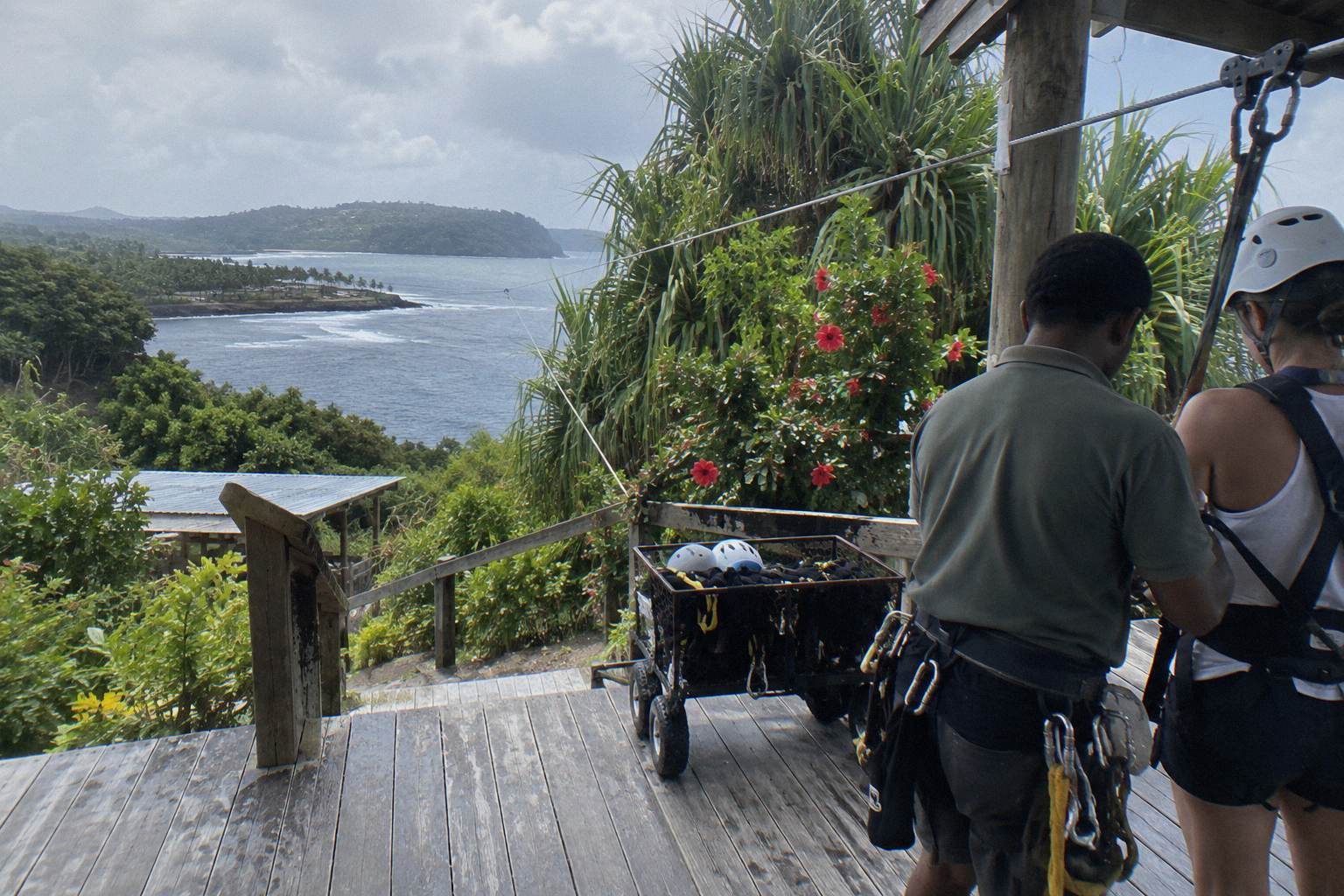
The registry matters because it is upfront about its own limits. Seventeen deaths over fifteen years across all challenge course activity, which includes high ropes courses, climbing walls and team elements as well as zip lines, is a small dataset by epidemiological standards. Only five were classed as traumatic, and four of those five happened on zip line elements. The remaining twelve deaths were medical, things like pre existing conditions surfacing during exertion, which is a different problem from a failure of equipment or procedure.
The staff versus guest split is the detail almost nobody mentions when this registry circulates online. Staff die on challenge courses more often than guests because they spend hundreds of hours a year at height, rigging, rescuing and demonstrating, and repetition builds both skill and exposure. A guest on a guided tour rides each line once, clipped by a guide, on a course inspected that morning. The exposure profiles are not comparable, which is exactly why the registry cannot be quoted as a guest risk figure.
Can the registry be updated? Not from the sources read. No equivalent count for 2001 onward appears in any of them, and no Fiji specific death or injury count appears in any source consulted. That is worth stating plainly once: no Fiji figure exists to print. What does exist for the modern era is the standards framework that grew out of incidents like these, and the benchmarking data from the industry's own association, which counted about 10,000,000 guests and 225 participant injuries across challenge courses between 2016 and 2021. Zip lines are one element within that data, and the association itself does not convert it into a per ride rate, so no per ride rate is offered here.
If the fatality question is really about whether the tour you book is run carefully, the practical route is to look at what operators publish about their procedures. The Sleeping Giant waterfalls and jungle safari tour page collects what that operator states about its course, and the same check can be made for the Momi Bay course before you pay.
What Causes Serious Zipline Incidents
The industry literature names three causes of serious zipline incidents: operator error such as failure to belay or clip, rider error, and equipment or braking failure. Against those three causes it names four safeguards: guide clipped carabiners, double lanyards so a rider is always attached to something, redundant brakes on faster lines, and documented pre ride checks. Every serious incident story in the sources reviewed traces back to one of the three causes meeting a missing safeguard.
The three causes deserve unpacking because they map directly onto what you can watch for. Operator error, failure to belay or clip, is the nightmare scenario where a rider steps off attached to nothing. It is also the cause most directly addressed by procedure: on courses where guides do the clipping rather than riders, the person doing the check does it fifty times a day and is trained and drilled on it. Rider error covers things like grabbing the cable, braking too early and stopping short, or ignoring briefings. Equipment and braking failure is the mechanical category, and it is the one the standards address most heavily.
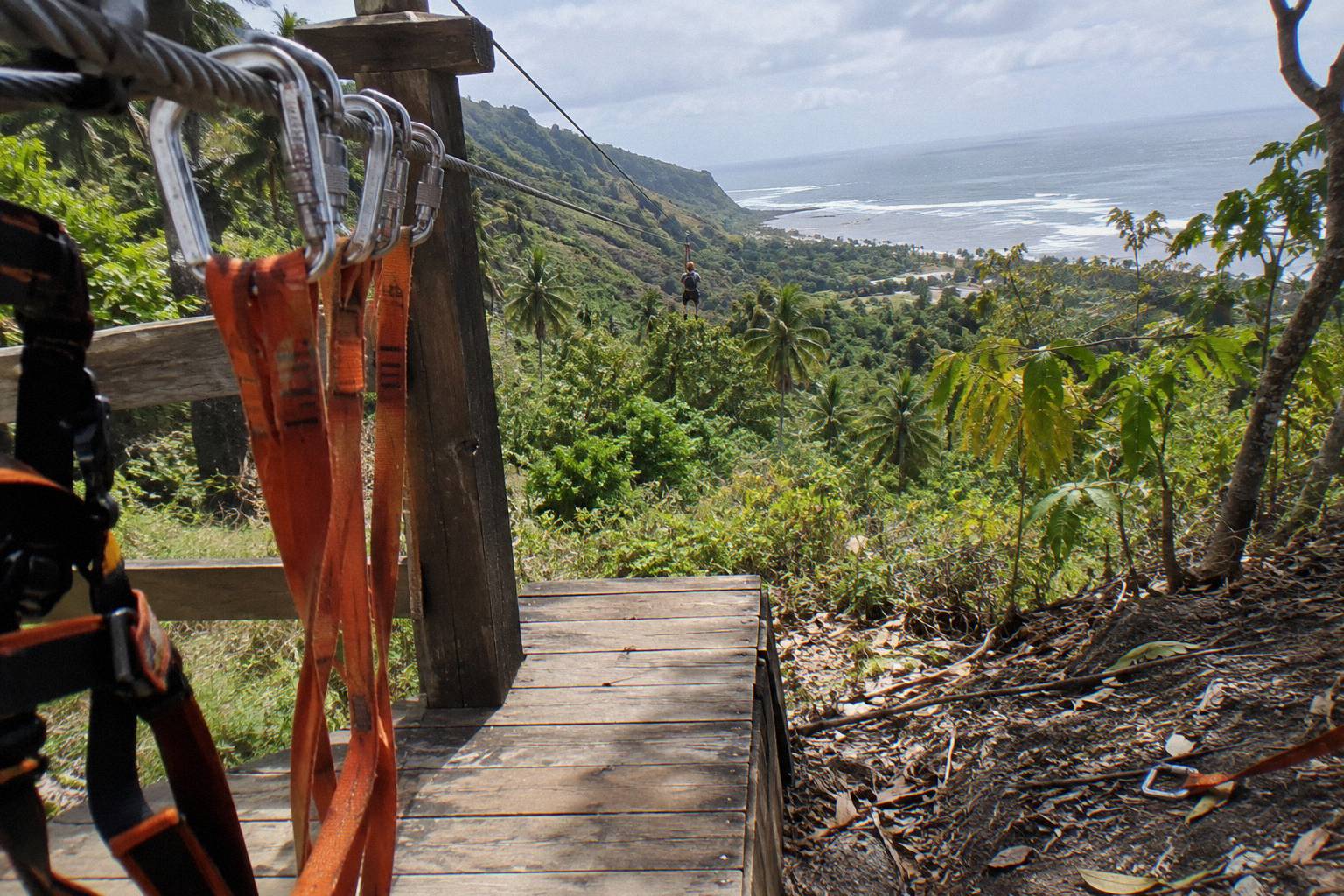
The safeguards are where standards get concrete. ASTM F2959, described at the ASTM F2959 standard page, sets criteria for the design, manufacture, installation, operation, maintenance, auditing and major modification of zip lines, canopy tours and challenge courses used commercially. Its companion, ANSI/ACCT 03-2019, documented through the Association for Challenge Course Technology, covers design, construction, inspection, operation, maintenance and staff training, and its guidance calls for documented pre use checks before participants ride and annual inspections by qualified persons.
| Named cause | What it looks like | Named safeguard | What you can observe |
|---|---|---|---|
| Operator error | Failure to belay or clip | Guide clipped carabiners | Watch whether guides or riders do the clipping |
| Rider error | Ignoring briefings, braking wrong | Pre ride briefing and practice | Listen for a full briefing before line one |
| Equipment failure | Brake or trolley malfunction | Redundant primary and backup brakes | Ask what the backup brake is |
| Mid line stall | Rider stops short of the platform | Pull in rope or mechanical advantage rescue | Ask how guides retrieve a stalled rider |
Two of those safeguards come straight from the standards text on faster lines. Standards call for a primary brake and a backup brake where a failure of the primary could let arrival speeds exceed roughly 10 km/h, and operators train staff on an evacuation or rescue plan for abnormal conditions. When a rider stops short mid line, a real and routine occurrence on light riders with a headwind, guides at the platform use a pull in rope or a mechanical advantage rescue system to bring them in. That scenario is common enough that every trained guide rehearses it, and it ends in retrieval, not injury.
Notice what is absent from the causes list: nothing about age, nothing about weight, nothing about the rider's fitness beyond following instructions. Eligibility rules like weight limits exist for physics reasons, because heavier riders arrive faster and braking is tested at the extremes of rider weight, and a minimum weight keeps a light rider from stalling short. Those rules, covered in detail in the guide to the Fiji zipline weight limit, are about whether the ride works, not about whether it is survivable.
What The Standards Require Of A Commercial Course
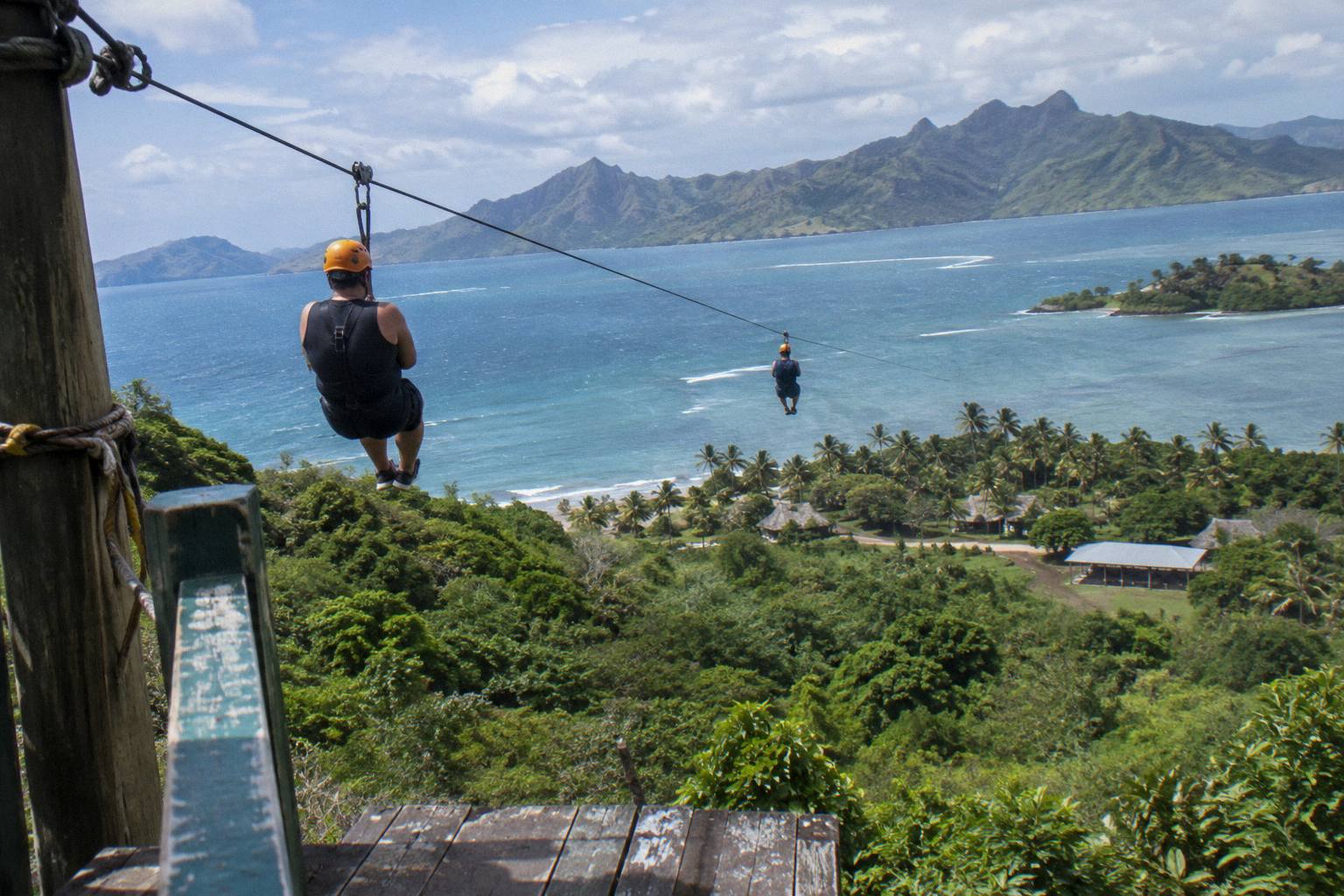
Two standards govern commercial zipline operations: ASTM F2959, the standard practice for aerial adventure courses, and ANSI/ACCT 03-2019 for challenge courses, zip lines and canopy tours. Between them they require qualified design and installation, documented pre use checks before participants ride, annual inspections by qualified persons, redundant braking on faster lines, and trained staff with an evacuation plan. A course built and run to either standard is a different animal from a backyard cable.
The two documents overlap but are not identical. ASTM F2959 sets criteria for design, manufacture, installation, operation, maintenance, auditing and major modification, which makes it the lifecycle standard: it follows the course from the drawing board through every season of operation. ANSI/ACCT 03-2019 covers design, construction, inspection, operation, maintenance and staff training, and the ACCT guidance layer adds the operational habits, documented pre use checks each day and annual inspections by a qualified person who was not the one building the course. The wider set of guides lives on Ziplines In Fiji.
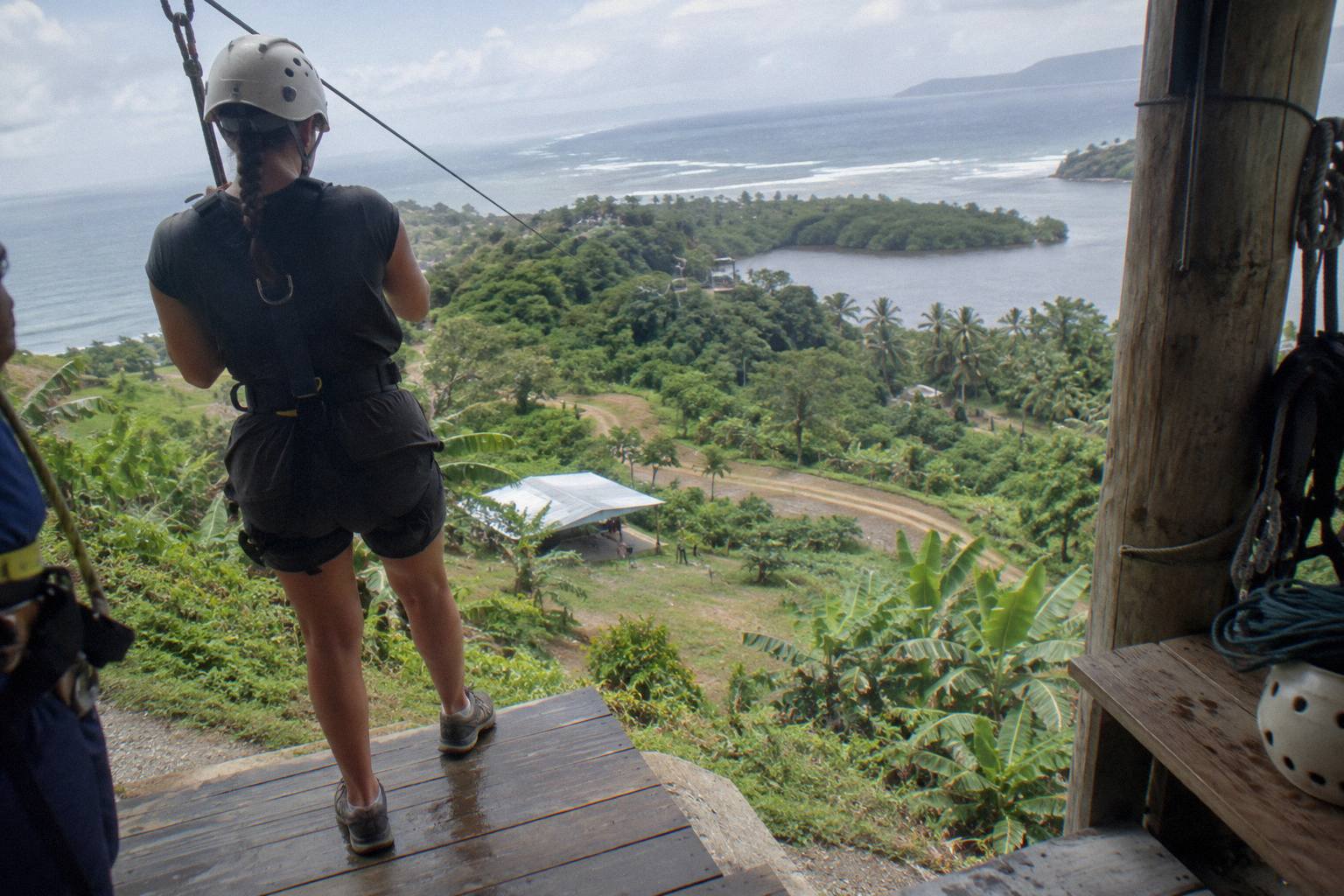
The braking requirement is the piece most relevant to the fatality question, because arrival at the platform is where speed meets solid objects. Standards call for an emergency arrest device when failure of the primary brake could let landing speeds exceed about 10 km/h. On a fast line, that means the system is designed assuming the main brake might fail, and the backup exists to make that failure survivable. Typical commercial zipline speeds quoted by operators run 40 to 64 km/h, and Sleeping Giant Zip Line itself says its lines reach up to 40 km/h, so this is not a theoretical margin.
Staff training is the third leg. Operators train staff on an evacuation or rescue plan for abnormal conditions, and the rescue tools are specified: a pull in rope or a mechanical advantage system for a rider stalled mid line. The benchmarking data from the Association for Challenge Course Technology, covering 2016 to 2021, counted about 10,000,000 guests and 225 participant injuries across challenge courses, with zip lines one element of those courses. The association publishes that as raw counts and explicitly does not convert it into a per ride rate.
What the standards do not do is name any specific operator as compliant, and no material read certifies any Fiji course against either standard. No claim of certification, licensing or inspection appears for Zip Fiji or Sleeping Giant Zip Line in the material read, so no such claim is made here. What you can do is ask the operator directly which standard their course was built to and what their daily pre use check covers, and treat a confident, specific answer as a good sign.
What The Fiji Operators Say They Do
Both Fiji operators publish safety procedures for their own courses. Zip Fiji's own safety pages describe its briefing, equipment fitting and guide ratios, and its course runs groups of up to 16 guests with 5 guides. Sleeping Giant Zip Line describes a 7 line course over 700 m with speeds up to 40 km/h and a guided format. Neither operator's material claims a fatality record or a certification, so what follows is limited to what each operator states.
Zip Fiji runs the 16 line course at Momi Bay, with a longest line of 235 m and 27 platform stations, and its stated format is groups of up to 16 guests with 5 guides, a safety briefing and equipment fitting before the first line, and a guided tour of the limestone caves on the same site. Its eligibility rules are specific and published: riders must be at least 3 years old, children under 18 accompanied by an adult, no maximum age, weigh less than 135 kilograms and fit the equipment as the Head Guide determines, and be able to walk 15 minutes uphill over uneven ground unassisted and stand on a platform about five stories high without severe anxiety. The operator also lists conditions it does not recommend the tour for, including pregnancy, epilepsy, heart problems and back, neck or shoulder problems.
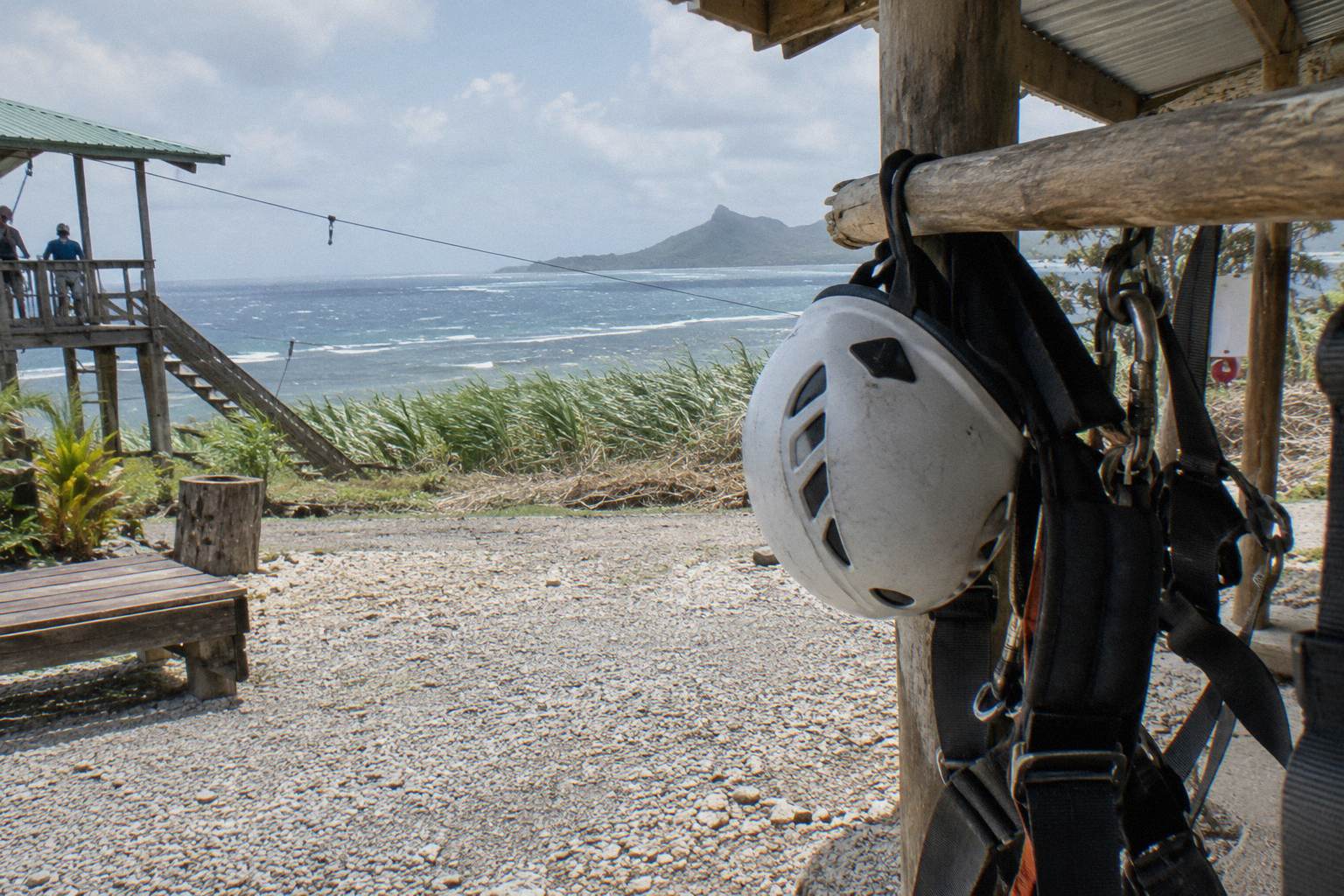
Sleeping Giant Zip Line describes a 35 acre park at Sabeto with 7 zip lines spanning over 700 m, individual lines of 80 to 160 m, speeds up to 40 kmh and two waterfalls, run in a guided format with a jungle safari walk. Its fitness requirement is the ability to walk 10 to 15 minutes uphill over uneven ground unassisted, manage about 20 trail stairs, and be comfortable at heights over 100 ft. The park's own FAQ and the booking page carry different age and weight thresholds, so confirm both with the park before paying rather than trusting either number alone. The booking page for its safari listing lists pregnant women, altitude sickness and recent surgeries among those not suited to the tour.
Neither operator promises safety in the absolute terms a nervous reader might want, and that restraint is actually informative. Zip Fiji states its weather rule plainly: the tour runs in all weather except lightning overhead, high winds and especially heavy rain. It also states that after the first zip, guests who cannot continue are walked back to the Welcome Centre, which means the course is built with an exit, not just a commitment to push everyone through. Its pages on equipment rules, cameras on straps only and no bottles or bags on the course, sit alongside a stated requirement that riders can follow the harness and briefing format.
The booking side adds one practical protection worth knowing before you pay. Every booking page listing for both courses carries free cancellation up to 24 hours before the start for a full refund, so the decision to ride does not have to be locked in at the moment of booking. For the Nadi Zipline, Waterfalls, and Jungle Safari Tour with Lunch, the page shows a from price of US$88 per person, and booking page amounts are US dollars, per person, and vary by date and group. You can check availability and read its full stated terms before committing.
How To Judge Your Own Risk Before You Book
Since no fatality rate exists, the workable method is to check four things against the known causes of incidents. Ask who clips the carabiners, since guide clipped systems address the deadliest cause. Ask what the backup brake is. Ask what the daily pre use check covers, since documented checks are the ACCT requirement. Then check the eligibility list for your own conditions, since the medical half of the old death registry was exertion related, not equipment related.
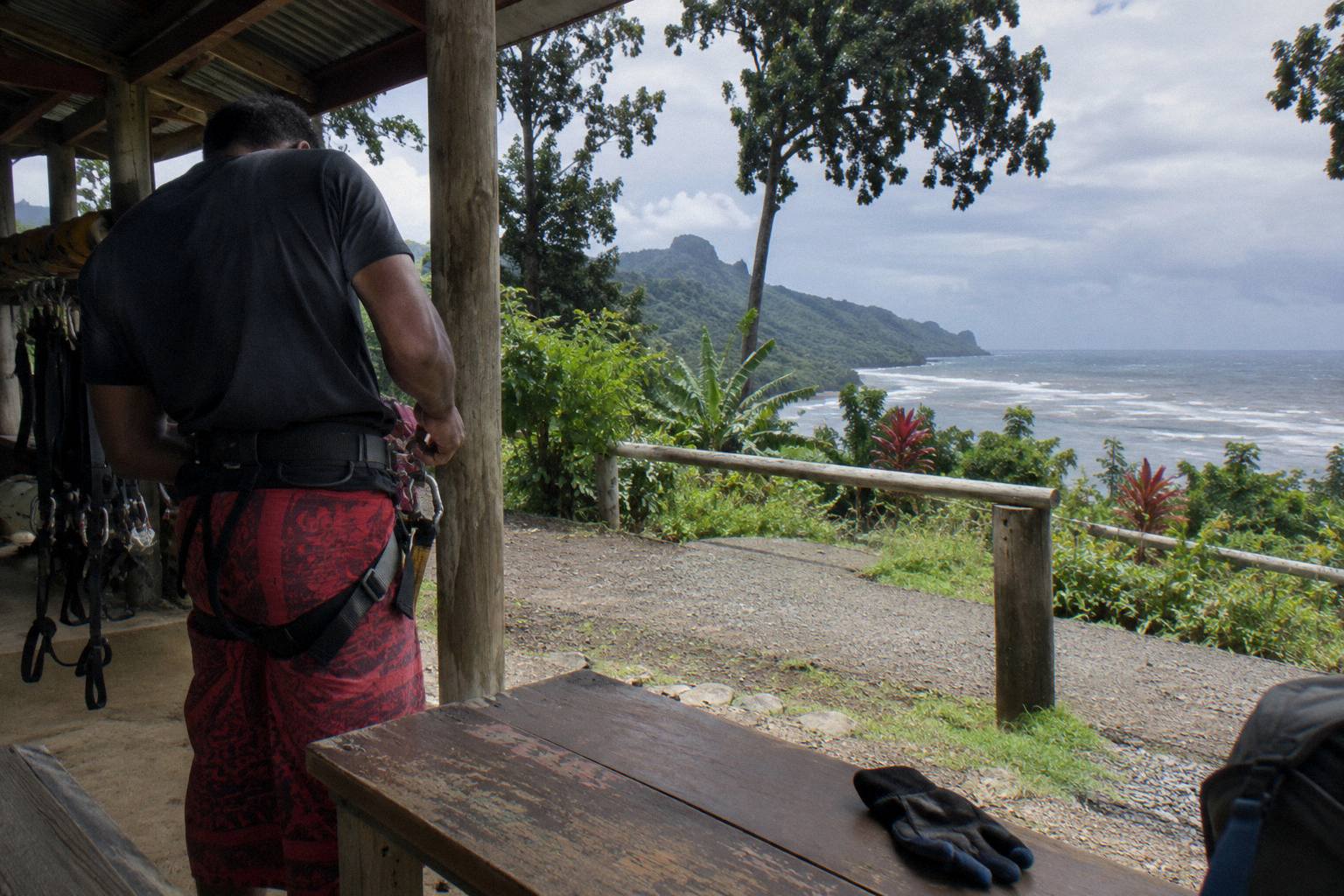
The first question is the highest value one. The registry's staff dominated deaths and the industry's own cause list both point at attachment failures and routine exposure, and a course where guides perform every clip removes the rider from the most safety critical step. Zip Fiji's stated format, 5 guides to a group of up to 16, implies a guide heavy operation where riders are not left to manage their own hardware, and its rule that guests must be able to stand on a high platform without severe anxiety exists because the course requires calm compliance with instructions at height.
The second and third questions, braking and daily checks, are fair to ask any operator by email before booking, and a course that answers specifically is telling you something real. The fourth check is the one only you can do. Every operator and booking page consulted lists pregnancy as not suitable, and each tour carries its own not suitable list: the mud pool combo excludes people over 70, wheelchair users and those with heart, back or kidney problems, the abseil combo excludes claustrophobia and fear of heights, and the Coral Coast pickup and waterfall combo pages list back problems and fear of heights. Those lists are per product, and they exist because the medical events in the old registry were things like cardiac episodes during exertion, which no brake design addresses.
For many readers the underlying question is not death at all but injury and fear, and those have better answers elsewhere here: is ziplining in Fiji safe covers the operator side, and whether ziplining feels like a roller coaster addresses the anxiety that sits behind many fatality searches. The one comparison no source supports is ziplining versus driving; no data from Zip Fiji or any booking page allows it, and any page offering that comparison is inventing it.
What Trips People Up Before You Book
The common mistakes are trusting a made-up death rate, conflating backyard zipline injuries with commercial tours, skipping the eligibility list, and treating the two Fiji courses as interchangeable. No published fatality rate exists, so any percentage found online is an estimate in costume. The injury studies count mostly homemade and playground rigs. The eligibility lists are per product and per course, and the Zip Fiji rules do not transfer to Sleeping Giant or the combos.
The conflation mistake is the most widespread. A social media post quoting 16,850 injuries almost never mentions that the pediatric subset of that data is entirely homemade and playground ziplines, rigged between trees with no guide, no briefing and no backup brake. Treating those numbers as a commercial tour risk is like judging a licensed taxi by moped accident data. The categories share a name and little else.
The eligibility mistake has real consequences in both directions. A reader with a back condition who skips the not suitable list, or who assumes the Zip Fiji rules apply to every listing, can end up on a tour their body should not be on. A nervous reader who assumes the strictest rule they read online applies everywhere can skip a tour they were fit for. The fix is mechanical: read the eligibility section of the exact listing you are booking, and where the operator's own FAQ and the booking page disagree, as they do for age and weight at Sleeping Giant, confirm with the operator before paying.
The interchangeability mistake shows up in planning. The Momi Bay course is 16 lines with a limestone cave, about 3 hours on site, 35 minutes from Nadi per the operator, while the Sleeping Giant park is 7 lines over 700 m with two waterfalls, about 4 hours of activity plus about 2 hours of round trip transfer per its FAQ. Different courses, different eligibility lists, different cancellation fine print on direct bookings versus booking pages. The two decisions should be made separately, and the Zip Fiji versus Sleeping Giant comparison works through them side by side.
The last mistake is waiting until the night before to raise a concern. The free cancellation window on every booking page runs to 24 hours before the start, and the operators answer email questions about braking, clipping and checks inside that window. Asking early costs nothing and converts an unanswerable statistical question into a specific, verifiable answer about the exact course you will ride.
Common Questions About Zipline Deaths And Safety Figures
What Is The Fatality Rate For Ziplining?
No source publishes a fatality rate for commercial zipline tours. The only death count available is a challenge course registry covering 1986 to 2000, which recorded 17 deaths, 4 of them on zip line elements, and most of the dead were staff rather than guests. Any specific percentage quoted online is an estimate, not a sourced figure.
Has Anyone Died On A Zipline In Fiji?
No Fiji zipline death or injury count appears in any source read for this topic, so nothing can be stated either way. No claim about the safety record of Zip Fiji or Sleeping Giant Zip Line appears in their own material that was reviewed, and no such claim is made up here.
How Many People Are Injured Ziplining Each Year?
The largest US dataset, covering 2000 to 2024, estimates 46,572 zipline injuries treated in emergency departments over the whole period. The 1997 to 2012 study estimated 16,850 cases and reported an annual rate of 11.64 injuries per million US population in 2012. Most cases in the pediatric subset came from homemade and playground ziplines, not commercial tours.
What Is The Most Common Zipline Injury?
Fractures lead every dataset: 46.7 percent of cases in the 1997 to 2012 study and 49.8 percent in the pediatric study. Falls were the mechanism in 77.3 percent of cases, and the upper extremities were the most injured region at 44.1 percent. These are US emergency department figures across all zipline types.
What Standards Govern Commercial Zipline Courses?
ASTM F2959 sets criteria for the design, manufacture, installation, operation, maintenance, auditing and modification of commercial zip lines and canopy tours. ANSI/ACCT 03-2019 covers design, construction, inspection, operation, maintenance and staff training, and calls for documented pre use checks and annual inspections by qualified persons.
What Causes Most Serious Zipline Incidents?
The industry literature names operator error such as failure to belay or clip, rider error, and equipment or braking failure. The safeguards against them are guide clipped carabiners, double lanyards, redundant brakes on faster lines and pre ride checks. None of the three causes is tied to rider age or weight in the sourced material.