What Happens If You Fall Off A Zipline? Harness Backups And Rescue On A Fiji Tour
A plain explanation of harness backups, double lanyards, brakes and guide rescue procedures on commercial ziplines, with the Fiji operator facts and the US injury data.
In short: A fall on a commercial zipline tour is the failure the whole system is designed against. You wear a harness, you are clipped to the cable by lanyards, and industry standards ask for a backup brake wherever a primary brake failure could matter. Guides are trained to reach and retrieve a rider who stops short between platforms. The US injury data shows falls are the dominant mechanism, and a large share of those injuries happen on homemade and playground ziplines, not commercial tours. Nothing here means a fall cannot happen, only that the equipment and the procedures exist to make one unlikely and survivable.
If you are weighing a specific booking, the Momi Bay zipline and cave tour is the course most visitors from Nadi end up on, and the fear in the title is the single most common reason people hesitate before paying.
| Fact | Detail |
|---|---|
| Dominant injury mechanism (US data) | Falls, 77.3 percent of zipline injuries treated in US emergency departments, 1997 to 2012 |
| Where many injuries happen | 45.9 percent on home-made and 54.1 percent on playground ziplines in one US pediatric study |
| Equipment that prevents a fall | Harness, lanyards, guide-clipped carabiners |
| Brake requirement | Standards call for a primary brake and a backup brake on faster zip lines |
| Stopped-short rescue | Guides use a pull-in rope or a mechanical-advantage rescue system |
| Fiji staffing example | Zip Fiji runs groups of up to 16 guests with 5 guides |
| Weather cutoff (Zip Fiji) | Tours run except in lightning overhead, high winds and especially heavy rain |
What Happens If You Fall Off A Zipline?
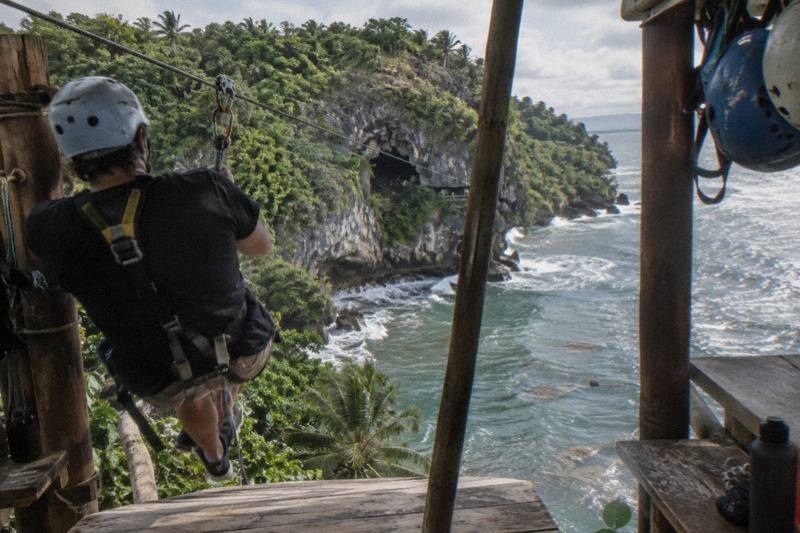
In practice, on a commercial course, a rider does not simply drop from the line: the harness holds you, the lanyards connect the harness to the trolley and the cable, and the guides control your arrival speed at the far platform. The word fall in the injury data mostly describes falls from height at launch, landing or on platforms, and falls on homemade or playground rigs with no guide, no backup and no inspection. A study in the American Journal of Emergency Medicine estimated 16,850 zipline-related injuries treated in US emergency departments from 1997 through 2012, with falls the mechanism in 77.3 percent of cases. That same dataset is dominated by private, non-commercial setups: a Journal of Pediatric Surgery study of 2009 to 2015 found 45.9 percent of US pediatric zipline injuries occurred on home-made ziplines and 54.1 percent on playground ziplines.
So the framing, and the one the equipment supports, is layered. The first layer is that you are attached before you ever leave the ground, and you stay attached until you are standing on the next platform. The second layer is redundancy: more than one lanyard, more than one brake, a guide doing the clipping. The third layer is the rescue plan, because the most common real-world mishap on a commercial line is not a fall but a stall, a rider who arrives short of the platform and hangs in the harness waiting for the guide.
That stall scenario is worth understanding, because it is what actually happens to nervous riders. It is uncomfortable, it is not a fall, and there is a procedure for it. The sections below walk through the attachment system, the brakes, the rescue, the injury data and what the two Fiji courses themselves say about briefing, fitting and staffing.
The fear that blocks a booking is usually the image of the drop. The reality of the training and equipment is aimed at exactly that image, and the fear and safety guide covers the wider question of how the Fiji courses manage risk.
How The Harness And Lanyard System Keeps You Attached
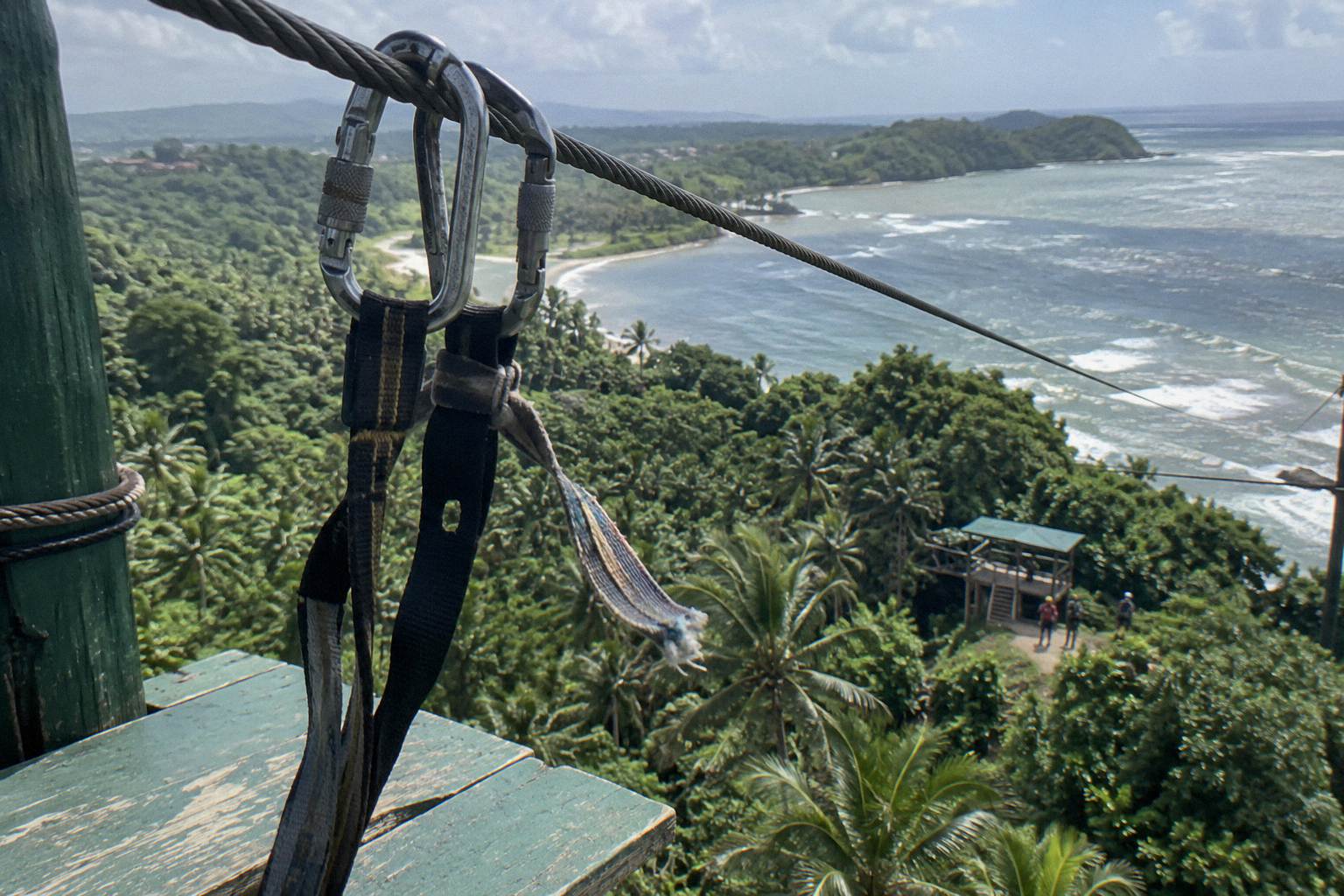
You wear a full-body or seat harness, and from that harness run lanyards, short strong lines with carabiners that connect you to the trolley riding on the cable, and the industry safeguard is that there is more than one of them. Double lanyards mean that as you move from one connection point to another at a platform, you are never fully disconnected. Guide-clipped carabiners mean the person making the connection does it dozens of times a day and checks it against a routine. The causes of serious incidents named in the industry literature are operator error such as a failure to belay or clip, rider error, and equipment or braking failure, and the named safeguards are exactly these: guide-clipped carabiners, double lanyards, redundant brakes and pre-ride checks.
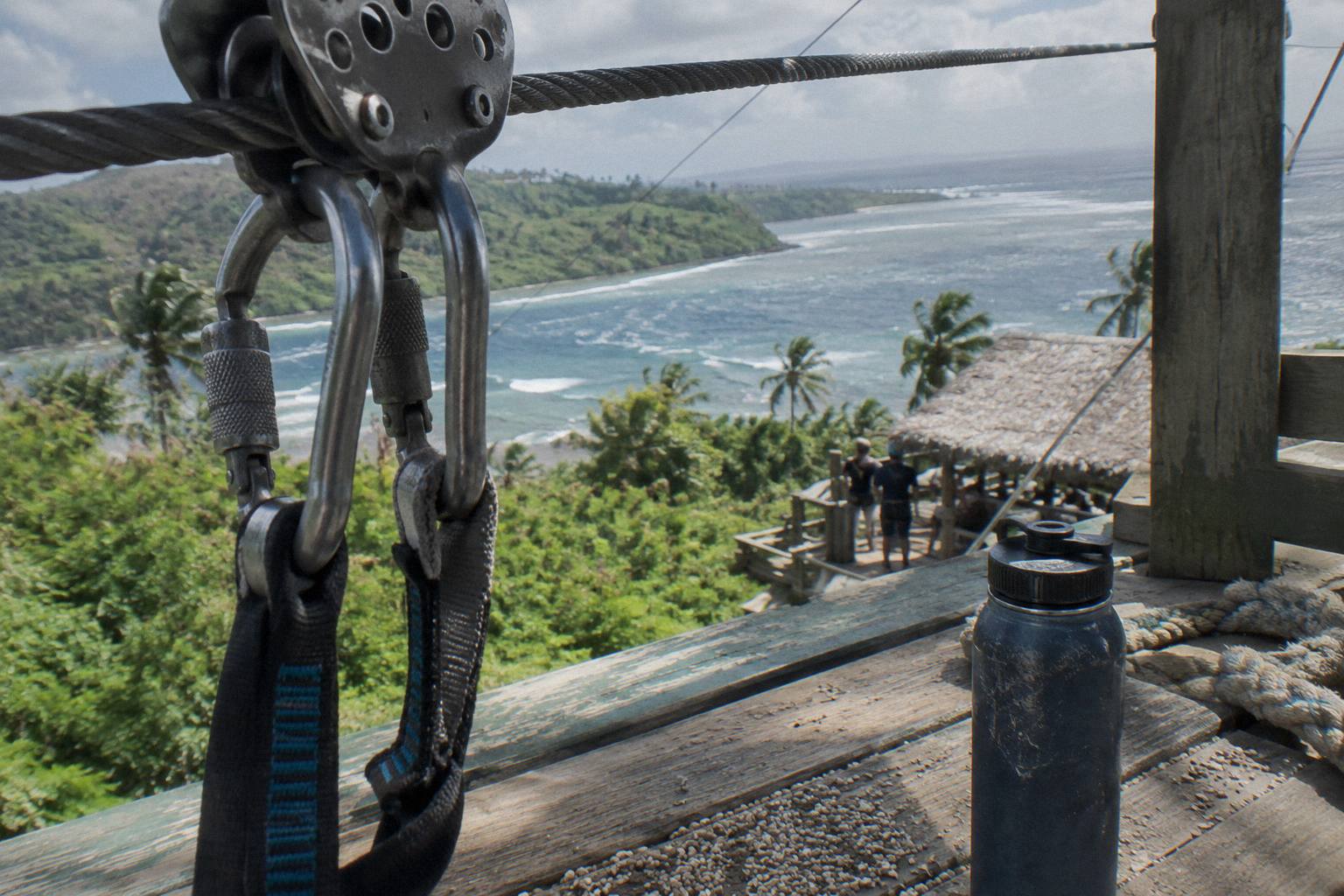
The physics is on your side too. A rider on a zip line hangs below the cable, so the harness, not your grip or your balance, carries your weight the entire time. Your hands steer nothing critical. On the Fiji courses the fitting happens before you leave the ground: Zip Fiji's tour includes a safety briefing and equipment fitting at the Welcome Centre before the 15 minute uphill walk to the first platform, and the operator's Head Guide determines whether the equipment fits you, which is why the weight rule is written as weighing less than 135 kilograms and fitting the equipment.
The pre-use check is the quiet part of the system. Guidance from the Association for Challenge Course Technology, the body behind the ANSI/ACCT 03-2019 standard for zip lines and canopy tours, calls for documented pre-use checks before participants ride and annual inspections by qualified persons. On the day, that looks like a guide tugging every connection, checking the trolley seat on the cable and testing the brake at the arrival platform before the first guest flies.
| Safeguard | What It Is | What It Protects Against |
|---|---|---|
| Harness | Full load-bearing attachment worn on the body | The rider's grip or balance never carries weight |
| Double lanyards | Two connection lines from harness to cable system | A single unclipped or failed connection |
| Guide-clipped carabiners | The guide makes and checks the connections | Rider error while clipping |
| Primary plus backup brake | Two independent braking systems on faster lines | A single brake failure at arrival |
| Pre-use checks | Documented inspection before guests ride | Equipment wear and mis-rigging |
| Rescue plan | Trained retrieval of a stopped or stuck rider | A rider stalled mid-line |
If a fall question is the thing holding you back from the Momi Bay course, the step-by-step tour walkthrough shows where each of these safeguards appears in the sequence of a real day, and you can check availability once the sequence makes sense.
What Actually Happens When A Rider Stops Short Mid-Line
The most common in-flight problem on a commercial zipline is not a fall but a stall: the rider loses momentum, stops on the cable short of the platform and hangs in the harness until a guide retrieves them, and the industry treats that retrieval as a drilled routine rather than a drama. Standards and operator training prepare for it directly. Guides at the platform use a pull-in rope or a mechanical-advantage rescue system to bring the stalled rider in, and ASTM F2959, the standard practice for aerial adventure courses, requires operators to train staff on an evacuation or rescue plan for abnormal conditions.
A stall usually has a physical cause, and it is the reason minimum rider weights exist in the industry. A light rider carries less momentum and can stall short of the platform, while a heavier rider arrives faster, so braking systems are tested at the extremes of rider weight and arrival speed. That is general zipline physics, not a Fiji rule, but it explains why operators ask weight at booking and why the answer matters for more than paperwork.
Hanging in a harness while a guide pulls you in is uncomfortable but safe for the minutes it takes. You are attached, the guide is attached, and the rope does the work. Nobody needs to swing, jump or grab the cable. The correct rider behaviour is to stay still, keep your hands off the equipment and wait, which is exactly what the briefing tells you before the first zip.
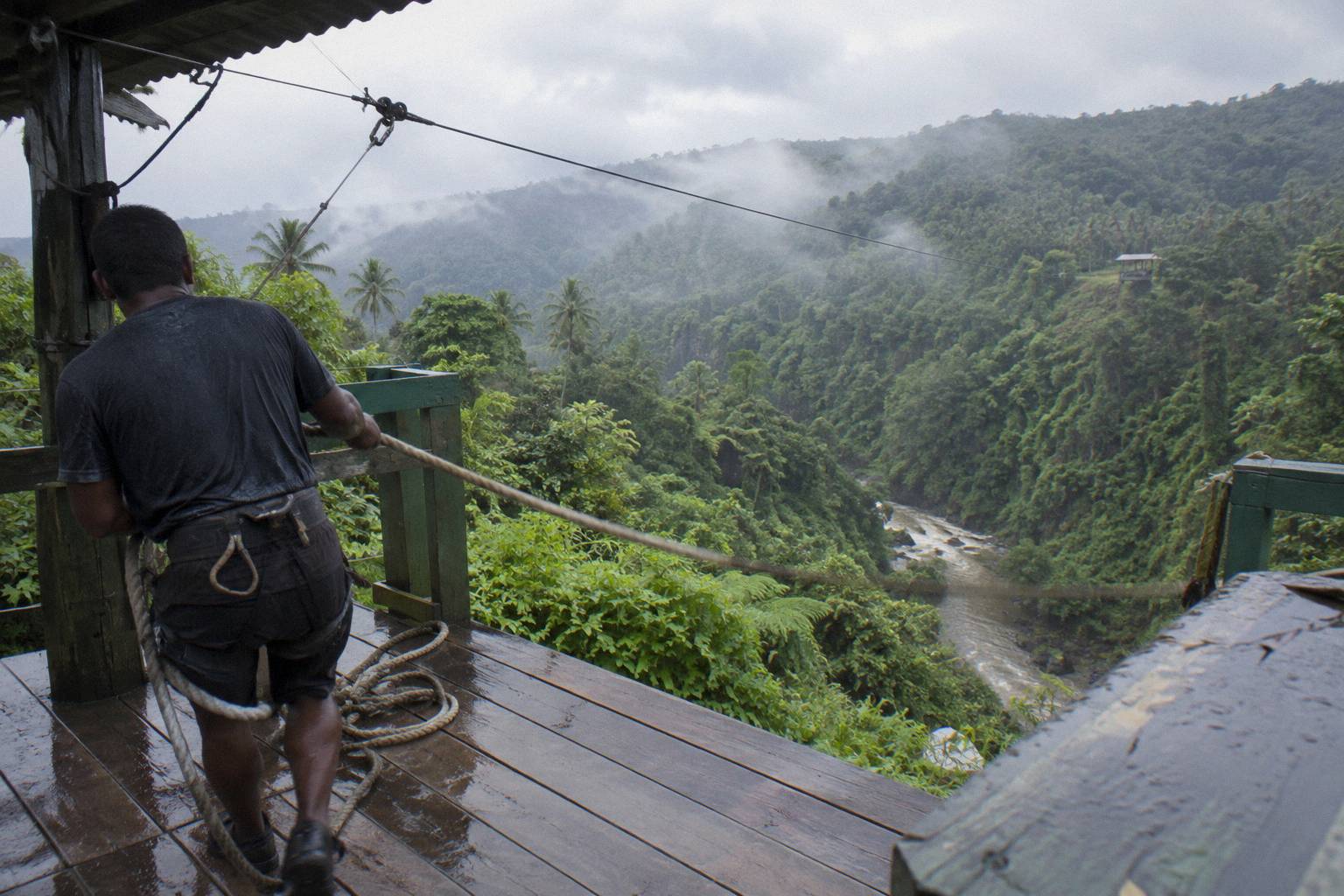
This is also why the tour runs with the staffing it does. Zip Fiji takes groups of up to 16 guests with 5 guides, which is roughly one guide for every three riders: enough staff to have a guide at launch, a guide at arrival and guides moving along the course in between. Sleeping Giant Zip Line runs 7 lines of 80 to 160 m with speeds up to 40 km/h, distances short enough that a stalled rider is within reach of platform staff.
What The Injury Numbers Actually Show
Every published figure on zipline injuries is US data, and the two largest studies point the same way: falls dominate, children are over-represented, and a large share of pediatric injuries happen on homemade and playground rigs rather than commercial tours. The American Journal of Emergency Medicine study estimated 16,850 US emergency-department-treated zipline injuries from 1997 through 2012, children aged 0 to 9 making up 45.0 percent, fractures 46.7 percent of injuries and the upper extremities the most injured body region at 44.1 percent. It reported an annual rate of 11.64 injuries per million population in 2012, up 52.3 percent from 2009, a rise the era of backyard kits explains as well as anything.
The Journal of Pediatric Surgery study of 2009 to 2015 estimated 9,397 US zipline injuries, with fractures at 49.8 percent and ages 5 to 9 most affected. Lower Extremity Review reports 2000 to 2024 US emergency-department data covering an estimated 46,572 zipline injuries in total, of which 7,962, or 17.1 percent, were lower-extremity, with fracture the most severe diagnosis in 31 percent of those cases. The lower leg accounted for 33.3 percent and the ankle 31.9 percent of affected lower-extremity body parts. All of these are US figures and are labelled as such because no Fiji statistic, regulation or inspection scheme appears in any source consulted: write nothing either way about Fiji regulation. The full index of guides sits on Ziplines In Fiji.
| Study (all US data) | Period | Estimate | Key Findings |
|---|---|---|---|
| American Journal of Emergency Medicine | 1997 to 2012 | 16,850 emergency-department injuries | Falls 77.3 percent, ages 0 to 9 were 45.0 percent, fractures 46.7 percent |
| Journal of Pediatric Surgery | 2009 to 2015 | 9,397 injuries | 45.9 percent home-made, 54.1 percent playground rigs, fractures 49.8 percent |
| Lower Extremity Review | 2000 to 2024 | 46,572 injuries | 17.1 percent lower-extremity, fracture the most severe diagnosis in 31 percent of those |
| Challenge-course benchmarking (ACCT data) | 2016 to 2021 | About 10,000,000 guests, 225 participant injuries | Across challenge courses, of which zip lines are one element |
Two cautions sit beside those numbers. First, no commercial zipline fatality rate appears in the sources, so no per-ride odds, no rate and no comparison with driving can be stated. Second, a published registry of challenge-course deaths from 1986 to 2000 reports 17 deaths, 5 of them traumatic, 4 of those on zip line elements, mostly staff rather than guests, a reminder that the sport has a real history even if the commercial touring record in the data is thin. The fuller statistical picture is in the injury rate explainer.
Ziplining carries real risk. The point of the equipment, the standards and the staffing is not that nothing can go wrong, it is that the most likely things that go wrong on a guided tour are stalls and scrapes, not the drop you are picturing.
How The Fiji Courses Brief And Fit You Before The First Zip
Both Fiji operators put the briefing and the fitting before the flying: Zip Fiji runs a safety briefing and equipment fitting with the Head Guide deciding whether the equipment fits you, and Sleeping Giant Zip Line asks that riders be comfortable at heights over 100 ft and able to walk 10 to 15 minutes uphill over uneven ground unassisted. Zip Fiji's own FAQ sets the participation rules for its course: at least 3 years of age, children under 18 accompanied by an adult, no maximum age, weighing less than 135 kilograms and fitting the equipment, full range of motion in arms, shoulders, neck and back, and the ability to stand on a platform about 5 stories high without severe anxiety or dizziness. Booking pages for the same course carry different thresholds, so confirm with the operator.
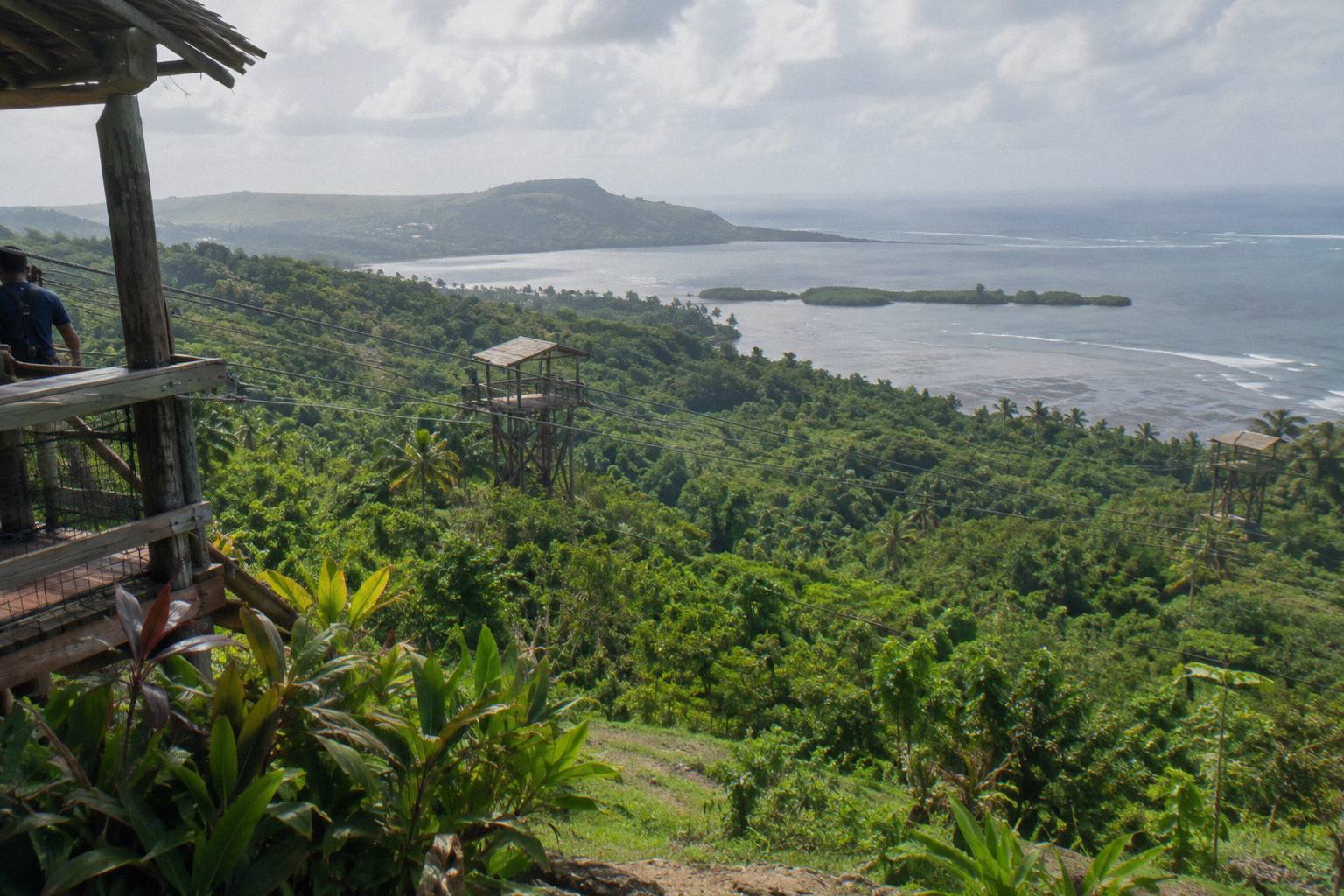
The briefing covers behaviour as much as hardware. Zip Fiji asks for closed-toe sport shoes, strap-on sandals acceptable and no bare feet, and allows cameras only on a strap or a GoPro on a helmet strap, with no water bottles, backpacks or belt packs on the course. Loose items are a genuine hazard on a zip line, which is why every serious operator has the same rule: anything that can drop from a height gets secured or left behind. The operator also lists the medical reasons it does not recommend the tour, among them pregnancy, epilepsy, heart problems and back, neck or shoulder problems, and intoxicated people may not take part.
Sleeping Giant's own FAQ and its booking page list different age and weight thresholds, so the park asks you to confirm both directly before paying, and its booking page lists pregnant women, altitude sickness and recent surgeries among those not suited to the tour. If you are weighing a Sabeto day against a Momi Bay day, the Zip Fiji versus Sleeping Giant comparison lays out lines, duration and pickup differences side by side.
Weather is the operator's call, not yours. Zip Fiji runs in all weather except lightning overhead, high winds and especially heavy rain, per the operator's stated rule. Nadi sits in a tropical monsoon climate with a short dry season in July and August and a long wet season otherwise, and the official South Pacific cyclone season runs from 1 November to 30 April, so a wet-day contingency is worth having at any time of year.
The Sleeping Giant safari listing, rated 4.7 from 67 reviews and from US$88 per person, gives you the shorter 7-line format with two waterfalls and a deli lunch, a good fit if the 5-story platform height at Momi Bay sounds like more exposure than you want on a first ride.
Which Safeguard Matters Most For A Nervous First-Timer
If you are scared of the drop specifically, the safeguard that answers your fear is the attachment system: the harness carries your weight from clipping to unclipping, the double lanyards mean you are never attached by fewer than the intended connections, and the guide does the clipping. The brake redundancy answers a different fear, arriving too fast. The rescue training answers the anticlimactic one, stopping too slow. Knowing which fear you actually have tells you which question to ask the operator before you pay.
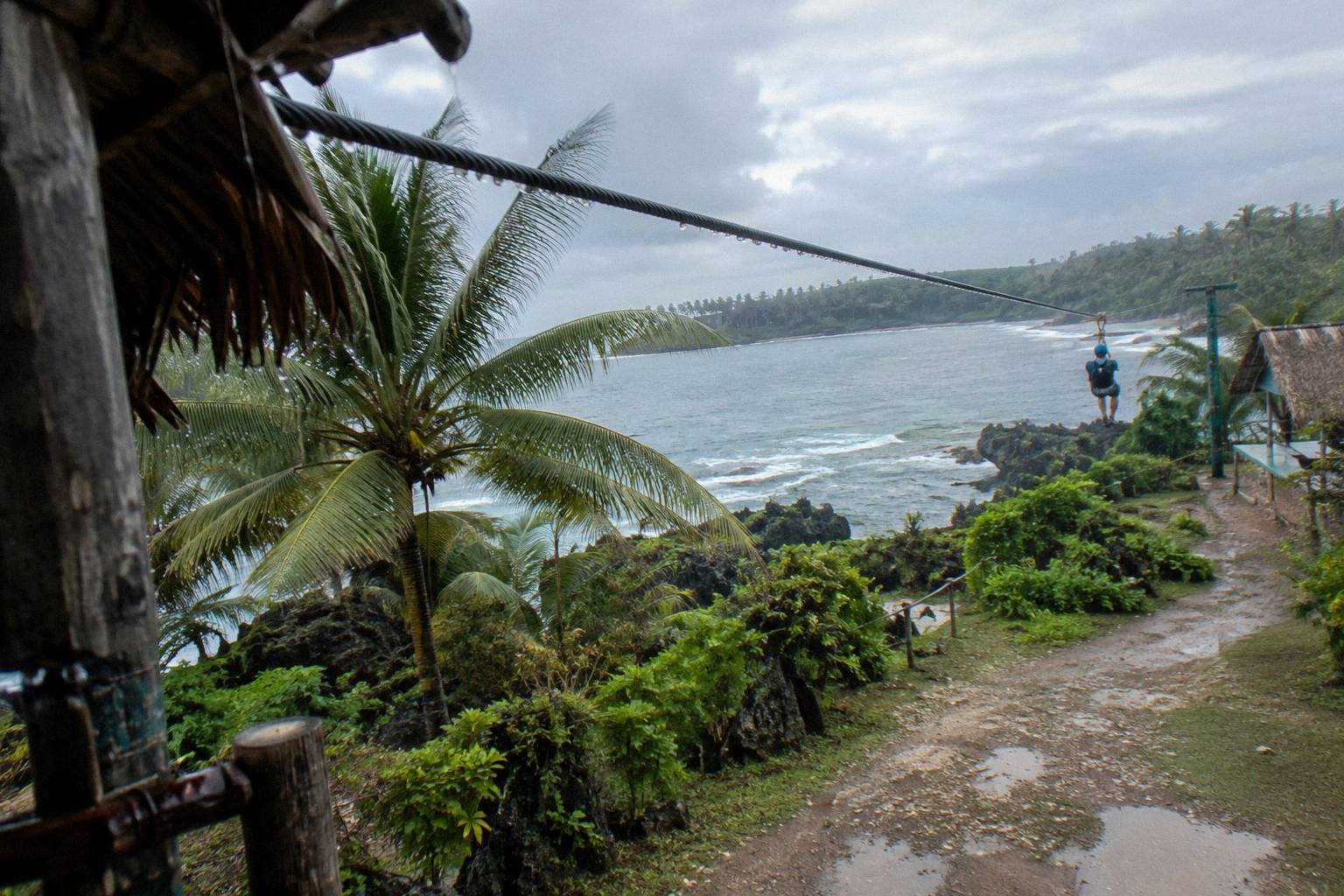
Ask, in plain words: who clips the carabiners, how many connections does each rider have between harness and cable, and what is the procedure if a rider stops short of the platform. An operator with drilled answers to those three questions is showing you the system described above. Zip Fiji's answers are on its own safety information page and its operator FAQ, and the underlying industry criteria sit in the ASTM F2959 standard page for anyone who wants the primary source.
Then book the format that matches your nerve. The standard Momi Bay listing, rated 4.9 from 303 reviews and from US$100 per person, is the 16-line course with the cave, shuttle and meal, about 3 hours on site. The abseil combo, 4.8 from 39 reviews and from US$113, adds three abseils including a 40 m descent into the Tau Caves and suits riders who want the vertical skills emphasized; its not-suitable list names claustrophobia and fear of heights. All amounts are US dollars, from prices per person, and they move with date and group size, so the booking page shows the figure for your date. Every one of these listings carries free cancellation up to 24 hours before the start on the booking page, which takes most of the risk out of deciding early.
What Trips People Up Before You Book
Most booking-day problems are not falls: they are showing up in the wrong shoes, misreading the weight rule as a simple number, assuming a child can ride alone, or expecting a transfer time the operator never promised, and each of those is avoidable with one check before you pay. Zip Fiji asks for closed-toe sport shoes and bans backpacks and bottles on the course, and the walk to the first platform is 15 minutes uphill over uneven ground, so footwear and fitness decide more days than nerves do. The weight rule is a fit rule: under 135 kilograms and able to fit the equipment as the Head Guide determines, and booking pages carry different thresholds, so the operator is the final word.
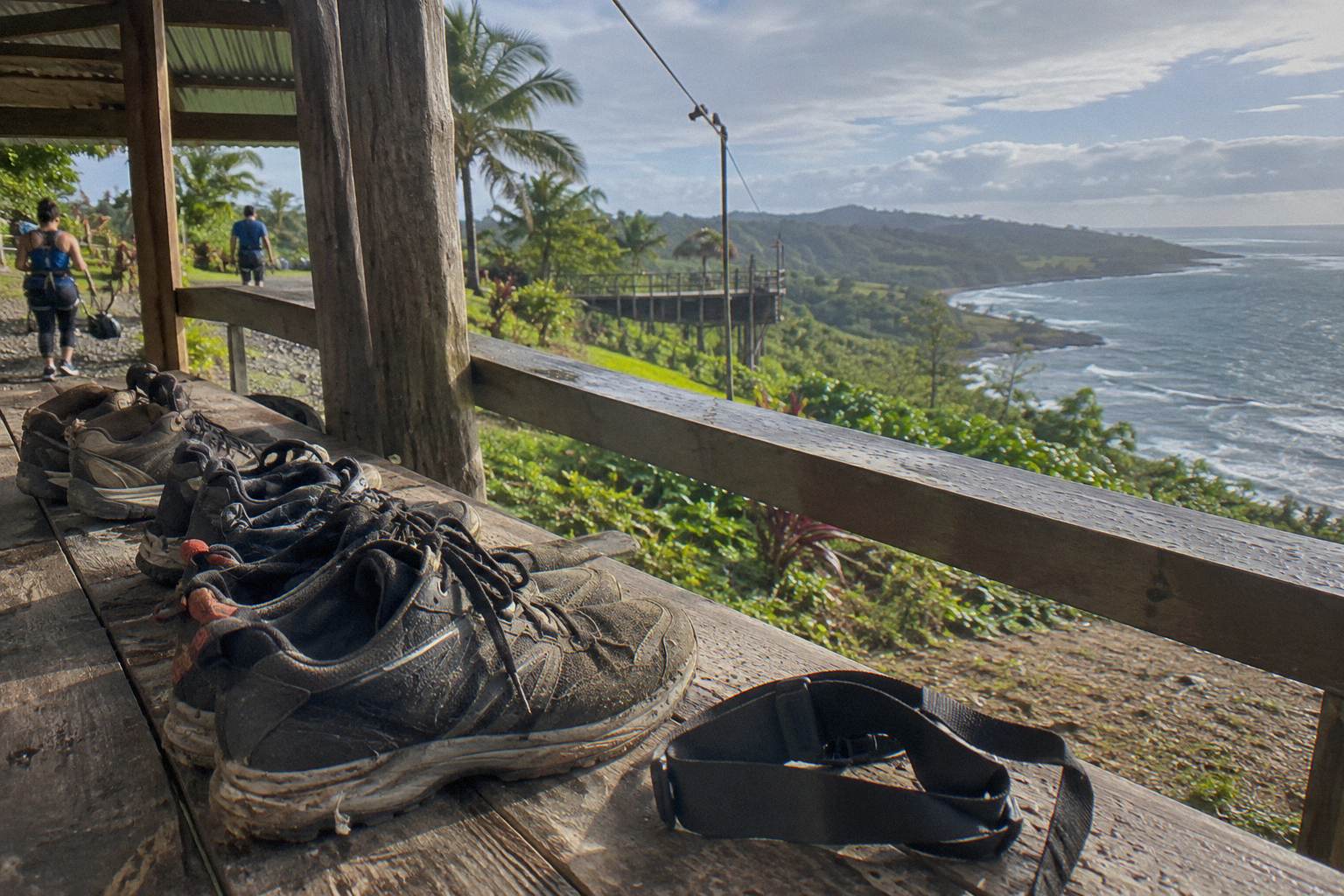
The transfer-time trap is the biggest scheduling one. Zip Fiji says Tau Village is 35 minutes from Nadi; one booking page says 45 minutes; a guest review reports about 2 hours from Nadi or Denarau when two hotel pickups are chained. Plan the afternoon loosely. At Sleeping Giant, the operator counts about 2 hours round trip from Denarau with pickups at 10am or 12pm and drop-off about 4 to 4:30pm or 5:30 to 6pm per the booking page.
The decision traps are quieter. Comparing the two courses' rules against each other fails, because the Zip Fiji FAQ figures and the Sleeping Giant fitness notes are per operator and never cross over. Assuming the mud pool or waterfall combo carries the same suitability as the standard tour fails too: each combo page lists its own not-suitable groups. And cancelling direct with an operator rather than through the booking page changes the terms, so read the cancellation line on whichever route you pay through. Beyond the fear in the question, the guide to who should not go ziplining lists the medical reasons both operators name.
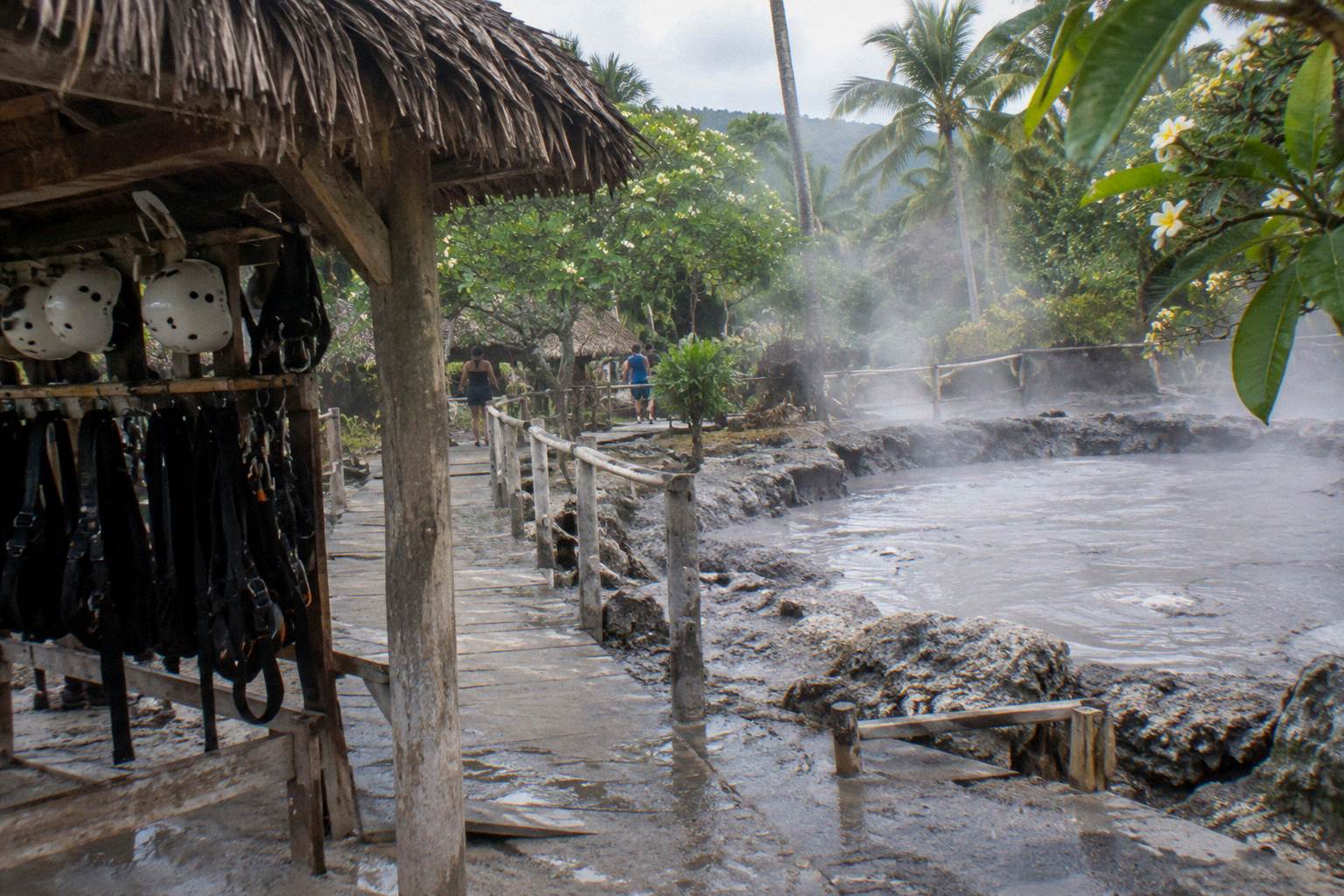
Common Questions About Zipline Falls And Rescue
What Happens If You Fall Off A Zipline?
On a commercial tour the system is built so a fall from the cable requires multiple simultaneous failures: the harness carries your weight, double lanyards connect you to the cable system, and the guide clips and checks the carabiners. If a rider stops short mid-line instead, which is the more common event, guides retrieve them with a pull-in rope or a mechanical-advantage rescue system per the training standards. No source publishes a commercial-tour fall rate, so the answer is the layered one: attachment, redundancy, brakes and a drilled rescue plan.
Can You Fall Out Of The Harness?
A correctly fitted, correctly buckled harness is designed to hold a hanging load, and the fitting happens before you leave the ground, with the operator's staff checking it. Zip Fiji's Head Guide determines whether the equipment fits you, which is why its weight rule pairs a number with a fit test. The industry safeguards against the failure modes that actually appear in the data are guide-clipped carabiners and double lanyards, not the harness alone.
What Happens If You Stop In The Middle Of A Zipline?
You hang in the harness, you stay still, and a guide brings you in. Standards call for operators to train staff on a rescue plan for abnormal conditions, and the platform tools are a pull-in rope or a mechanical-advantage rescue system. Stalls are common enough that minimum rider weights exist in the industry precisely because light riders carry less momentum and can finish short of the platform.
Has Anyone Died On A Commercial Zipline Tour?
A published registry covering challenge courses from 1986 to 2000 reports 17 deaths, 5 of them traumatic, 4 of those on zip line elements, and notes most were staff rather than guests. No source read publishes a commercial zipline fatality rate, and no Fiji safety statistic or regulation appears in any source consulted, so no rate, per-ride odds or comparison with other risks can be stated.
Are Fiji Zipline Tours Safe For Nervous Beginners?
Both operators state their own readiness rules and neither promises an outcome, so the answer is procedural. Zip Fiji briefs and fits you first, asks that you can stand on a platform about 5 stories high without severe anxiety, and runs up to 16 guests with 5 guides, with the option to walk back to the Welcome Centre after the first zip if you cannot continue. Sleeping Giant asks that riders be comfortable at heights over 100 ft. Ziplining carries real risk, and the operators say what they do to manage it.
Do The Brakes Ever Fail On A Zipline?
Equipment and braking failure is one of the causes of serious incidents named in the industry literature, which is why standards call for a primary brake and a backup brake on faster zip lines, and for an emergency arrest device where a primary brake failure could let arrival speeds exceed about 10 km/h. Documented pre-use checks before participants ride are part of the ACCT guidance. Redundancy does not mean failure is impossible, it means one failure is not the whole story.