Are Zipline Tours In Fiji Safe? Harnesses, Guides And What To Check
Ziplining carries real risk, like any activity that puts a person on a cable above the ground. What a booking decision actually turns on is whether the risk is managed well, and at the two courses near Nadi the answer sits in what the operators say they do, the standards their equipment is built and inspected under, and the health rules each rider has to meet.
Short answer
Ziplining is a real-risk activity with a serious injury pattern documented in United States emergency-department data, mostly falls and fractures. The two courses near Nadi, Zip Fiji at Momi Bay and Sleeping Giant at Sabeto, run guided tours with briefings, fitted equipment and age, weight and health rules. No safety statistic for Fiji is published, so the decision rests on the operator systems and the rider's own fitness.
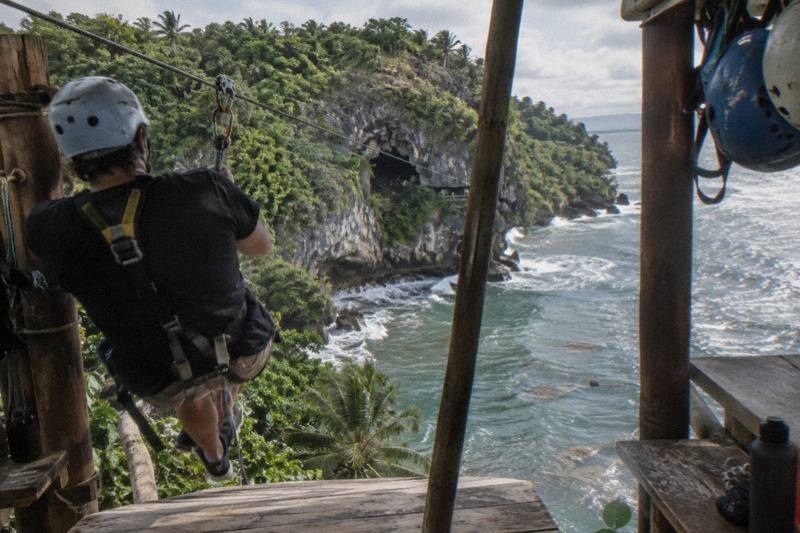
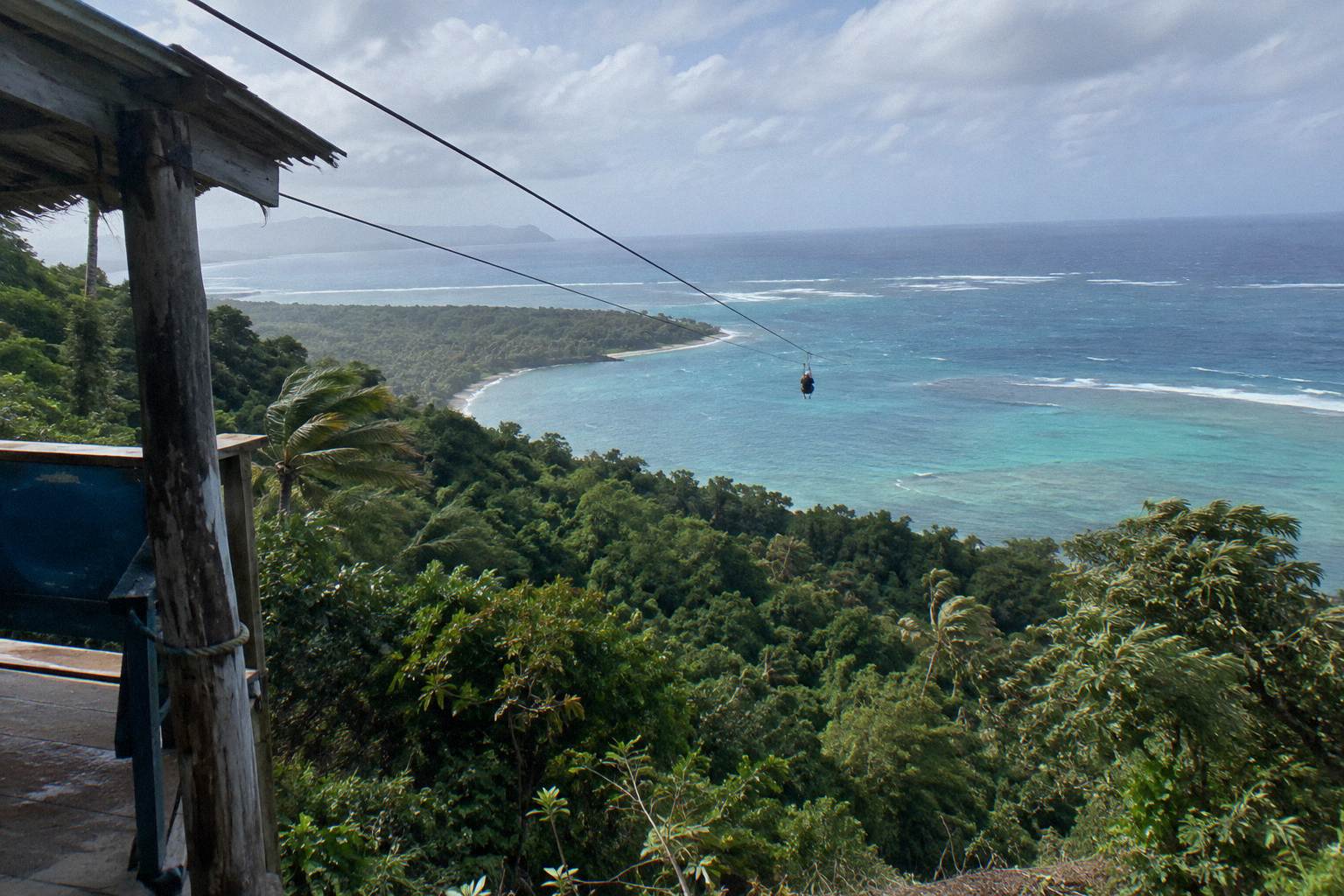
Ziplining is a real-risk activity. A rider hangs from a cable above the ground, gathers speed, and stops only when a braking system slows them at the far platform, and every serious study of the sport documents injuries from falls, collisions and equipment problems. That is the starting point, because the useful question is not whether ziplining is dangerous in the abstract but whether the course you are booking manages that danger well. On Viti Levu, two courses operate near Nadi: Zip Fiji at Momi Bay, with 16 lines and 27 platforms, and Sleeping Giant Zip Line at Sabeto, with 7 lines over 700 m. Both sell guided tours rather than open ride access, both fit equipment and brief riders before the first line, and both publish health rules that exclude some people entirely.
What does not exist is a Fiji safety statistic. No published injury rate, inspection scheme or regulatory record for ziplining in Fiji appears in any source cited here, so nothing here claims one. What does exist is a body of United States emergency-department data on zipline injuries, published industry standards for how commercial courses are designed, built, inspected and operated, and the two operators' own published rules. Those three layers, read together, are what a careful booking decision rests on.
If you want the short version of which tour fits a cautious group, start with the full 16-line Momi Bay course listing: the Zipline Adventure and Cave Exploration booking covers the 16-line course with a cave tour, shuttle and meal, from US$100 per person on the booking page, rated 4.9 from 303 reviews.
| Fact | Detail |
|---|---|
| Courses covered | Zip Fiji at Momi Bay (16 lines, longest 235 m, 27 platforms) and Sleeping Giant at Sabeto (7 lines over 700 m, speeds up to 40 km/h) |
| Supervision at Momi Bay | Groups of up to 16 guests with 5 guides, per Zip Fiji |
| Briefing and fitting | Both operators run a safety briefing and equipment fitting before the course |
| Key US injury figure | An estimated 16,850 zipline injuries treated in US emergency departments from 1997 through 2012 |
| Standards | ASTM F2959 and ANSI/ACCT 03-2019 cover design, operation, inspection and staff training for commercial zip lines |
| Intoxicated riders | Zip Fiji states intoxicated people may not take part |
| Opt-out | At Momi Bay, a guest who cannot continue after the first zip is walked back to the Welcome Centre |
| Fiji safety statistic | None published in the sources behind these pages; no claim is made either way |
How Safe Is Ziplining In Fiji?
No safety record for ziplining in Fiji is published in any of the sources used here, so the answer has to be built from three other layers: what the two operators say they do, the equipment and inspection standards commercial courses are built under, and the health and fitness rules each rider meets before being clipped in. Read that way, a guided tour at either course is a managed-risk activity, not a gamble, though ziplining still carries real risk.
The plain framing is that the operators control part of the risk through equipment, training and rules, and you control another part by reading those rules carefully and matching them to your own body. Anyone who tells you a course is perfectly safe is overselling, and nothing here does that.
The two courses structure risk differently. Zip Fiji at Momi Bay runs groups of up to 16 guests with 5 guides, includes a safety briefing and equipment fitting before the first line, and states plainly that intoxicated people may not take part. It also has a published escape hatch: a guest who cannot continue after the first zip is walked back to the Welcome Centre rather than pushed through 15 more lines. That single policy matters more for a nervous rider than any marketing line, because the cost of stopping is low.
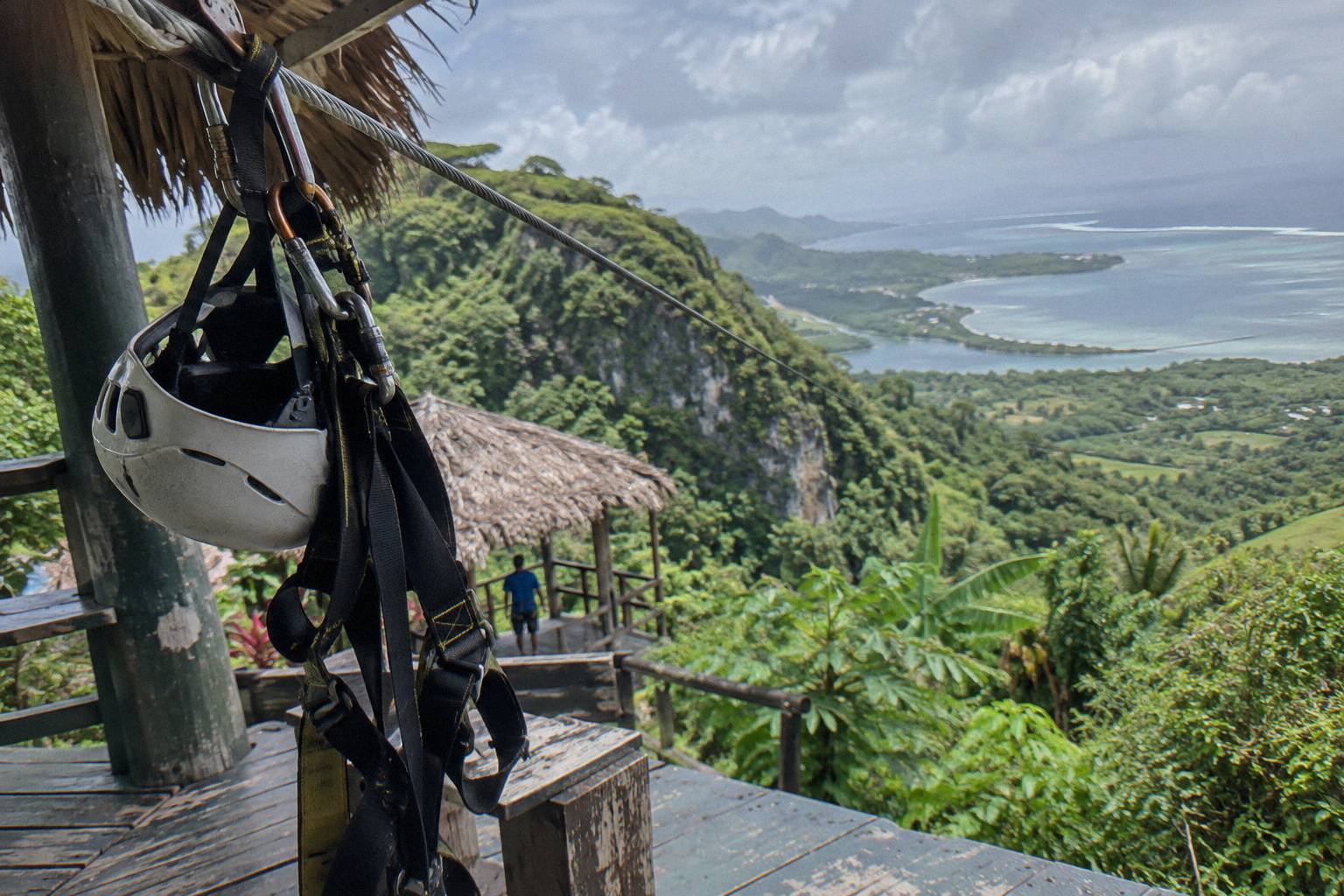
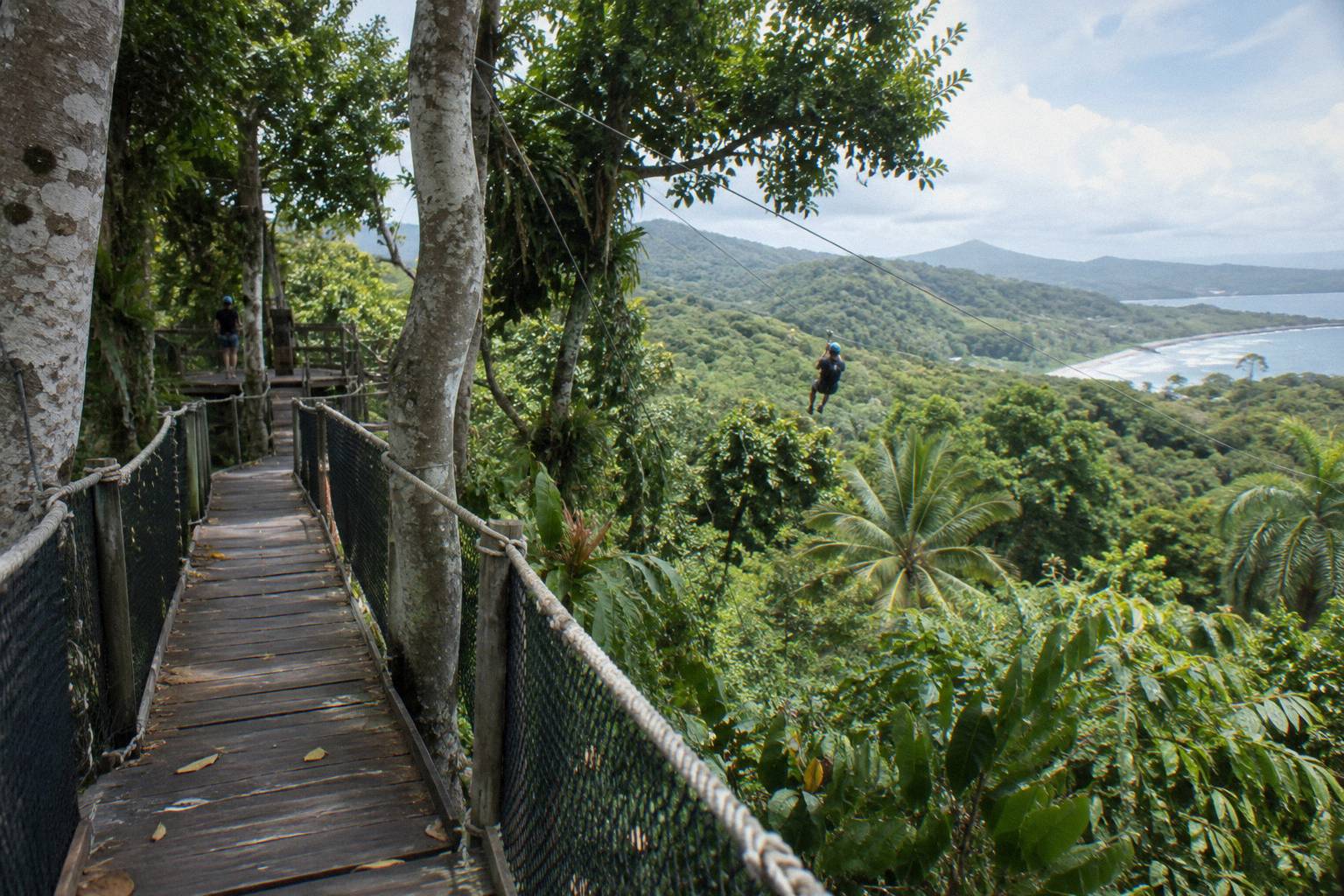
Sleeping Giant Zip Line at Sabeto runs a smaller course, 7 lines of 80 to 160 m over a 35-acre park, with a guided jungle safari walk and deli lunch around the riding. Its operator page describes the same basic structure: briefing, fitted equipment, guides on the course. The park asks riders to be comfortable at heights over 100 ft and able to walk 10 to 15 minutes uphill over uneven ground, with about 20 trail stairs.
Neither operator should be described as certified, licensed, audited or inspected to any standard, because no source here says so. What can be said is what the standards themselves require of commercial courses, and what the operators themselves publish. For a full walkthrough of the day itself, from check-in to the last line, see what happens on a Fiji zipline tour step by step.
What The US Injury Numbers Actually Show
The only solid injury numbers are United States emergency-department figures: a study in the American Journal of Emergency Medicine estimated 16,850 zipline injuries treated from 1997 through 2012, with falls the mechanism in 77.3 percent and fractures 46.7 percent. A second study put 9,397 US zipline injuries in 2009 to 2015 on home-made and playground ziplines, not commercial tours.
| US data point | Figure | Source period |
|---|---|---|
| Zipline injuries in US emergency departments | 16,850 estimated | 1997 to 2012 |
| Falls as the injury mechanism | 77.3 percent | Same study |
| Fractures among those injuries | 46.7 percent | Same study |
| Children 0 to 9 as a share | 45.0 percent | Same study |
| Annual US rate | 11.64 injuries per million population, up 52.3 percent from 2009 | 2012 |
| Pediatric zipline injuries | 9,397 estimated, 45.9 percent home-made, 54.1 percent playground | 2009 to 2015 |
| Total US emergency-department zipline injuries | 46,572 estimated, 7,962 lower-extremity | 2000 to 2024 |
The pattern in those numbers is consistent: people get hurt falling off ziplines, and they break bones, mostly in the upper extremities, when they do. Lower Extremity Review's own read of 2000 to 2024 US emergency-department data estimated 46,572 zipline injuries in total, of which 7,962, about 17.1 percent, were lower-extremity, with fractures in 31 percent of those and the lower leg and ankle the most affected parts. The American Journal of Emergency Medicine study page carries the original figures.
Two qualifications follow. First, these are US numbers covering every kind of zipline, from backyard ropes to commercial canopy tours, and no source separates commercial-tour injuries from the whole pool, so no per-ride risk for a guided tour can be computed from them. Second, no Fiji figure of any kind exists in the sources here, and none is given here. Challenge-course industry benchmarking published by the Association for Challenge Course Technology covers about 10,000,000 guests and 225 participant injuries across challenge courses from 2016 to 2021, with zip lines as one element among many, and that raw pair of numbers is the closest thing to a commercial-course figure anywhere in the data. It cannot be turned into a per-ride rate.
The practical takeaway is not "ziplining is safe" or "ziplining is dangerous". It is that the documented injury mechanisms, falls, arrival collisions and equipment or braking failures, are exactly the mechanisms the equipment standards and operator procedures are built against, which is why the next two sections matter more than the raw totals.
The flagship Momi Bay listing is the one most first-time visitors compare against, since it is the full 16-line course with the cave, shuttle and meal in one booking.
What The Two Operators Say They Do
Zip Fiji publishes its safety detail on its own pages: a safety briefing and equipment fitting before the course, 5 guides for groups of up to 16, a weather rule that stops the tour only for lightning overhead, high winds or especially heavy rain, and a stated right to refuse intoxicated riders. Sleeping Giant publishes briefing, fitted equipment and guides, plus a comfort-at-heights requirement and an uphill walk requirement, but states no weather rule.
Zip Fiji's own safety information page is the primary source for its course rules, and the eligibility figures are stated in the FAQ: riders must be at least 3 years old, children under 18 accompanied by an adult, no maximum age, under 135 kilograms and able to fit the equipment as the Head Guide determines. The physical requirements are spelled out too: walking 15 minutes uphill over uneven ground unassisted, full range of motion in arms, shoulders, neck and back, and the ability to stand on a platform about 5 stories high without severe anxiety or dizziness. The full rule set and its per-listing wrinkles are covered in the dedicated Fiji zipline weight limit guide.
Sleeping Giant's requirements live on its operator pages: 10 to 15 minutes of uphill walking over uneven ground, about 20 trail stairs, and comfort at heights over 100 ft. Its age and weight thresholds are the one place where its own FAQ and the booking page disagree, and because they disagree, no number for that park is printed here. The right move before paying is to confirm age and weight with the park directly, a point worth making once and then moving on.
Both operators restrict loose items on the course. Zip Fiji allows cameras only on a strap or a GoPro on a helmet strap, and bans water bottles, backpacks and belt packs on the course. Sleeping Giant asks riders to bring a camera and glasses strap. Neither rule is decoration: a dropped phone from a platform is the mildest version of what a loose object can cause, and the packing logic behind it is covered in what to wear and bring ziplining in Fiji.
For a family weighing the smaller course against the bigger one, the Sleeping Giant listing pairs the 7 lines with two waterfalls and the jungle safari walk, deli lunch included, from US$88 per person, rated 4.7 from 67 reviews.
Harnesses, Brakes And The Equipment Standards
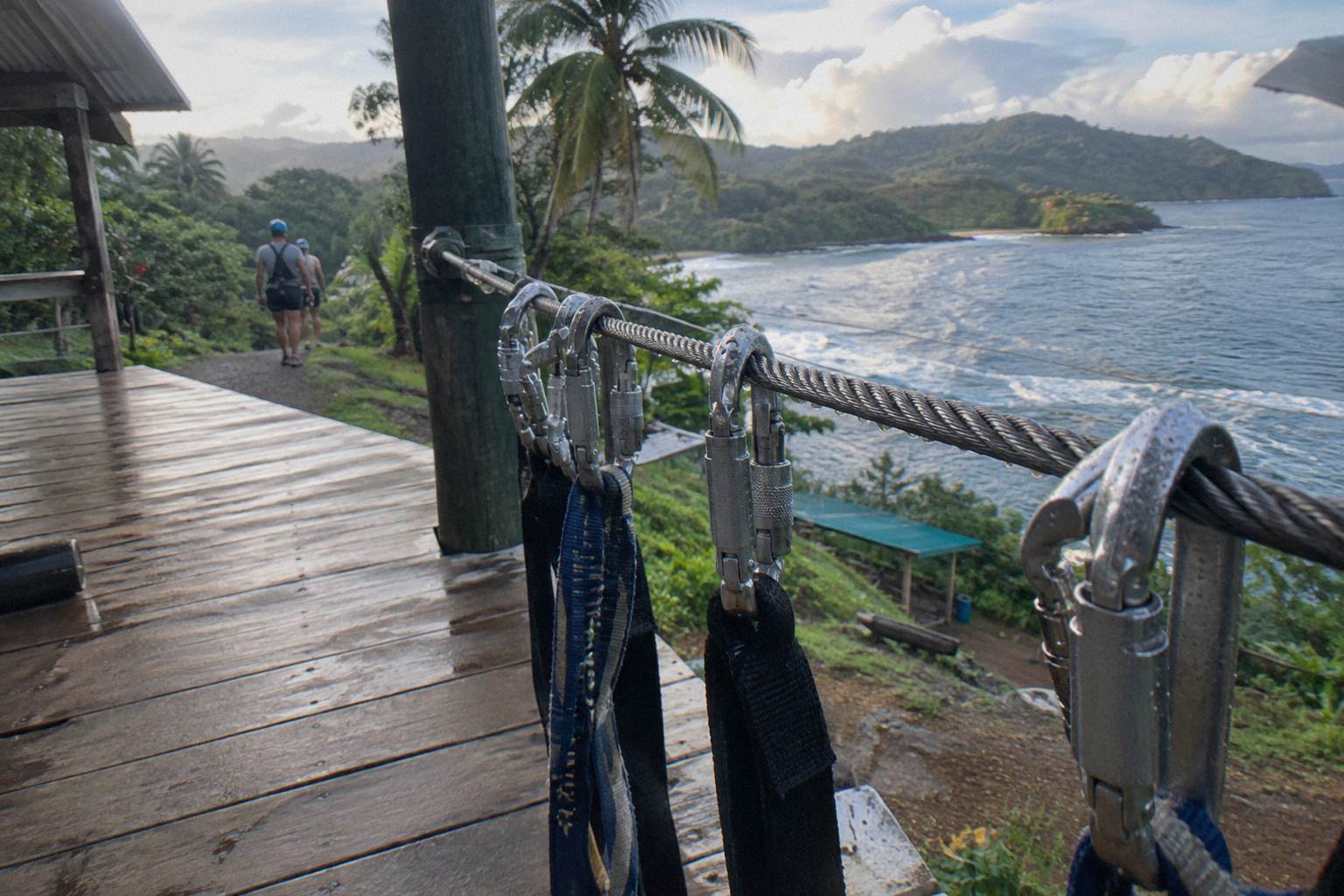
Commercial zip lines are built under written standards: ASTM F2959 sets criteria for the design, manufacture, installation, operation, maintenance, auditing and major modification of zip lines and canopy tours used commercially, and ANSI/ACCT 03-2019 covers design, construction, inspection, operation, maintenance and staff training. Both call for documented pre-use checks, annual inspections by qualified persons, and on faster lines a primary brake plus a backup brake.
The engineering logic is straightforward and worth understanding as a rider. Heavier riders carry more momentum and arrive at the landing platform faster, so braking systems are tested at the extremes of rider weight and arrival speed. A minimum weight matters for the opposite reason: a very light rider can stall short of the platform. Standards call for an emergency arrest device when failure of the primary brake could let arrival speeds exceed about 10 km/h, and when a rider does stop short mid-line, guides at the platform recover them with a pull-in rope or a mechanical-advantage rescue system. The ASTM F2959 standard page and the ACCT standards body site carry the detail.
| Requirement | What the standards call for |
|---|---|
| Pre-use checks | Documented checks before participants ride |
| Inspections | Annual inspection by a qualified person |
| Braking on fast lines | A primary brake and a backup brake |
| High-arrival-speed lines | An emergency arrest device where primary brake failure could exceed about 10 km/h at landing |
| Stalled riders | Recovery by pull-in rope or mechanical-advantage system |
| Staff training | Covered under ANSI/ACCT 03-2019 |
| Lifespan of equipment | No published lifespan is sourced; equipment is inspected under the standards |
The named safeguards against the injury mechanisms in the US data are specific: guide-clipped carabiners so a rider is never responsible for their own clipping, double lanyards so a rider is always attached to something, redundant brakes, and pre-ride checks. The named causes of serious incidents in the industry literature are equally specific: operator error such as failure to belay or clip, rider error, and equipment or braking failure. Notice how tightly those two lists map onto each other, because that mapping is the whole argument for caring who runs the course and how they train their guides.
A rider's own harness is the piece of equipment they can check. It should be fitted by staff, not self-adjusted after the fitting, and the operator pages for both courses describe equipment fitting as part of the briefing. Zip Fiji's rule that the Head Guide determines whether a rider fits the equipment is a weight-and-shape rule at heart, not an arbitrary one, since a harness that does not fit properly does not distribute load properly either.
Guides, Briefings And Group Size
The single most safety-relevant number either operator publishes is Zip Fiji's ratio of 5 guides for up to 16 guests, because the documented failure mode in the industry literature is operator error, and staffing is the direct control on it. Briefings and equipment fittings come next: both operators run them before the first line, and both publish rules a briefing enforces, from loose items to closed-toe footwear to refusing intoxicated riders.
Guide training is not a soft topic. ANSI/ACCT 03-2019 covers staff training for challenge courses, zip lines and canopy tours, and ASTM F2959 requires operators to train staff on an evacuation or rescue plan for abnormal conditions. The standards also describe the recovery procedure for the most common mid-ride problem, a rider stalling short of the platform, and the fact that the procedure is standardized matters: it means a well-run course has a rehearsed answer to the situation a nervous rider actually pictures. The wider set of guides lives on Ziplines In Fiji.
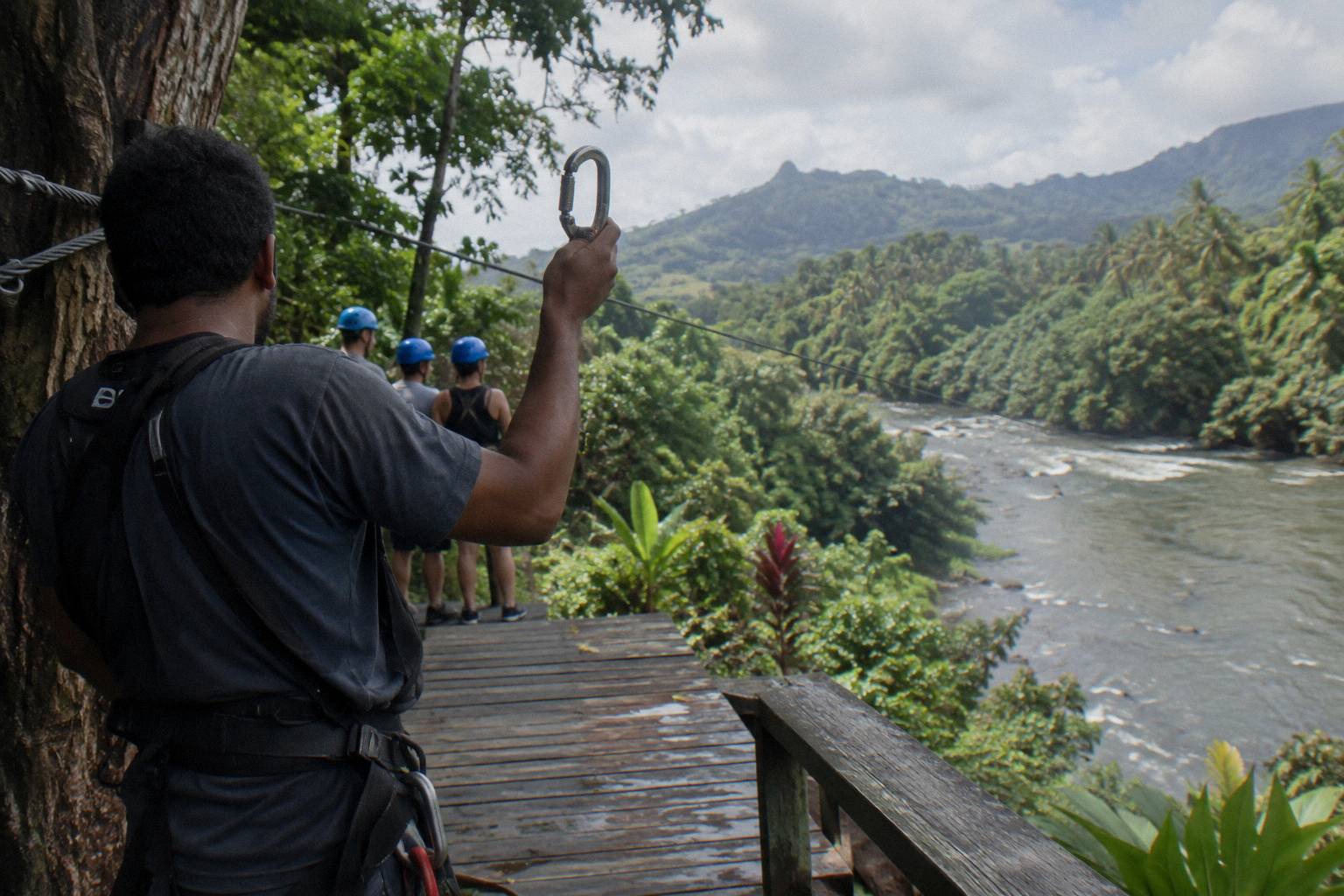
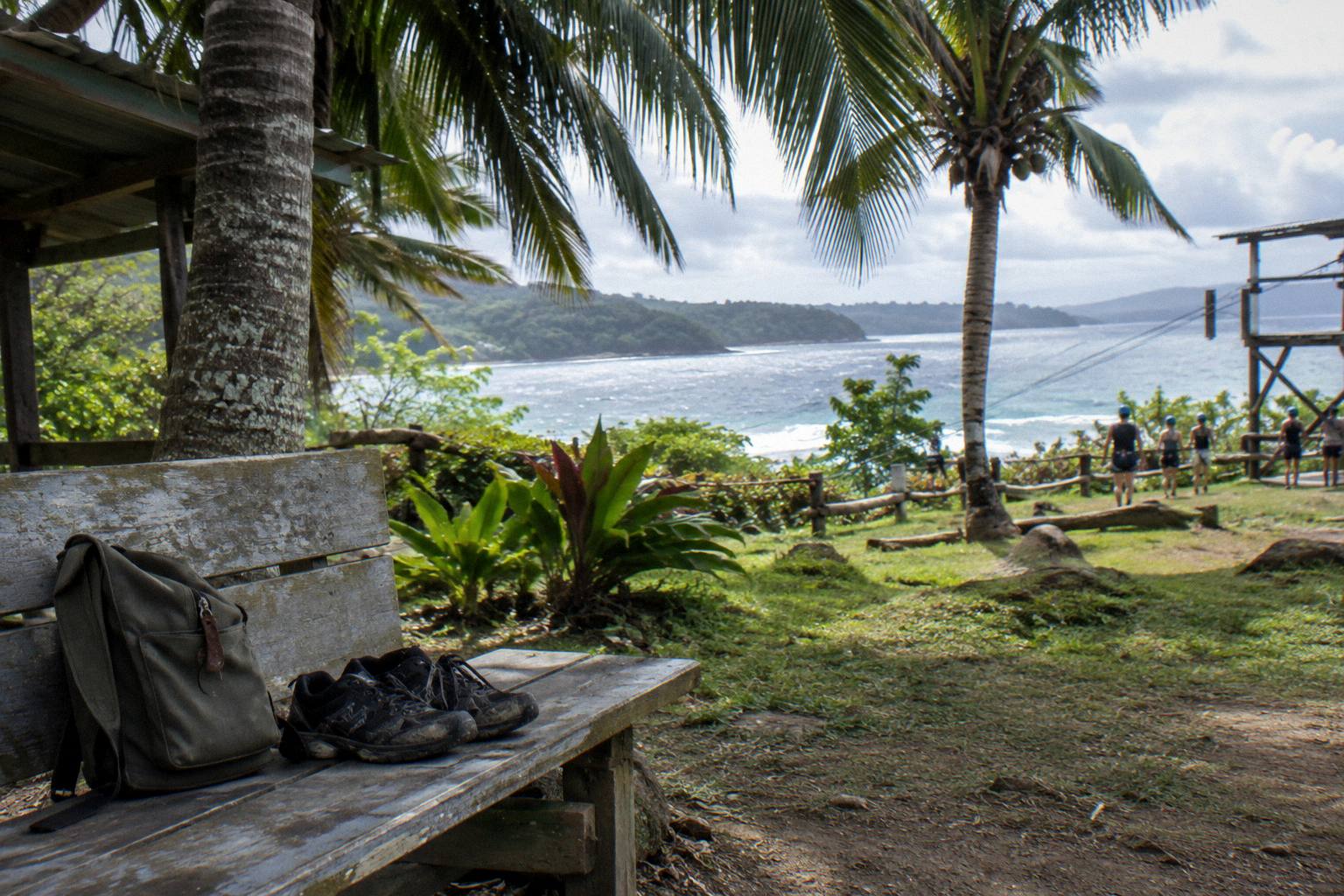
The briefing is where the rider rules become enforceable. Zip Fiji lists what to wear, comfortable clothing that does not interfere with the harness, closed-toe sport shoes best, strap-on sandals acceptable, no bare feet, and what stays off the course, water bottles, backpacks, belt packs, and its own climbing gear, which is not allowed. A rider who shows up in skirts, dresses or bathing suits is sent to change, because loose and flowing clothing interferes with the harness. Sleeping Giant's list is shorter: waterproof shoes, a towel, sunscreen, bug repellent, and a camera and glasses strap.
Group size cuts both ways. A group of 16 at Momi Bay moves as a supervised unit with 5 guides along it, which is a different thing from a self-ride course where a rider clips and launches alone. Sleeping Giant's operator page describes its Zipline and Safari Tour as about 6 hours door to door, with the activity itself about 4 hours plus about 2 hours round trip, which leaves room for unlimited rounds on the 7 lines and the guided jungle walk.
No published lifespan for zipline equipment is sourced anywhere behind the Zip Fiji tour documentation, so nothing is claimed; what the standards do require is inspection, documented pre-use checks and annual inspection by a qualified person, and that is the system that answers the age-of-equipment question in practice.
Who Should Not Ride At Each Course
Zip Fiji's FAQ lists riders not recommended for the course: people with asthma, balance problems, epilepsy, heart problems, some disabilities, back, neck or shoulder problems, and pregnancy, plus anyone intoxicated. Sleeping Giant's booking page lists pregnant women, altitude sickness and recent surgeries as not suitable. The combo listings add their own lists per product, and those lists never transfer between products.
The per-product rule is the one people break most often by assuming. The mud pool combo booking page lists people over 70, wheelchair users and people with heart, back or kidney problems as not suitable, for that product only. The Coral Coast pickup and the Biausevu waterfall combo pages list back problems and fear of heights among their not-suitable groups. The abseil combo lists claustrophobia and fear of heights, which makes sense given a 40 m abseil into the Tau Caves. A rider cleared for the standard Momi Bay course is not automatically cleared for the abseil combo, and vice versa.
| Listing | Not suitable, per that product's own page |
|---|---|
| Zip Fiji course standard listings | Asthma, balance problems, epilepsy, heart problems, some disabilities, back, neck or shoulder problems, pregnancy, intoxication (operator FAQ) |
| Sleeping Giant safari listing | Pregnant women, altitude sickness, recent surgeries (booking page) |
| Mud pool combo | Over 70, wheelchair users, heart, back or kidney problems |
| Abseil combo | Claustrophobia, fear of heights |
| Coral Coast pickup and Biausevu waterfall combos | Back problems, fear of heights |
Pregnancy is the one constant: every operator page and booking page consulted lists pregnancy as not suitable, and that is stated plainly here without medical advice attached. General practice in the industry, as distinct from either operator's rules, lists pregnancy, recent injuries and serious heart or back conditions as reasons not to ride, and advises asking a doctor first, but the rules that bind a booking are the operator's own.
The physical requirements deserve the same attention. Harness load and sudden stops put compressive and shear loads on the spine at launch and landing, which is why riders with active back problems or recent spinal surgery are advised against riding, and why "I'll be fine" is not a plan. The uphill walk requirement at both courses, 15 minutes at Momi Bay, 10 to 15 minutes plus about 20 trail stairs at Sleeping Giant, is a fitness test embedded in the tour, and it exists because platforms are not reachable by vehicle.
Age and weight deserve their own careful reading, and the dedicated guides cover them in full: age and kids on a Fiji zipline for the 3-year minimum and the adult-companion rule, and the weight guide above for the 135 kg FAQ figure and how booking pages differ from it.
For groups that want the abseil plus the course, the combo adds 3 abseils including the 40 m descent into the Tau Caves, with the same meal and Nadi shuttle, rated 4.8 from 39 reviews.
Weather Cancellation And Opting Out
Zip Fiji states its tour runs in all weather except lightning overhead, high winds and especially heavy rain, which means rain alone does not stop the course and riders should expect to ride damp. Sleeping Giant states no weather rule on its pages, so nothing is claimed for that park. The opt-out at Momi Bay is published: after the first zip, a guest who cannot continue is walked back to the Welcome Centre.
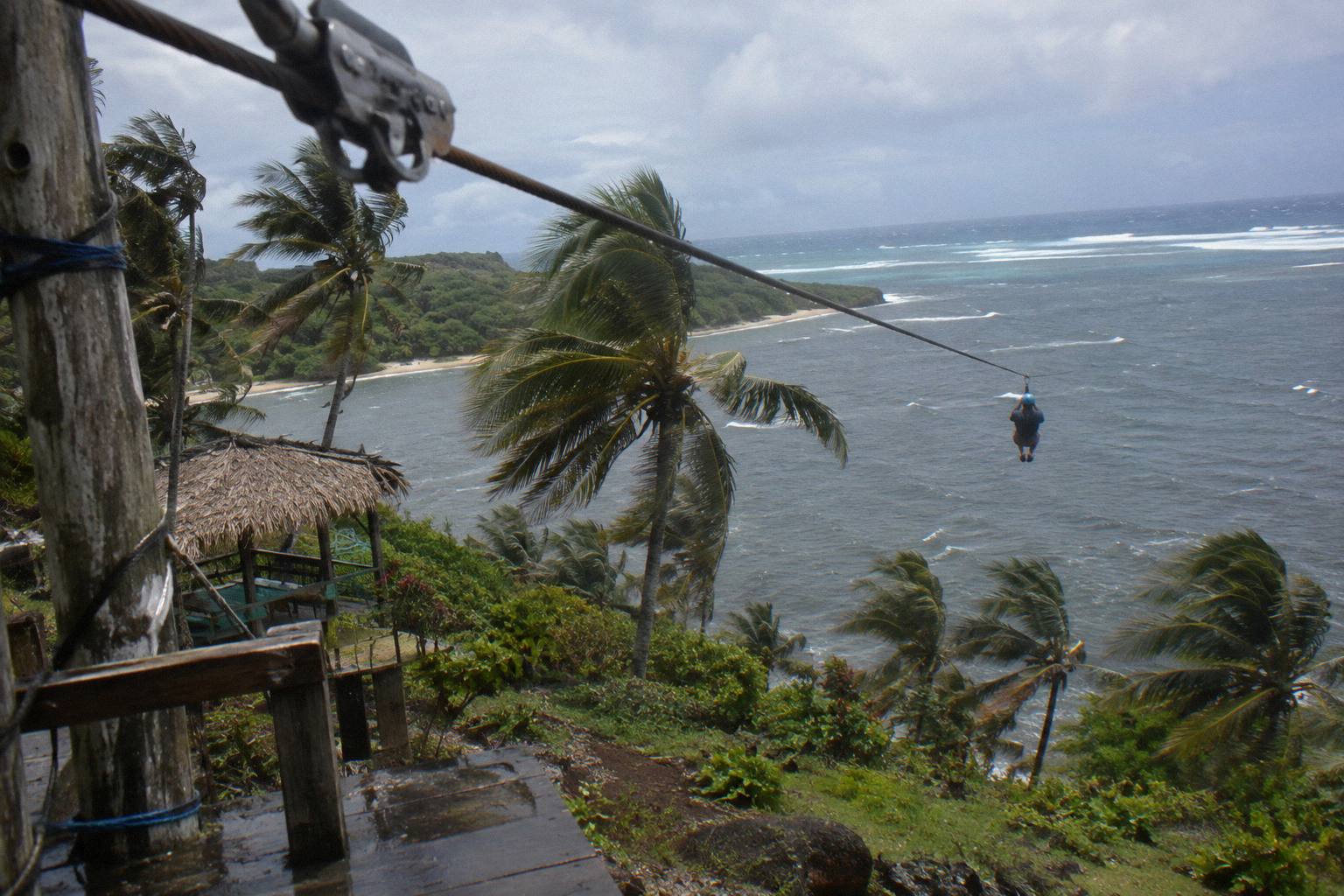
The weather rule matters for planning because it sets expectations in both directions. Rain does not cancel the Momi Bay tour, so booking it in the wet season is not a wasted booking, but showing up expecting blue skies is a setup for disappointment. Nadi has a tropical monsoon climate with a short dry season in July and August and a long wet season through the remaining months, receiving 1,999.4 mm a year against a mean daily maximum of 30.2 degrees Celsius, per the 1991 to 2020 airport normals. The South Pacific tropical cyclone season runs officially from 1 November to 30 April, which is worth knowing for a trip that crosses those months, and the dedicated Fiji zipline in the rainy season guide works through the whole question.
The opt-out policy is the underrated half of the safety picture. A first-time rider's real fear is usually not the first zip, it is being trapped into fifteen more after discovering the first one was too much. Zip Fiji's published answer is that the guest is walked back to the Welcome Centre after the first zip, no drama attached. Sleeping Giant's structure offers something similar in practice, since the 7 lines can be ridden in rounds and the tour wraps the jungle walk and lunch around them, though the park publishes no formal opt-out rule, so ask the operator about it rather than assuming.
Lightning is the bright line. Standards and operator practice treat overhead lightning as a stop condition, and a course with cables strung between trees and platforms above a forest floor is exactly the environment where a storm overhead means getting people down and inside. If a tour is called off, the cancellation terms are the next thing that matters: every booking page for these listings carries free cancellation up to 24 hours before the start for a full refund. Booking direct with an operator is a different contract, and the direct terms differ from the booking page, so the cancellation guide is worth a read before choosing which way to pay.
Timing within the day is a smaller but real decision, and the best time of day and year for ziplining in Fiji covers it from the weather and light angle.
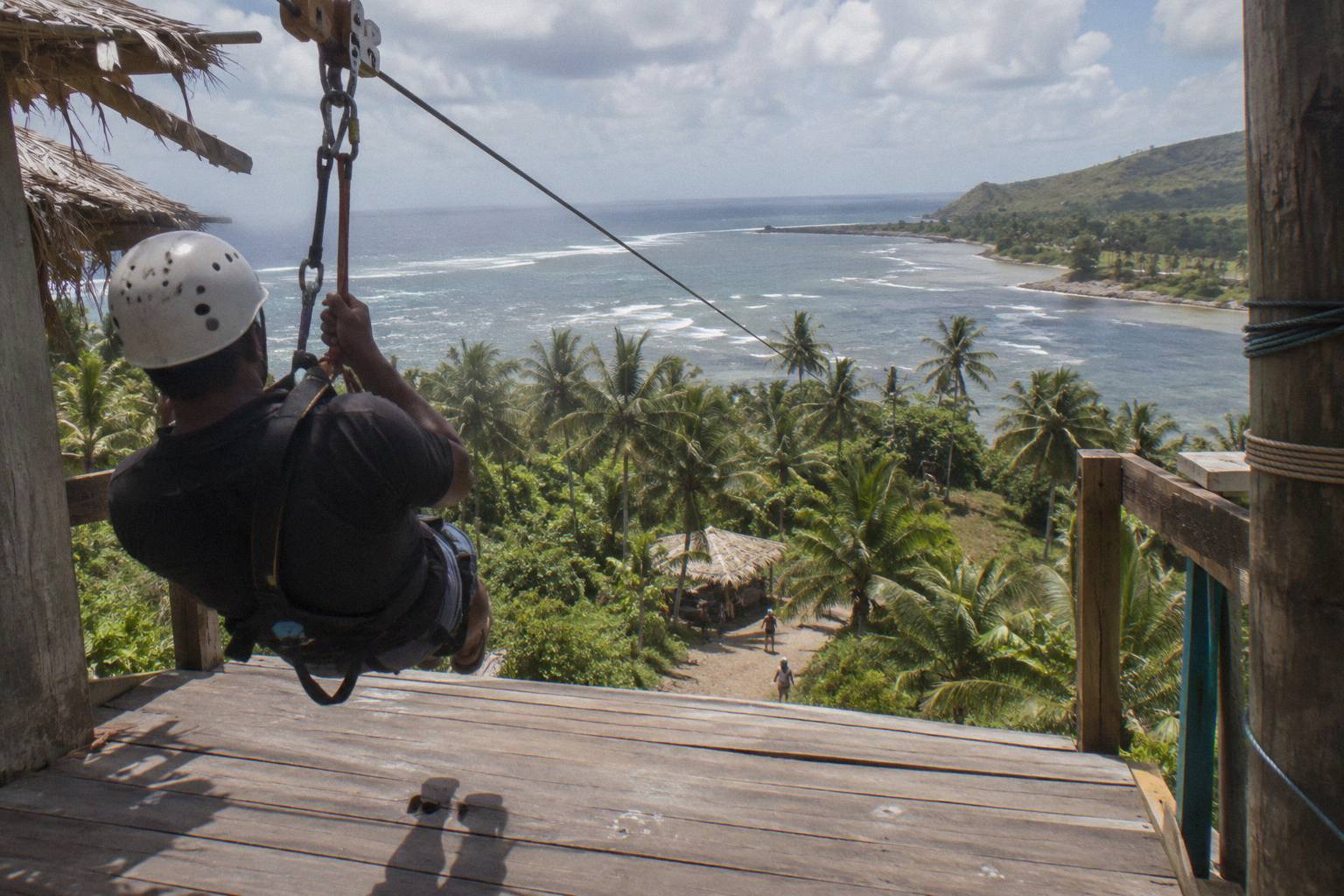
Questions To Ask Before You Pay
Three questions cover most of the safety-relevant ground: what are this listing's exact age, weight and health rules, since operator FAQs and booking pages can differ; what happens if the tour is cancelled for weather; and who in the group cannot ride under the published not-suitable list for that specific product. Asking them costs nothing and prevents the two most common booking mistakes.
Those two mistakes are paying for a rider who is excluded by the rules, and assuming one listing's rules apply to another. Both are avoidable in ten minutes of reading before payment.
The age and weight question deserves the most care, because it is where published sources genuinely disagree. Zip Fiji's FAQ figures, age from 3, under 135 kg and fitting the equipment, are printable and attributed, but booking pages for the same course carry different thresholds, so the confirmation worth having before paying is with the operator, not with a summary. At Sleeping Giant the disagreement is between the park's own FAQ and the booking page, and no number for that park is printed here for exactly that reason. Confirm with the park, in writing if you can, for the specific date and the specific riders in your group.
The weather question is simpler. Ask what happens if the operator calls the tour off, and read the cancellation terms on the booking page before paying rather than after. The 24-hour free cancellation on these listings gives a family room to lock a date early and adjust later, which is worth doing in peak season, and the how to book a Fiji zipline guide walks through the whole sequence.
The group question is the one people skip. Every listing carries a not-suitable list, and the lists differ by product. A grandparent cleared for the standard course may be excluded from the mud pool combo by the over-70 rule on that listing's own page. A rider with claustrophobia is fine on the open course but not on the abseil combo with its descent into the caves. Read the list for the product you are actually booking, and where a group splits between products, read both lists.
What Trips People Up Before You Book
The recurring mistakes are assuming one listing's rules apply to every listing on the same course, trusting a summary age or weight figure instead of confirming with the operator where sources disagree, ignoring the uphill walk requirement and dressing for it badly, and treating the combo add-ons as the same product as the standard course when each carries its own not-suitable list. Every one of these is avoidable in ten minutes of reading before payment.
The worst version of the first mistake is the age and weight one. A family reads a figure attached to one course, books a different listing, and arrives to find the rule they relied on belongs to the other park. The fix is mechanical: match the rule to the product by name, and where the operator's own FAQ and the booking page disagree, as they do at Sleeping Giant, confirm with the operator before paying rather than after booking.
Dressing badly costs a ride. Skirts, dresses and bathing suits are not appropriate at Zip Fiji, bare feet are banned, and closed-toe sport shoes are best. A rider in flip-flops may be turned away or held to a strap-on sandal at best, and the walk requirement makes the shoe choice matter twice, once on the trail and once on the platform. The packing guide covers the full list, including the camera strap rule and what stays off the course.
The combo listings deserve their own read. The abseil combo adds a 40 m descent into the Tau Caves, which is why claustrophobia appears on its not-suitable list. The mud pool combo lists people over 70, wheelchair users and heart, back or kidney problems. The Biausevu waterfall combo adds a 45 minute hike and a kava ceremony across an about 8 hour day. None of these lists transfers to the standard course, and the standard course's list does not transfer to them.
The Coral Coast pickup listing is worth a look for visitors staying south of Nadi: the same 16-line course with a 1 hour van each way from Coral Coast hotels, from US$115 per person, rated 4.9 from 28 reviews, with free cancellation up to 24 hours before the start on the booking page.
Finally, do not book a zipline for someone who has not read the health rules, and do not book one for yourself while ignoring your own. The lists exist, they are specific, and they are enforced by the people who clip you in. The safety decision is made at booking, not at the platform.
Common Questions About Zipline Safety
Is Ziplining In Fiji Safe?
No safety statistic for ziplining in Fiji is published, so the answer is built from what is known: ziplining carries real risk, documented in United States emergency-department data dominated by falls and fractures. The two courses near Nadi run guided tours with briefings, fitted equipment, published health rules and, at Momi Bay, 5 guides for up to 16 guests. Read the rules for the specific listing, and match them to your own fitness before booking.
How Many People Get Injured Ziplining?
United States emergency departments treated an estimated 16,850 zipline injuries from 1997 through 2012, and an estimated 46,572 from 2000 to 2024. Falls caused 77.3 percent of injuries in the first study and fractures were 46.7 percent. Of 9,397 pediatric zipline injuries studied from 2009 to 2015, 45.9 percent occurred on home-made ziplines and 54.1 percent on playground ziplines, not commercial tours. No Fiji figure exists in any source here.
What Safety Standards Do Commercial Ziplines Follow?
ASTM F2959 sets criteria for the design, manufacture, installation, operation, maintenance, auditing and major modification of zip lines and canopy tours used commercially. ANSI/ACCT 03-2019 covers design, construction, inspection, operation, maintenance and staff training. Both call for documented pre-use checks before participants ride and annual inspections by qualified persons, and faster lines carry a primary and a backup brake.
Can I Change My Mind After The First Zipline?
At Zip Fiji's Momi Bay course, yes: the operator states that after the first zip, guests who cannot continue are walked back to the Welcome Centre. Sleeping Giant publishes no formal opt-out rule, so ask the park before booking if this matters to a rider in your group.
Does Rain Stop A Zipline Tour In Fiji?
Not by itself at Momi Bay. Zip Fiji states the tour runs in all weather except lightning overhead, high winds and especially heavy rain. Nadi's climate is a tropical monsoon one with a short dry season in July and August, so rain is ordinary for most of the year. Sleeping Giant states no weather rule, so check with the park when booking.
Who Should Not Go Ziplining In Fiji?
Per the operators' own pages: at Zip Fiji's course, people with asthma, balance problems, epilepsy, heart problems, some disabilities, back, neck or shoulder problems, and pregnancy, plus anyone intoxicated. At Sleeping Giant, the booking page lists pregnant women, altitude sickness and recent surgeries. Combo listings add their own not-suitable lists, including over-70 and heart, back or kidney rules on the mud pool combo and claustrophobia on the abseil combo, and those lists apply to those products only.