Zipline Weight Limits At The Two Fiji Courses: What The Operators Allow
One Fiji course publishes a clear limit in its FAQ, the other publishes two different ones in two places. Here is exactly what each operator says, why the limits exist in physics rather than policy, and what to settle before you hand over money.
Short answer
Zip Fiji's FAQ at the Momi Bay course says riders must weigh under 135 kilograms and fit the equipment as the Head Guide decides, with no maximum age and a minimum age of 3. Sleeping Giant Zip Line at Sabeto prints no single reliable number, because its own FAQ and the booking page carry different thresholds, so confirm age and weight with the park before paying.
| Fact | Detail |
|---|---|
| Zip Fiji course location | Tau Village, Momi Bay, 35 minutes from Nadi per the operator |
| Zip Fiji weight rule | Under 135 kg and able to fit the equipment, as the Head Guide decides (operator FAQ) |
| Zip Fiji minimum age | 3 years, under-18s accompanied by an adult (operator FAQ) |
| Zip Fiji maximum age | None (operator FAQ) |
| Sleeping Giant weight rule | No number printed here; the park FAQ and the booking page carry different thresholds |
| Sleeping Giant course | 7 lines over 700 m, lines of 80 to 160 m, speeds up to 40 km/h |
| Why limits exist | Rider weight drives arrival speed and braking load; minimums stop light riders stalling short |
| Main Momi listing price | From US$100 per person, varies by date and group |
What Is The Weight Limit At The Zip Fiji Momi Course?
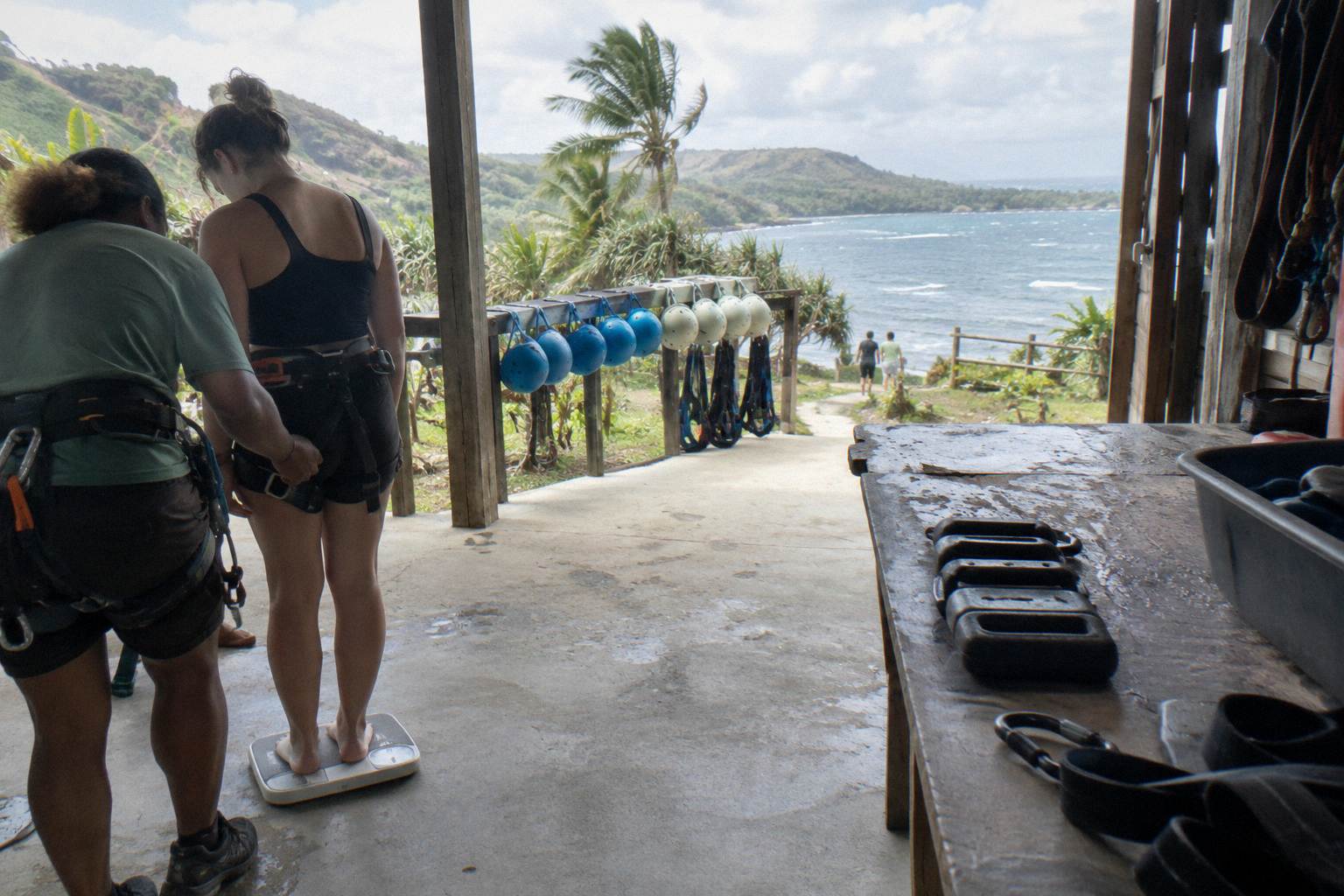
Zip Fiji's own FAQ gives the rule in two parts: weigh less than 135 kilograms, and fit the equipment as determined by the Head Guide on the day. There is no maximum age, the minimum age is 3 years, and children under 18 must ride with an accompanying adult. The 135 kilogram figure is the operator's own published threshold, and it is the only number worth treating as the real limit for this course.
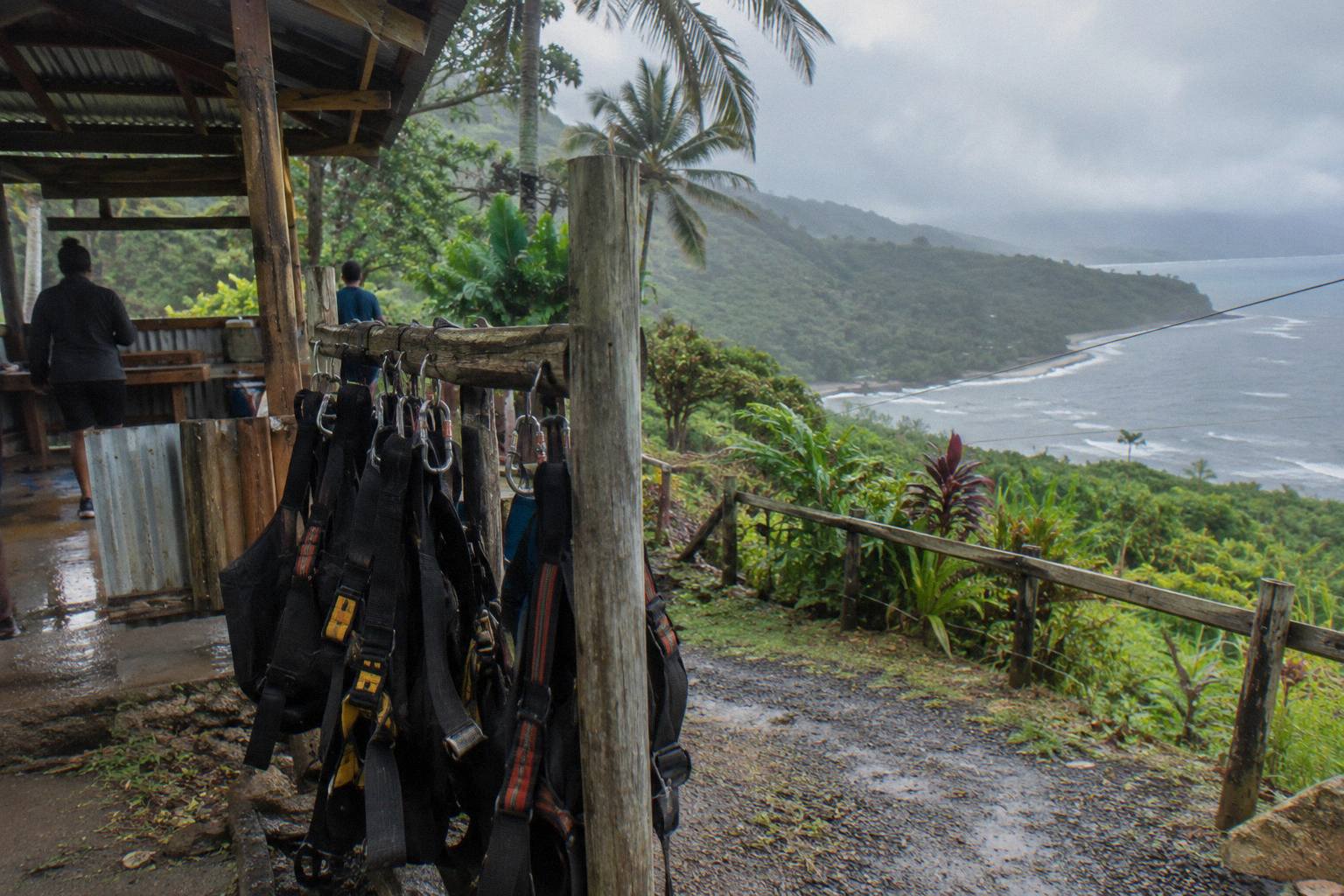
The two-part wording matters more than most people realise. The 135 kilogram ceiling is the first gate, but the second gate, fitting the equipment, is judged in person by the Head Guide. A rider who is under the ceiling but whose harness cannot be adjusted to fit safely does not ride, and that call belongs to the guide team, not to a booking confirmation. Zip Fiji frames it as a single eligibility test rather than a number you can clear from home, which is why the operator's own wording is worth reading in full on the Zip Fiji FAQ.
There is a wrinkle to know about before you book any Momi Bay listing. Booking pages for the same 16-line course carry different thresholds than the operator states directly, so the number you see at checkout may not match the number above. Print nothing from that mismatch into your planning except the practical lesson: what the operator states directly is the authoritative version, and if your weight is anywhere near a boundary, confirm with Zip Fiji directly before you pay. The Fiji Zipline Adventure and Cave Exploration listing, from US$100 per person in US dollars as a from price that varies by date and group, covers the full 16-line course, the cave tour, the shuttle and the meal, and it carries free cancellation up to 24 hours before the start on the booking page.
The same FAQ sets the physical conditions that travel alongside the weight rule, and they decide more days than the scale does. Riders must walk 15 minutes uphill over uneven ground unassisted, have full range of motion in arms, shoulders, neck and back, and be able to stand on a platform about five stories high without severe anxiety or dizziness. Zip Fiji also lists asthma, balance problems, epilepsy, heart problems, some disabilities, back, neck or shoulder problems and pregnancy as reasons the tour is not recommended, and intoxicated people may not take part. Every one of those is an operator-stated rule, not a judgement call, and each one can end a booking as firmly as the kilogram figure. For the full picture on ages and family booking, the companion piece on Fiji zipline age rules and kids breaks down the age side separately.
What Is The Weight Limit At The Sleeping Giant Course?
Sleeping Giant Zip Line at Sabeto prints no single weight number you can rely on, because the park's own FAQ and the booking page list different thresholds. The practical answer is procedural: confirm your age and weight with the park directly before you pay, and treat any third-hand figure, including one quoted in a review or a summary, as unreliable.
That may read like an evasion, so it is worth being precise about what is going on. The park's FAQ states one set of age and weight thresholds, and the booking page for its zipline safari states another. Both come from the operator's side of the fence, both are current, and they do not agree. Rather than pick one and let you plan around a number that the park may not honour, the safer reading is that the thresholds are applied case by case at the park, and the only voice that counts is the park's own staff answering your specific question before you pay. The Sleeping Giant zipline FAQ is where the park's own version lives.
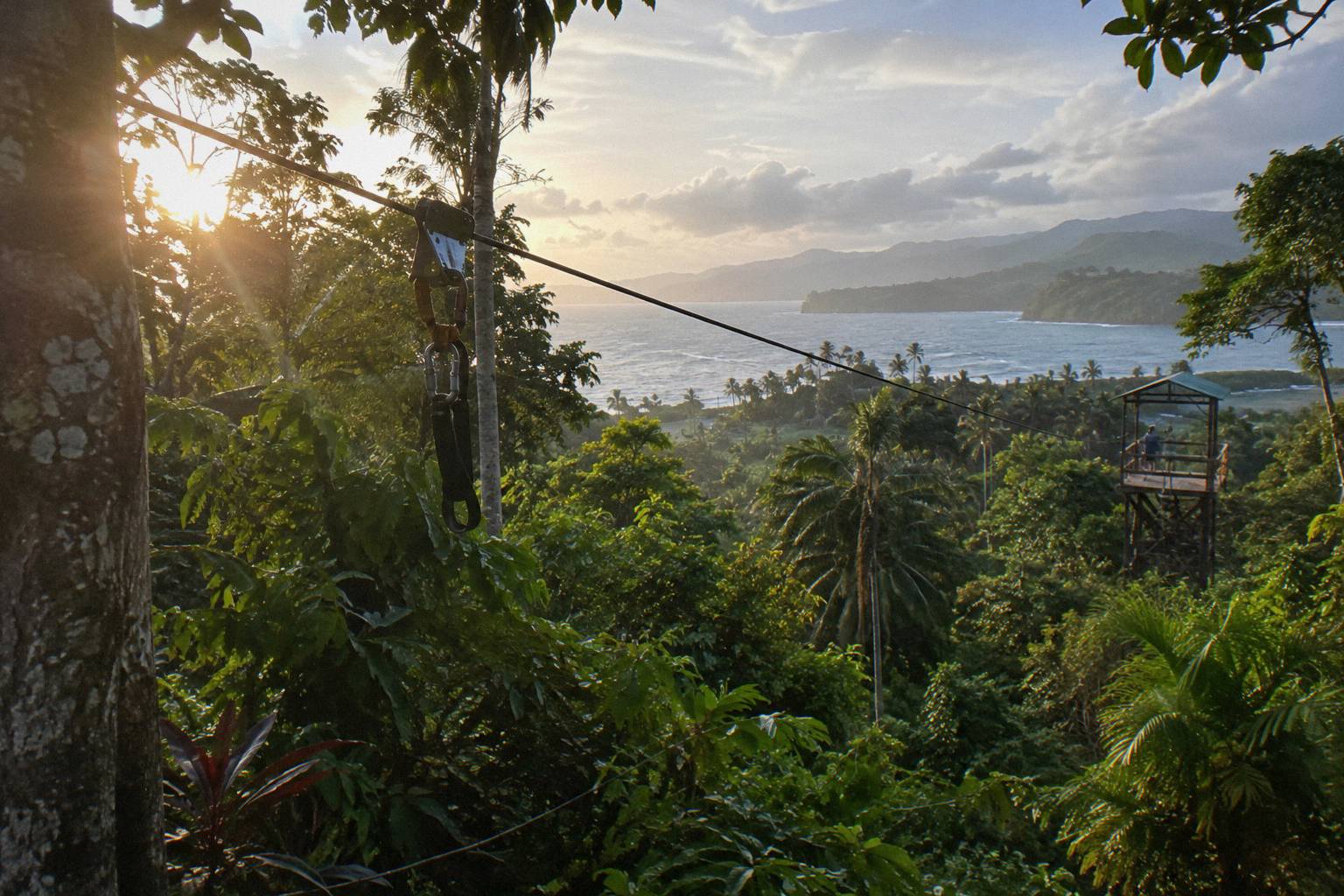
What the park does state clearly is the fitness requirement, and it functions as a second gate alongside whatever weight threshold applies. Riders need to walk 10 to 15 minutes uphill over uneven ground unassisted, manage about 20 trail stairs, and be comfortable at heights over 100 feet. The booking page lists pregnancy, altitude sickness and recent surgeries among the not-suitable groups for the safari product. The Zipline and Safari Tour runs about 6 hours door to door with hotel pickup at 10am or 12pm from Denarau hotels, shared transfers complimentary between Vuda and the InterContinental with an extra charge per person outside that area, a deli lunch with a soft drink, unlimited rounds on the 7 lines, and the guided jungle safari walk past two waterfalls. The Zip Fiji tour is rated 4.7 from 67 reviews and priced from US$88 per person, a from price in US dollars that moves with date and group.
The park sits 20 minutes from Nadi per the operator, with about an hour each way from Denarau, so it is the closer of the two courses and the easier half-day-plus option if the Momi Bay schedule does not fit. If your weight case is straightforward and you simply want the jungle-and-waterfall version of the day rather than the cave version, the Nadi Zipline, Waterfalls, and Jungle Safari Tour with Lunch is the tour to price first, and free cancellation up to 24 hours before the start applies per the booking terms.
Why Do Zipline Weight Limits Exist At All?
Weight limits on commercial ziplines are physics, not preference. Heavier riders carry more momentum and arrive at the landing platform faster, so braking systems are tested at the extremes of rider weight and arrival speed. A minimum weight keeps a light rider from stalling short of the platform. Industry standards, including the ASTM F2959 practice for aerial adventure courses, set criteria for design, operation, maintenance and auditing of zip lines used commercially.
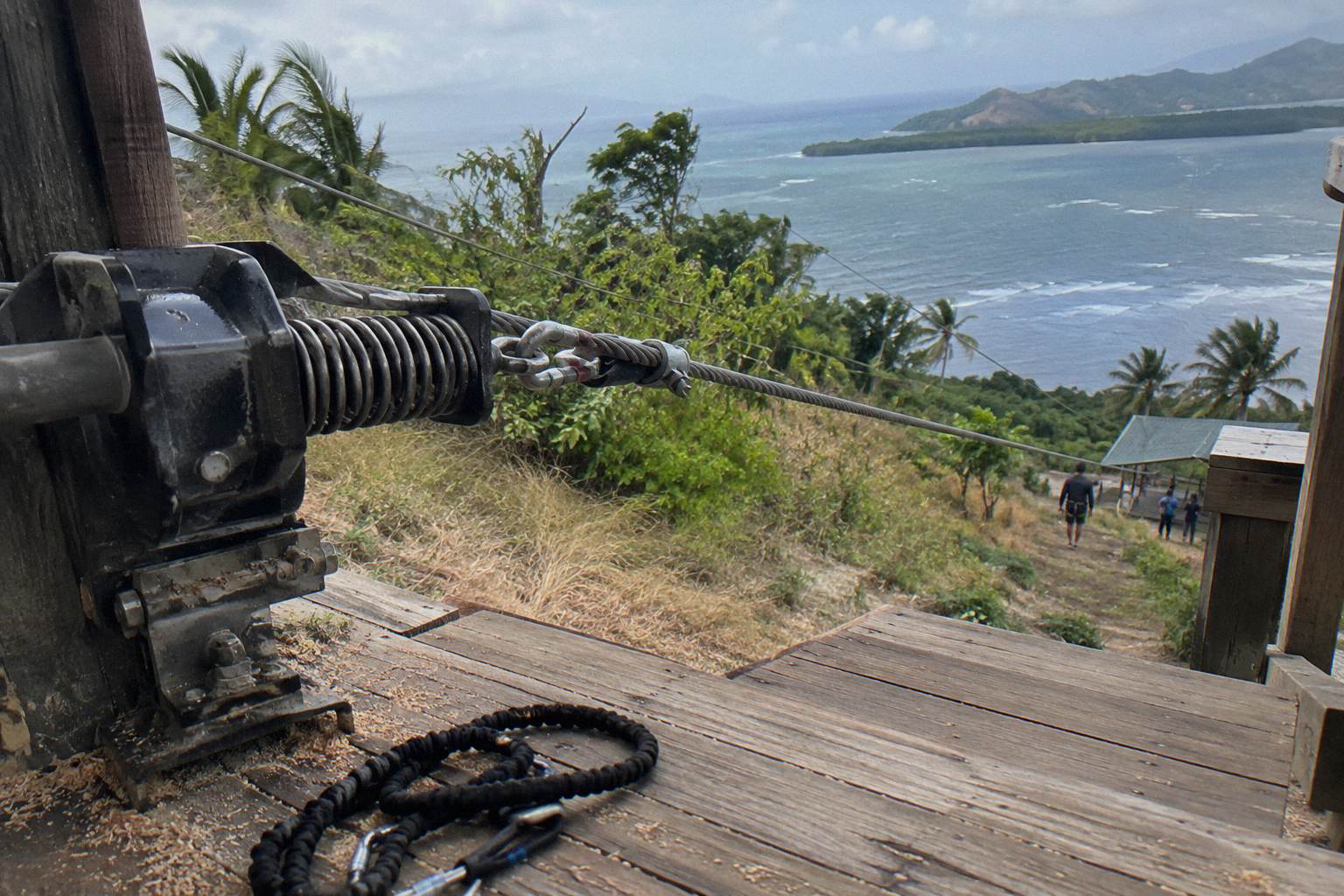
The mechanics are simple enough to state plainly. Gravity accelerates every rider down the cable at the same rate, but momentum is mass times velocity, and a heavier body at the same speed carries more energy for the brake to absorb. That is why the fitted-equipment clause in Zip Fiji's FAQ is not small print: a brake rated for a range of rider weights, paired with a harness sized for a range of bodies, only protects the people inside both ranges. The general industry guidance, and it is general context rather than either Fiji operator's rule, is that standards call for an emergency arrest device when failure of a primary brake could let landing speeds exceed about 10 km/h, and that faster zip lines carry a primary brake plus a backup brake. The ASTM F2959 standard page sets out the commercial criteria, and the Association for Challenge Course Technology publishes complementary guidance on design, inspection and staff training, including documented pre-use checks and annual inspections by qualified persons.
The minimum-weight end of the range gets less attention and causes more mid-line stops. A very light rider can lose momentum to friction and cable sag and stall short of the arrival platform, which is why the standards literature describes pull-in ropes and mechanical-advantage rescue systems as standard platform kit, and why guides train on an evacuation plan for abnormal conditions. Neither Fiji operator publishes a minimum weight in the sources available here, so if you are booking for a small child or a very light adult, that is a second question to put to the operator alongside the maximum. Typical commercial zipline speeds quoted by operators run 40 to 64 km/h in general, and Sleeping Giant itself says up to 40 km/h, which places both Fiji courses inside the band where braking, not gravity, is the engineering problem.
| Physics Factor | What It Means For A Rider | Where It Shows Up In The Rules |
|---|---|---|
| Heavier rider, same speed | More momentum for the brake to absorb | Maximum weight ceilings such as Zip Fiji's 135 kg FAQ figure |
| Light rider, low momentum | Can stall short of the arrival platform | Minimum weights operators apply case by case |
| Braking at the extremes | Brakes tested across the rider weight range | The equipment-fit clause decided by the Head Guide |
| Stall mid-line | Rider needs a pull-in rope or rescue system | Guides train on an evacuation plan for abnormal conditions |
For heavier visitors planning a Fiji trip, the practical upshot is that the limit is the first fact to confirm, before the price, before the date. Zip Fiji gives you a number to check against; Sleeping Giant gives you a conversation to have. Both are workable, but only one of them can be cleared from your sofa.
What Should You Do If You Are Near The Limit?
Measure yourself in the clothes and shoes you will actually wear, then contact the operator before you pay, not after. At Zip Fiji, ask the Head Guide specifically whether the harness and equipment will fit your height and weight. At Sleeping Giant, ask the park directly which threshold applies that day, since the two published versions differ. Free cancellation up to 24 hours before is a backstop, not a substitute for asking first.
The measuring part sounds obvious and is still where most people slip. Bathroom scales read differently, clothing and shoes add real mass, and a day of travel adds water weight that a morning checkup will not show. If your home scale in shorts reads just under the ceiling, the planning number for a harness fitting in running shoes is higher, not lower. Zip Fiji's rule is under 135 kilograms and fitting the equipment, so the gap between your true number and the ceiling is the margin you are living on. For a point of reference that appears only once: 300 pounds is about 136 kilograms, which sits just above the Zip Fiji ceiling, so a reader at that figure should assume the conversation with the operator is mandatory rather than optional.
The asking part has a right order. Confirm with the operator first, book second, and only then treat the 24 hour free-cancellation window on the booking page as the safety net for schedule changes rather than weight surprises. The main Momi listing, from US$100 per person in US dollars, and the abseil combo at from US$113, both carry the 24 hour window on the booking page, and both use the same Zip Fiji equipment, so one conversation with the operator covers either product. If you want the abseil version, the Nadi Abseiling, Zipline, and Cave Tour with Meal adds three abseils including a 40 metre descent into the Tau Caves on top of the 16 lines, and its booking page additionally lists claustrophobia and fear of heights among the not-suitable groups for that product specifically. Once your weight question is answered, check the live price for your date before committing a day of the trip.
One more distinction earns its keep here. Being under the published ceiling clears you at the scale but not necessarily at the fitting, because harnesses adjust within a range and body shape decides fit as much as mass does. That is exactly why Zip Fiji words the rule as the Head Guide determines, and it is why no booking page can truly pre-clear a boundary case. Riders close to the band's upper end should ask the fitting question explicitly, and riders above the band should ask whether any accommodation exists before planning the day around the tour. If the answer is no, better to learn it by email than at the Welcome Centre at 9:00 am with a shuttle already paid for.
Which Other Rules Travel With The Weight Limit?
At Zip Fiji, the weight limit is just one clause in a longer eligibility list: riders must be age 3 or older, with no maximum age, and anyone under 18 must be accompanied by an adult. You also need to manage a 15 minute unassisted uphill walk, have full range of motion in your arms, shoulders, neck and back, and feel comfortable standing about five stories up.
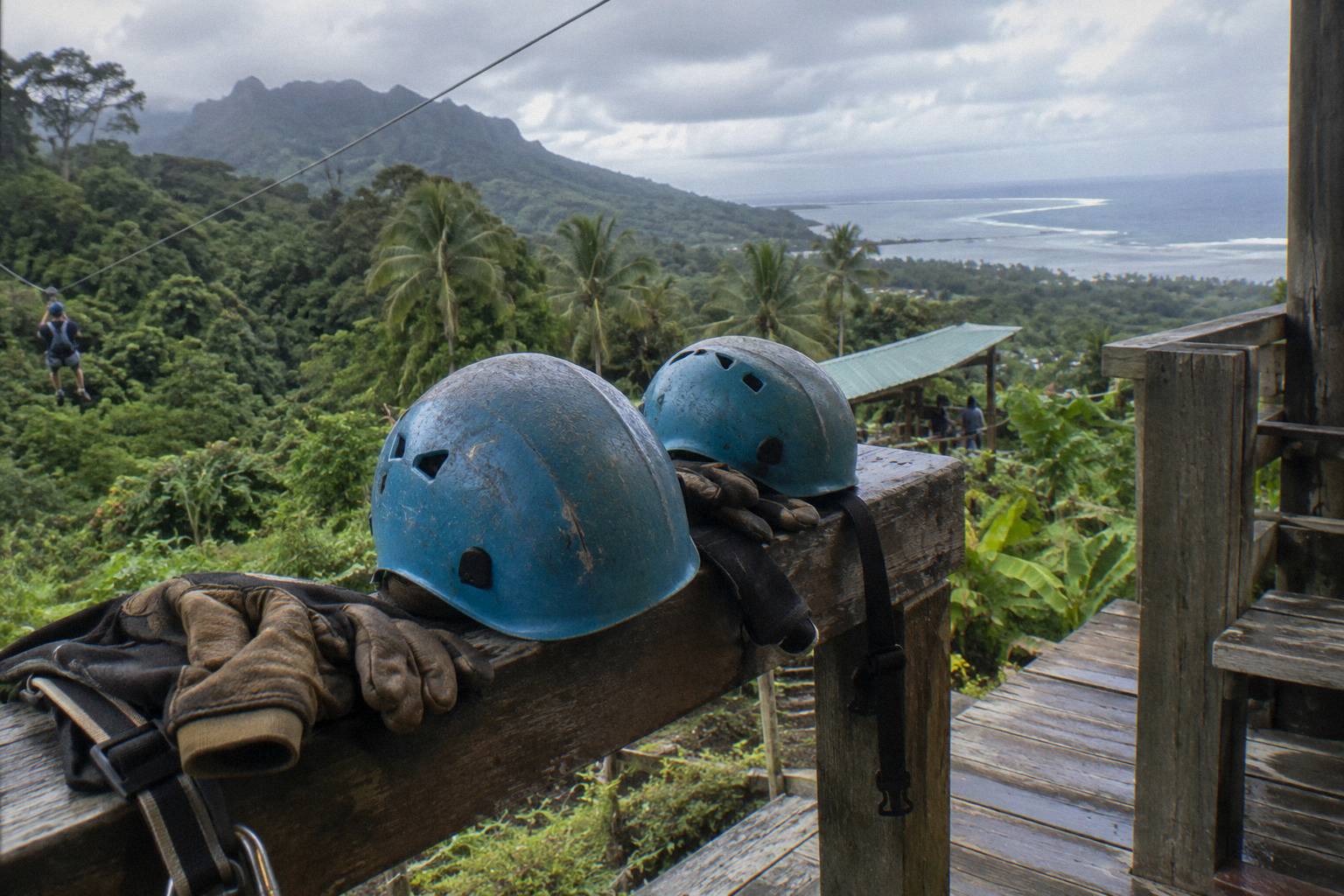
These per-product lists do not cross over, and treating them as one big Fiji zipline rulebook is the fastest way to plan wrong. The Zip Fiji course rules apply to the Momi listings, including the Coral Coast pickup version and the combo products built on the same course. Sleeping Giant's rules apply at Sabeto only. The combo listings layer their own exclusions on top: the mud pool combo's booking page lists people over 70, wheelchair users and people with heart, back or kidney problems as not suitable, while the Coral Coast pickup and Biausevu waterfall combo pages list back problems and fear of heights, each for those products only. If a medical condition in those lists matches your situation, that specific product is off the table regardless of your weight.
Pregnancy is the one exclusion that appears on every operator page and booking page consulted, at both courses and across every combo, so it deserves its own sentence rather than a footnote: pregnant riders are listed as not suitable everywhere here, and no medical advice is added to that. Anyone with a recent injury or a heart or back condition should raise it with the operator and their own doctor before booking, which is the general operator advice in the industry as well. The companion guide on who should not go ziplining works through those exclusions in full.
| Rule | Zip Fiji Momi Course | Sleeping Giant Sabeto |
|---|---|---|
| Published weight figure | Under 135 kg, operator FAQ | No number; park FAQ and booking page differ |
| Equipment fit | Decided by the Head Guide | Confirm with the park |
| Minimum age | 3 years, adult with under-18s | Confirm with the park |
| Maximum age | None | Confirm with the park |
| Uphill walk | 15 minutes unassisted | 10 to 15 minutes, about 20 trail stairs |
| Height comfort | Platform about 5 stories high | Comfortable over 100 ft |
| Pregnancy | Not recommended | Not suitable on the safari listing |
Wear and bring rules ride alongside these, and they interact with size more than people expect. Zip Fiji asks for comfortable clothing that does not interfere with the harness, names shorts, T-shirt and running shoes as typical, and rules out skirts, dresses and bathing suits, with closed-toe sport shoes best and no bare feet. Cameras are allowed only on a strap or a helmet strap, and no water bottles, backpacks or belt packs go on the course. Sleeping Giant asks for waterproof shoes, a towel, sunscreen, bug repellent and a camera or glasses strap. A harness that has to close over bulky clothing fits differently than one over a T-shirt, which loops back to measuring in what you will actually wear; the full packing breakdown is in what to wear and bring ziplining in Fiji.
How Do You Confirm Your Weight Case Before Paying?
Before you pay, send the operator your weight in kilograms, your height, and one direct question about whether the equipment will fit you on the day. At Zip Fiji, cite the FAQ wording, under 135 kilograms and fitting the equipment as the Head Guide determines. At Sleeping Giant, ask which threshold applies, since the FAQ and booking page differ. Save the reply, book after it arrives, and keep the 24 hour free-cancellation window as the backstop.
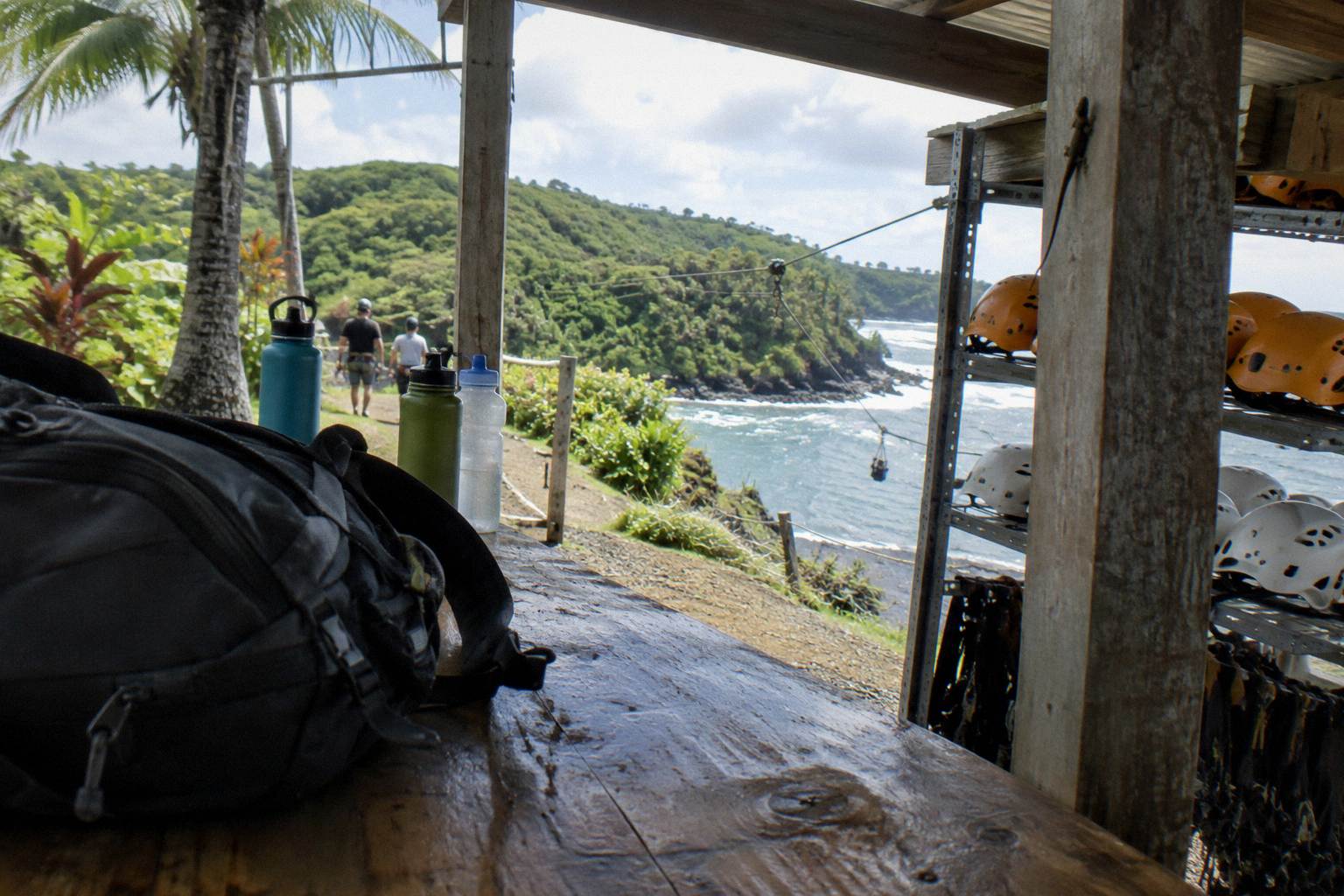
The order of operations is the whole trick. Travellers who book first and ask later end up relying on cancellation windows, which cover schedule changes but cannot undo a day built around a tour you cannot ride. Travellers who ask first get a written answer, a realistic decision, and usually a better choice of date, because the operator can also tell you which departure, 9:00 am or 2:00 pm at the Zip Fiji Welcome Centre, suits your transfer plan. The airport drop-off and private-transfer variants of the Momi course all use the same equipment and the same FAQ rules, so one confirmation covers whichever pickup version fits your hotel situation.
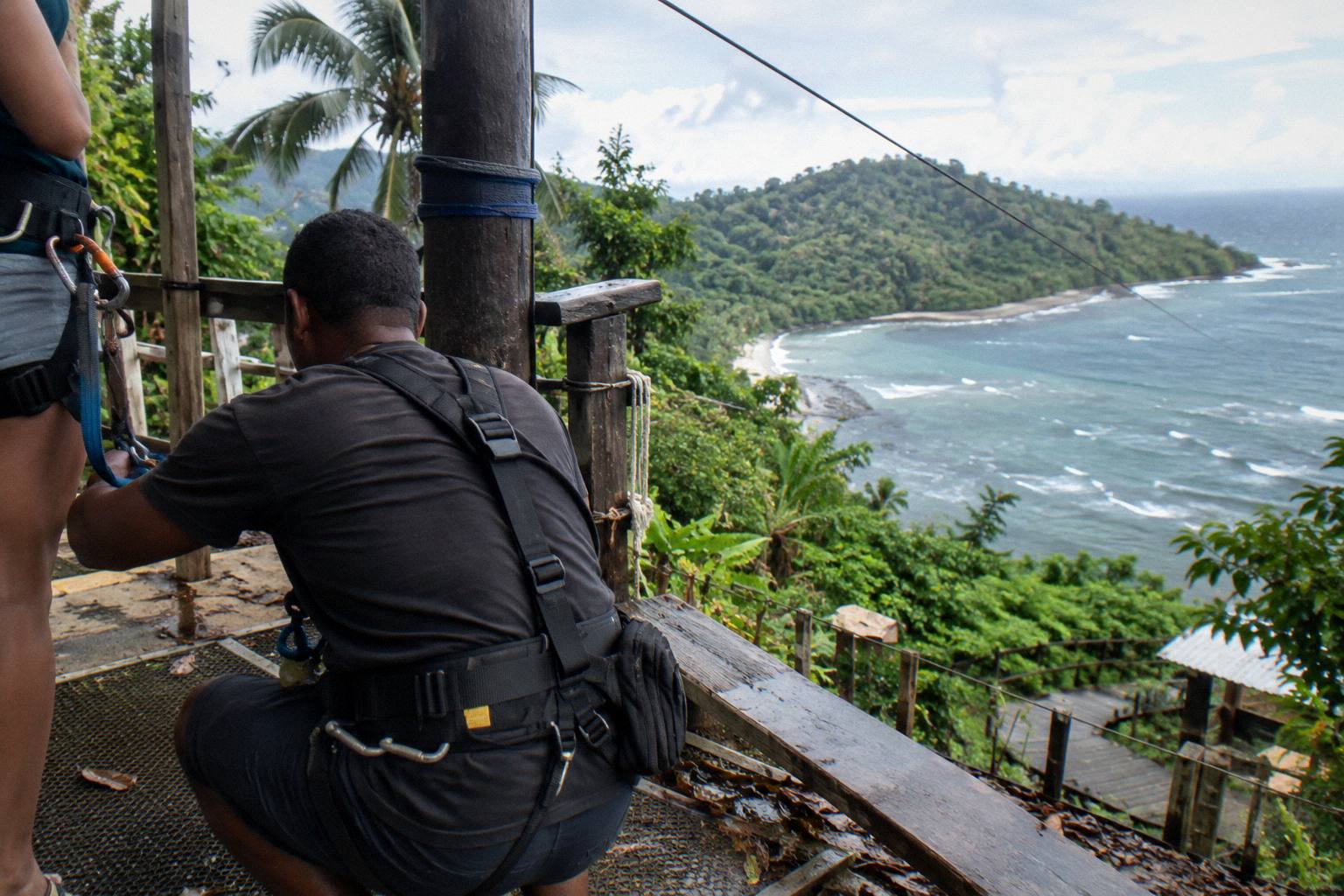
For groups, one more planning angle pays off. Mixed parties with one boundary-case rider should ask the operator what happens to the rest of the booking if the fitting fails on the day, because group bookings at Zip Fiji run up to 16 guests with 5 guides and the meal and shuttle are shared. Knowing the answer before you pay beats renegotiating it at the platform. Zip Fiji also states that a guest who cannot continue after the first zip is walked back to the Welcome Centre, which sets clear expectations for anyone anxious about the height rather than the weight. Weather sits outside all of this: the Momi tour runs in all weather except lightning overhead, high winds and especially heavy rain, per the operator, and no operator promises conditions.
Prices for planning purposes: the main Momi listing from US$100, the abseil combo from US$113, the Sleeping Giant safari from US$88, all per-person from prices in US dollars that vary by date and group, with the booking page showing the price for your date. See dates on the Largest Zipline, Meal Included link once your weight question is answered.
| Step | What To Do | Why It Matters |
|---|---|---|
| 1 | Weigh yourself in kilograms, in touring clothes and shoes | Home scales and clothing both shift the number |
| 2 | Email the operator with weight, height and the fit question | The Head Guide's fit call cannot be pre-cleared at checkout |
| 3 | At Sleeping Giant, ask which threshold applies | The park FAQ and booking page differ |
| 4 | Book after the written reply | Keeps the cancellation window for schedule changes, not weight |
| 5 | Save the reply with your booking | A written answer settles any day-of question |
What Trips People Up Before You Book
The three traps are trusting a booking-page threshold over the operator's own FAQ, assuming that being under the weight ceiling means you are automatically cleared to ride, and treating the 24 hour cancellation window as weight insurance. Booking pages for the Momi course show different figures from Zip Fiji's FAQ, the equipment-fit call belongs to the Head Guide on the day, and a refund cannot recover a lost day of a short trip built around the tour.
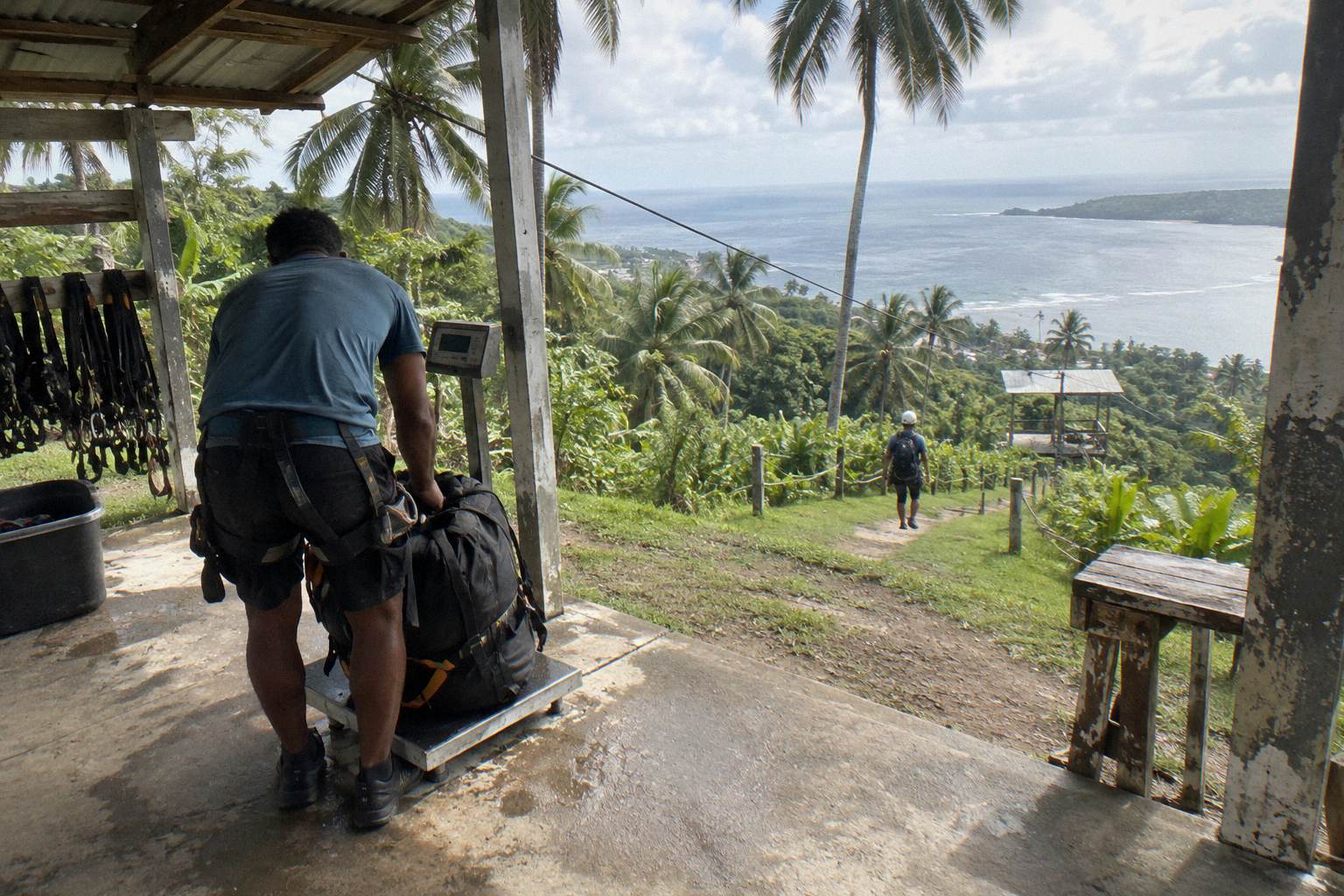
The first trap catches people through no fault of their own, because a checkout page looks authoritative. It is a sales surface, and for the Momi course its thresholds do not match the FAQ the operator publishes, so a boundary-case rider who clears the checkout figure can still face the Head Guide's fit decision at the platform. The second trap is the fit clause itself: 135 kilograms is a ceiling, not a promise, and harness adjustment ranges mean two riders at the same weight can get different answers. The third trap is the cancellation window, which is real and useful, from 24 hours before the start on the booking page for the main listings, but it refunds money, not time.
Weather belongs on the mental checklist too, since no operator promises conditions and Zip Fiji itself excepts lightning overhead, high winds and especially heavy rain. And a final small one: the weighing question. No source describes the weighing procedure at either course, so ask the operator how checks are done rather than assuming a scale at check-in, a question the blog on whether you get weighed before ziplining takes up directly. Ziplining carries real risk like any aerial activity, and the operators' rules are the ones that decide your day, so build the plan on their stated figures and their written answers.
Common Questions About Weight Rules
What Is The Weight Limit For The Zip Fiji Course?
Zip Fiji's FAQ says riders must weigh less than 135 kilograms and fit the equipment as determined by the Head Guide. Booking pages for the same course carry different thresholds, so confirm with the operator if you are near the limit before you pay.
Is There A Weight Limit At Sleeping Giant Zip Line?
The park's own FAQ and the booking page list different thresholds, so no single number can be relied on. Confirm your weight case with the park directly before booking.
Is 300 Pounds Over The Limit?
300 pounds is about 136 kilograms, which sits just above the Zip Fiji FAQ ceiling of under 135 kilograms. Contact the operator before booking.
Can I Ride If I Am Under 135 Kilograms But Very Tall Or Broad?
The second half of Zip Fiji's rule is fitting the equipment, decided by the Head Guide on the day, so send the operator your height and weight and ask the fit question in advance.
Do You Get Weighed Before Ziplining In Fiji?
No published source describes the weighing procedure at either course. Ask the operator how checks are handled when you confirm your booking.
Does The Weight Limit Include Clothes And Shoes?
Zip Fiji asks for comfortable clothing that does not interfere with the harness, with shorts, T-shirt and running shoes typical. Measure in what you will wear on the day, and ask the operator if your number is close to the ceiling.