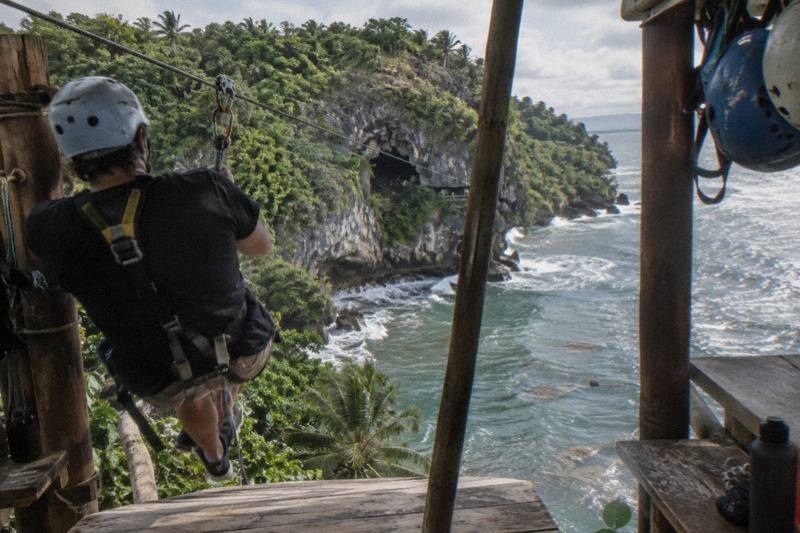
Do You Get Weighed Before Ziplining? Weight Checks At Two Fiji Courses
Whether you step on a scale before a Fiji zipline tour, what the weight rules are at Zip Fiji and Sleeping Giant, and what a 300lb rider should ask before booking.
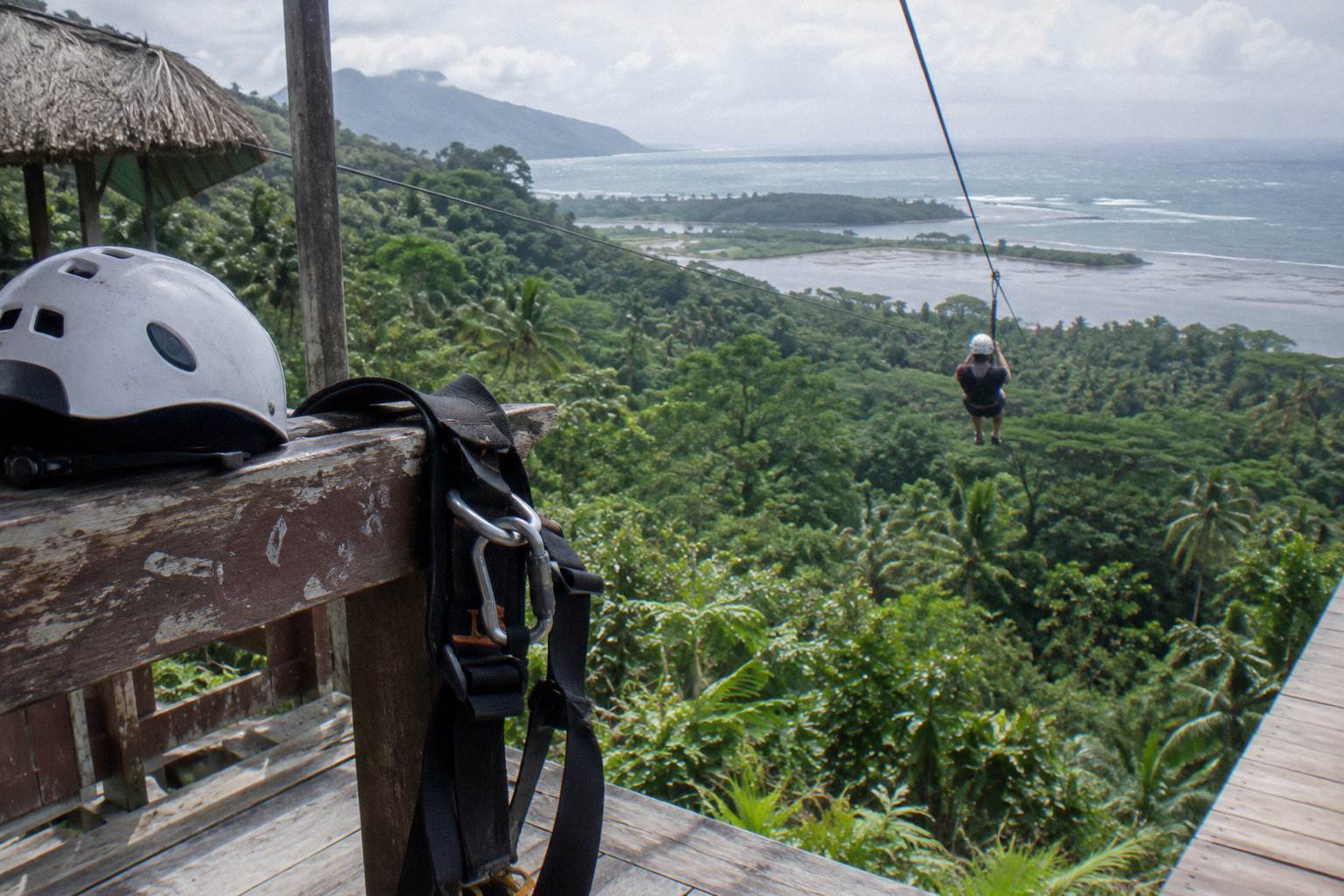
Before anything else: if a 16-line course with a cave, a meal and a Nadi shuttle sounds like the plan, the full course rundown sits on the Momi Bay zipline and cave exploration tour, and every listing there shares the same equipment rules. The short answer to the question in the title: neither Fiji operator describes a weigh-in at check-in. What each operator publishes instead is a weight threshold you are asked to meet, and a fit test on the harness that a guide, not a scale, decides.
| Fact | Detail |
|---|---|
| Weigh-in described by either operator | None described on the operator pages |
| Zip Fiji weight rule | Under 135 kilograms and fit the equipment, as the Head Guide decides |
| Zip Fiji minimum age | 3 years, per the operator FAQ |
| Booking-page thresholds | Different from the operator FAQ; no number applies universally |
| Sleeping Giant weight rule | No number printable; park FAQ and booking page differ |
| 300 lb in kilograms | About 136 kg, just over the Zip Fiji FAQ limit |
| Equipment decisions | Made by the Head Guide at Zip Fiji, by staff at the course |
| Cancellation on the booking page | Free up to 24 hours before the start |
Do You Get Weighed Before Ziplining?
No operator page for either Fiji zipline course describes a weigh-in, a scale at check-in, or a printed weight card. Zip Fiji's published rule works differently: you must weigh under 135 kilograms and fit the equipment, with the fit decided by the Head Guide on the day. Booking pages for the same courses carry different thresholds again, so the practical answer is to know your weight in kilograms before booking and to confirm it with the operator.
Neither the Zip Fiji operator site nor the Sleeping Giant site describes a weighing procedure for guests. No sourced page mentions guests being asked to step on a scale in public or in private, and nothing here should be read as a promise that no check ever happens. What the operators publish are eligibility rules, and those rules are enforced through the harness, the lanyards and the braking system rather than through a number read off a display.
The distinction matters for a first-time rider. A weigh-in is a procedure; a weight limit is a design input. The Zip Fiji FAQ, which is where the clearest rule sits, says riders must weigh less than 135 kilograms and be able to fit the equipment as determined by the Head Guide. Two things happen in that sentence: there is a number, and there is a judgement. The number is fixed. The judgement is made on the day by staff who see how the harness sits on the actual rider, and no booking page can make that call in advance.
Booking pages for the same Momi Bay course carry different thresholds from the operator FAQ, so confirm with the operator before you pay if your weight is anywhere near a limit. The same caution applies at Sleeping Giant, where the park's own FAQ and the booking page list different thresholds; no single number applies, so phone the park and confirm your situation in kilograms. A number quoted by a friend, a forum or an out-of-date page is not something to bet a holiday on.
If the weight question is settled and the plan is the 16-line course, the cave, the meal and the shuttle, the Fiji Zipline Adventure and Cave Exploration covers all of it from US$100 per person, rated 4.9 from 303 reviews, with free cancellation up to 24 hours before the start on the booking page. Prices shown are US dollars, from prices per person, and the date and group size move them.
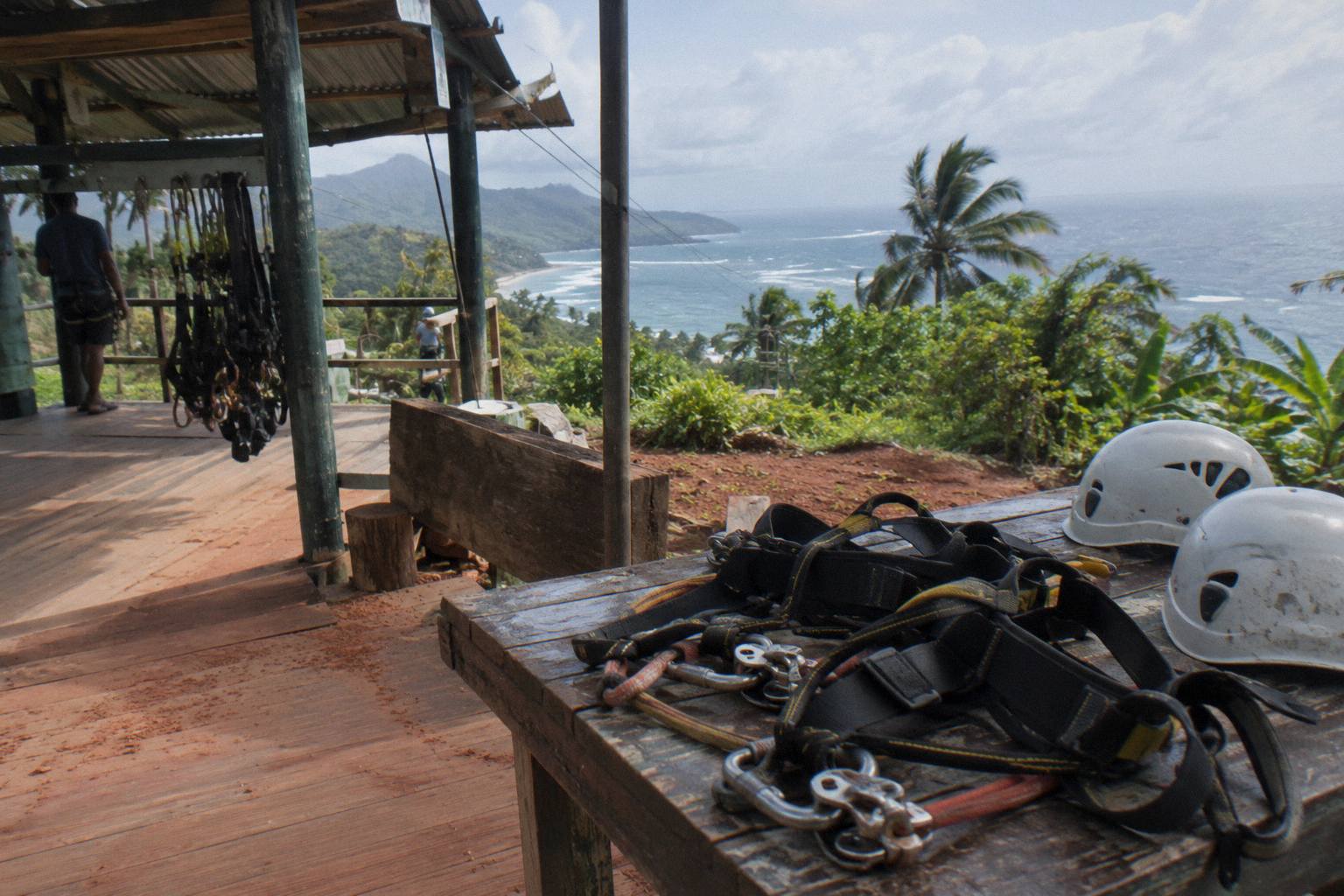
For a fuller treatment of the limits themselves, the Fiji zipline weight limit guide works through both courses, and the question of whether heavier people go faster on ziplines explains the physics behind the rule.
Can A 300lb Person Zipline?
At 300 pounds, a rider weighs about 136 kilograms, which sits just over the 135 kilogram limit in the Zip Fiji FAQ. That does not automatically end the conversation: the rule also requires fitting the equipment, and the Head Guide decides. But because booking pages carry different thresholds from the operator, a 300lb rider should phone the operator and ask about their exact situation before booking rather than relying on any single published number.
The gap is small. A 300lb rider sits just over the FAQ figure, close enough that the fit of the harness and the judgement of the guide become the deciding factors rather than the figure alone. Zip Fiji's FAQ also asks that riders be able to walk 15 minutes uphill over uneven ground unassisted and stand on a platform about five stories high without severe anxiety, so weight is one of several checks in the same paragraph.
The same question at Sleeping Giant cannot be answered with a number here. The park's FAQ and the booking page list different thresholds, and neither is printable as the rule. What the park does publish is a fitness requirement: be able to walk 10 to 15 minutes uphill over uneven ground unassisted, and be comfortable at heights over 100 feet. A heavier rider who clears those points should still confirm weight directly with the park before paying, in kilograms, with their height and build described, so staff can answer properly rather than guess.
If the answer comes back no at one course, it may still be yes somewhere, and a phone call costs nothing. It may also simply not be possible on a given day, for reasons that have nothing to do with the rider: harness sizes available that morning, the braking setup on the fastest lines, or wind conditions. Ziplining carries real risk and the guides on site make real decisions; a rider who phones ahead gets an answer from the people who will actually clip the carabiners.
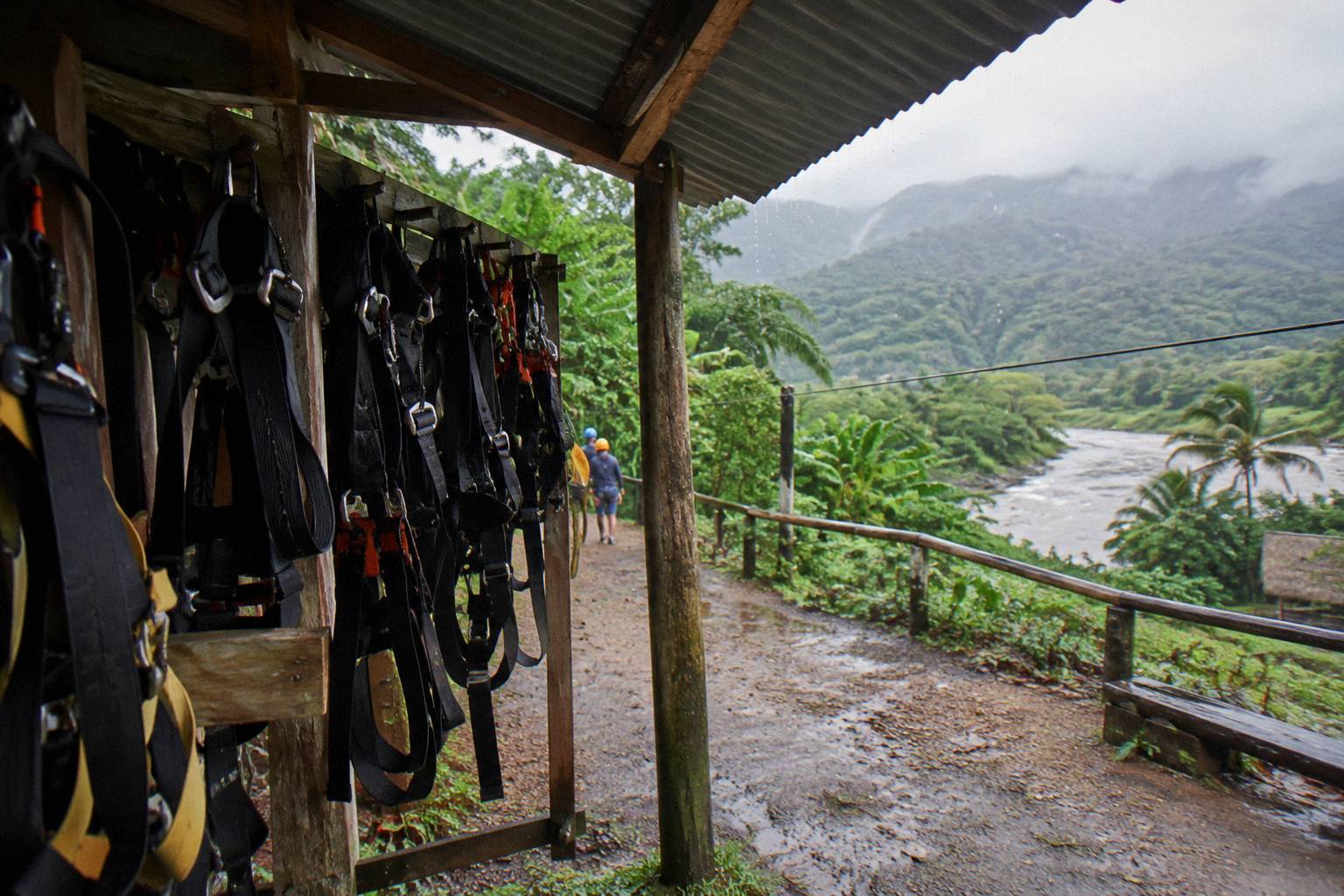
For riders who want the Coral Coast pickup rather than Nadi, the same course runs as the Coral Coast listing from US$115 per person, rated 4.9 from 28 reviews, with a one-hour van ride each way from hotels between Shangri-La Yanuca and Hideaway. The equipment rules are the course's rules, not the pickup's.
Why Weight Limits Exist At All
Weight limits exist because rider weight changes arrival speed: a heavier rider carries more momentum and reaches the landing platform faster, while a very light rider can stall short of it. Braking systems are tested at the extremes of rider weight and arrival speed, which is why the limits are written as both a maximum and a minimum in general industry practice. The rule is physics, not a judgement about body size.
General zipline engineering, as covered in the ASTM F2959 standard page, sets criteria for the design, operation and maintenance of commercial zip lines and canopy tours, and equipment performance sits at the centre of it. A harness rated to a load, a trolley rated to a speed, and a brake rated to an energy figure together define a window of rider weights the course can carry safely. Outside that window the equipment is not tested for the arrival, which is the whole reason the FAQ number exists.
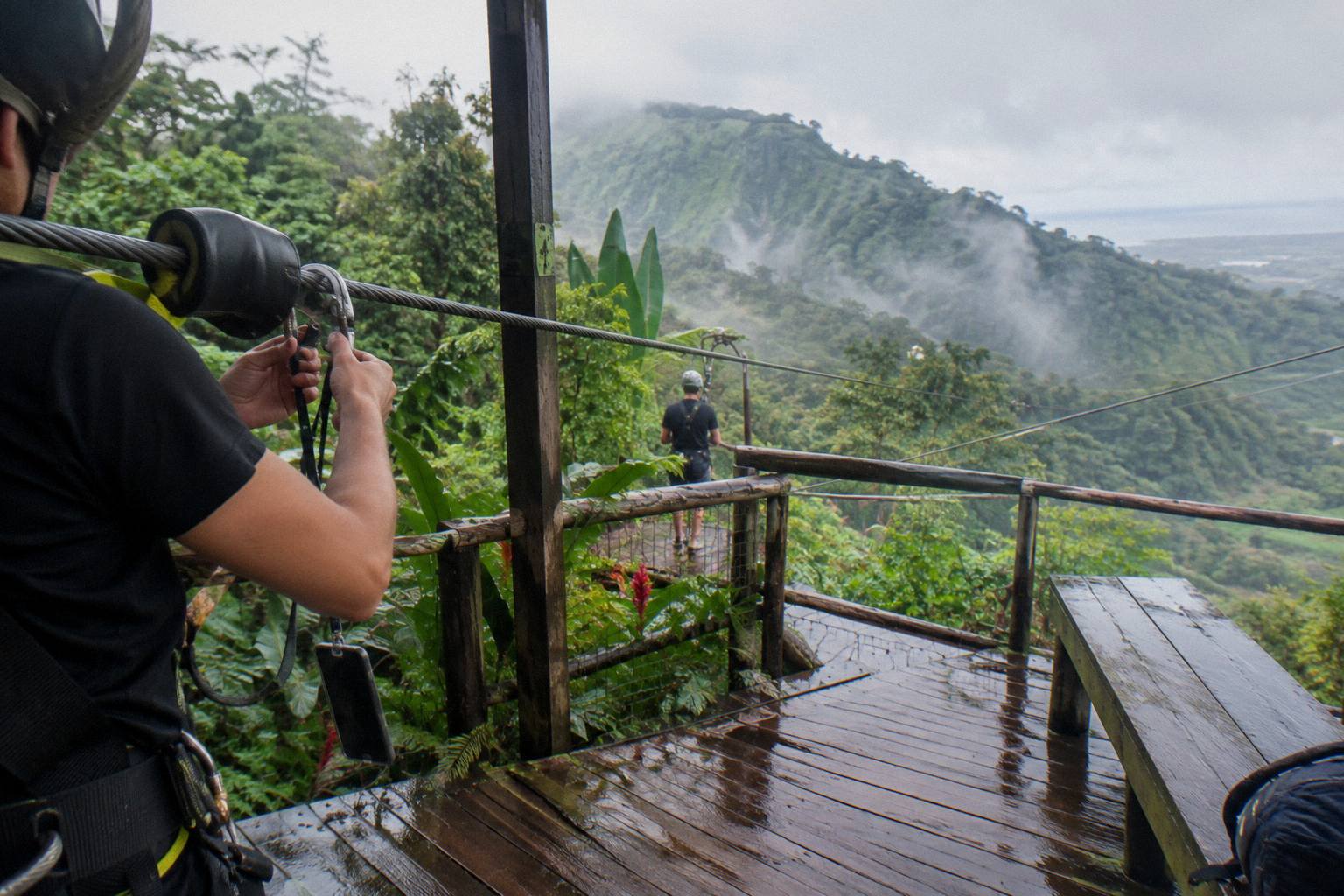
The minimum-weight side of the rule surprises people more than the maximum. A rider who is too light can stop partway along a line, hanging above the ground, waiting for a guide to pull them in with a rope. That is a routine rescue, not an emergency, but it slows the tour and it is the reason a light child may be paired with a guide or ruled off a course. Zip Fiji's own minimum is age-based rather than weight-based: riders from 3 years old, with children under 18 accompanied by an adult.
At the top end, the failure mode the limits guard against is a brake that has to absorb more energy than it was built for. Sleeping Giant Zip Line itself quotes speeds up to 40 km/h on its 7 lines over 700 metres, and the fastest lines on any course are where the weight question bites hardest, because arrival speed scales with momentum. The full speed story, including why a heavier rider arrives faster, is worked through in the question about whether heavier riders go faster.
| What the limit protects | What goes wrong without it | Who decides on the day |
|---|---|---|
| Brake energy absorption | Arrival above the speed the brake was tested for | Head Guide at Zip Fiji |
| Harness fit and load rating | Harness that cannot be adjusted to sit correctly | Head Guide at Zip Fiji |
| Minimum rider momentum | Rider stalls short of the landing platform | Course guides |
| Platform and cable load | Loads outside the course's tested envelope | Operator staff |
What Each Fiji Course Actually Publishes
Zip Fiji publishes one clear rule: under 135 kilograms, fit the equipment, decided by the Head Guide, with no maximum age and a minimum age of 3. Sleeping Giant publishes fitness requirements, but its weight and age thresholds differ between the park's FAQ and the booking page, so no number from either source is printed here. Booking pages for the Momi course also differ from the operator FAQ. Each figure belongs to its own source and none crosses between courses.
The Zip Fiji rule comes from the Zip Fiji FAQ, and it is worth reading in full because it bundles weight with mobility and height comfort: walk 15 minutes uphill over uneven ground unassisted, have full range of motion in arms, shoulders, neck and back, and stand on a platform about five stories high without severe anxiety or dizziness. The FAQ also lists conditions it does not recommend the tour for, including pregnancy, back, neck or shoulder problems, and heart problems, and says intoxicated people may not take part. The equipment side of the rule, on the operator's safety page, covers briefing and fitting before anyone leaves the ground.
Sleeping Giant's published picture is different in kind. The park describes a 35-acre adventure park at Sabeto, 20 minutes from Nadi, with 7 lines of 80 to 160 metres, speeds up to 40 km/h, two waterfalls and a jungle safari walk. Its fitness note asks that riders manage a 10 to 15 minute uphill walk and about 20 trail stairs, and be comfortable at heights over 100 feet. On age and weight the park's FAQ and the booking page carry different thresholds, so the only safe instruction to a reader is: confirm with the park before paying. The park's booking page separately lists pregnancy, altitude sickness and recent surgeries as not suitable.
The combo listings add their own not-suitable lists, and those belong to each product alone. The mud pool combo page lists people over 70, wheelchair users and people with heart, back or kidney problems; the abseil combo lists claustrophobia and fear of heights; the Biausevu waterfall and Coral Coast pickup pages list back problems and fear of heights. None of those lists is a weight rule, and none transfers to another product, but together they show the pattern: each booking page states its own envelope, and the operator FAQ states another. When the two disagree, the phone wins.
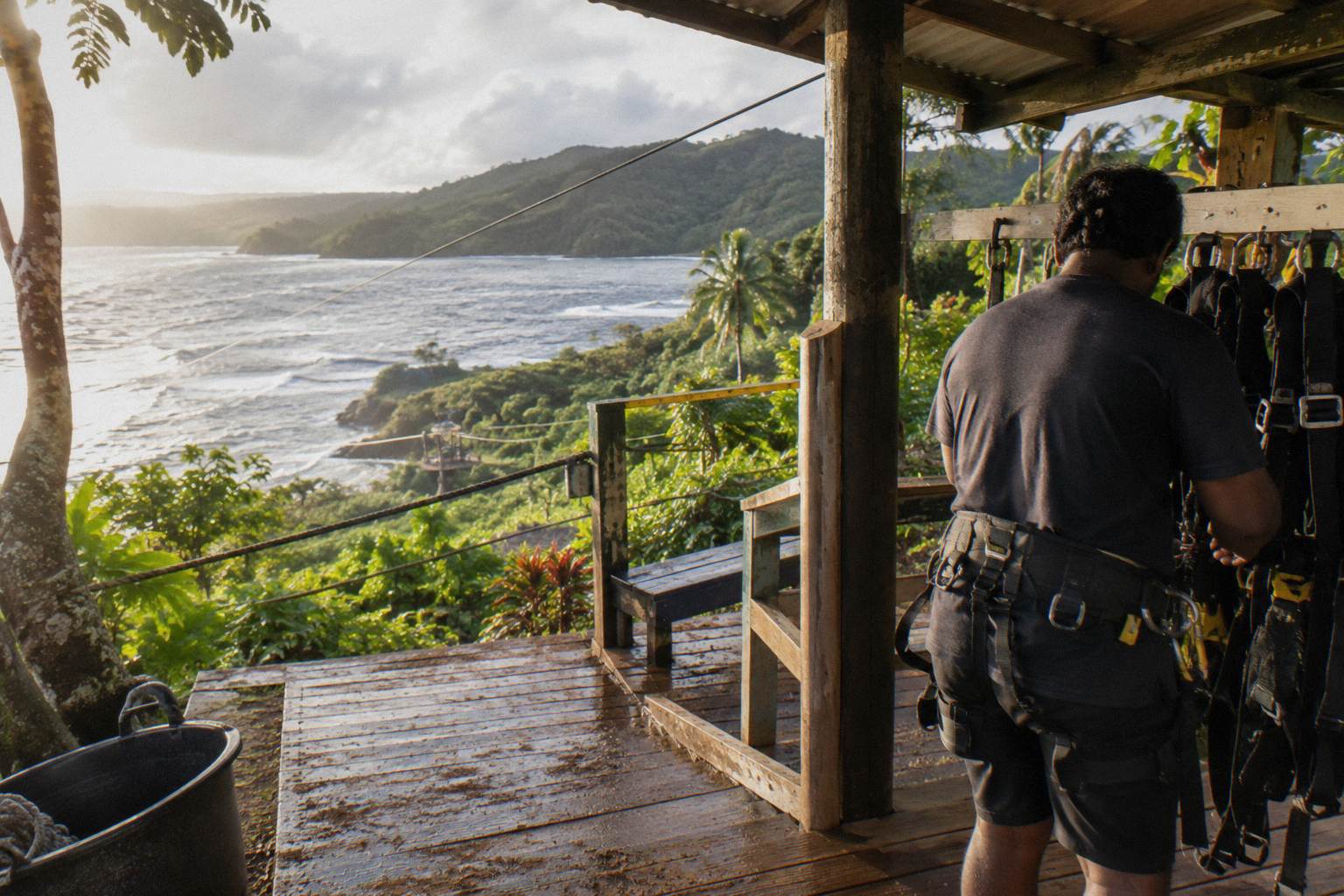
The Sleeping Giant safari listing, 7 lines with a deli lunch and hotel pickup, runs from US$88 per person and is rated 4.7 from 67 reviews, with free cancellation up to 24 hours before the start on the booking page.
| Source | What it says about weight | Usable as a rule? |
|---|---|---|
| Zip Fiji operator FAQ | Under 135 kg, fit the equipment, Head Guide decides | Yes, attributed to Zip Fiji |
| Booking pages for the Momi course | Thresholds differ from the operator FAQ | Confirm with the operator |
| Sleeping Giant park FAQ | Differs from the park's own booking page | Confirm with the park |
| Sleeping Giant booking page | Differs from the park FAQ | Confirm with the park |
| Combo booking pages | Not-suitable lists per product, no weight figure | Per product only |
What To Settle With The Operator Before You Pay
Three things settle the weight question before money changes hands: your weight in kilograms, stated plainly to the operator; the specific product you are booking, because thresholds vary by booking page; and the fit question, because fitting the equipment is a separate test from the number. One phone call or message covering all three turns a guess into an answer, and free cancellation up to 24 hours before the start on the booking page is the backstop if plans change.
Start with kilograms because that is the unit every threshold uses. A rider who knows only pounds should convert before calling, and should also be ready to describe height and build, since two riders of the same weight but different builds fit a harness differently. Ask specifically whether your figures sit inside the limits for the course and the product, and ask what happens on the day if the guide judges the fit is not right. Zip Fiji says guests who cannot continue after the first zip are walked back to the Welcome Centre, which is worth knowing in advance.
Name the exact product when you ask. The Momi Bay course is sold with several pickup and add-on arrangements, and the underlying ride is the same, but the booking pages differ in their stated thresholds. If a rider books the Coral Coast pickup, the abseil combo or the airport drop-off variant, the equipment rules of the course still apply, and the booking page's own thresholds apply too. Confirming with the operator against the named product avoids the trap of clearing one threshold and missing another.
Timing is the last piece. The Zip Fiji tour runs daily from the Welcome Centre at 9:00 am and 2:00 pm, about 3 hours on site, and the operator says the transfer from Nadi is 35 minutes, longer when the shuttle collects several hotels. Sleeping Giant pickups run at 10am or 12pm from Denarau hotels, about 1 hour each way, with drop-off around 4 to 4:30pm or 5:30 to 6pm. A rider who phones two days ahead with a weight question still has the 24-hour free cancellation window on the booking page if the answer changes the plan. Riders ready to see dates can check availability for the Coral Coast listing, or the Nadi pickup equivalent, at a genuine decision moment rather than after arrival.
What Trips People Up When Checking A Weight Limit
The recurring mistakes are quoting a number from the wrong source, mixing the two courses' rules into one, and reading a marketing phrase as a limit. A threshold from a booking page does not override the operator FAQ, and a Sleeping Giant figure never applies to Momi Bay. Riders who check the source of every number, and phone the operator when sources disagree, avoid the traps at once.
The first trap is source confusion. Zip Fiji's FAQ says under 135 kilograms; a booking page for the same course states a different figure; neither replaces the other, and the guide on the day enforces the equipment fit regardless. The second trap is crossing the courses. Zip Fiji's rule, its 15-minute uphill walk and its platform-height comfort note are Momi Bay rules. Sleeping Giant's 10 to 15 minute uphill walk, 20 trail stairs and 100-foot height comfort are Sabeto rules. A rider who clears one course's envelope has learned nothing certain about the other, which is why the comparison question of which course to book is worth settling alongside the weight question.
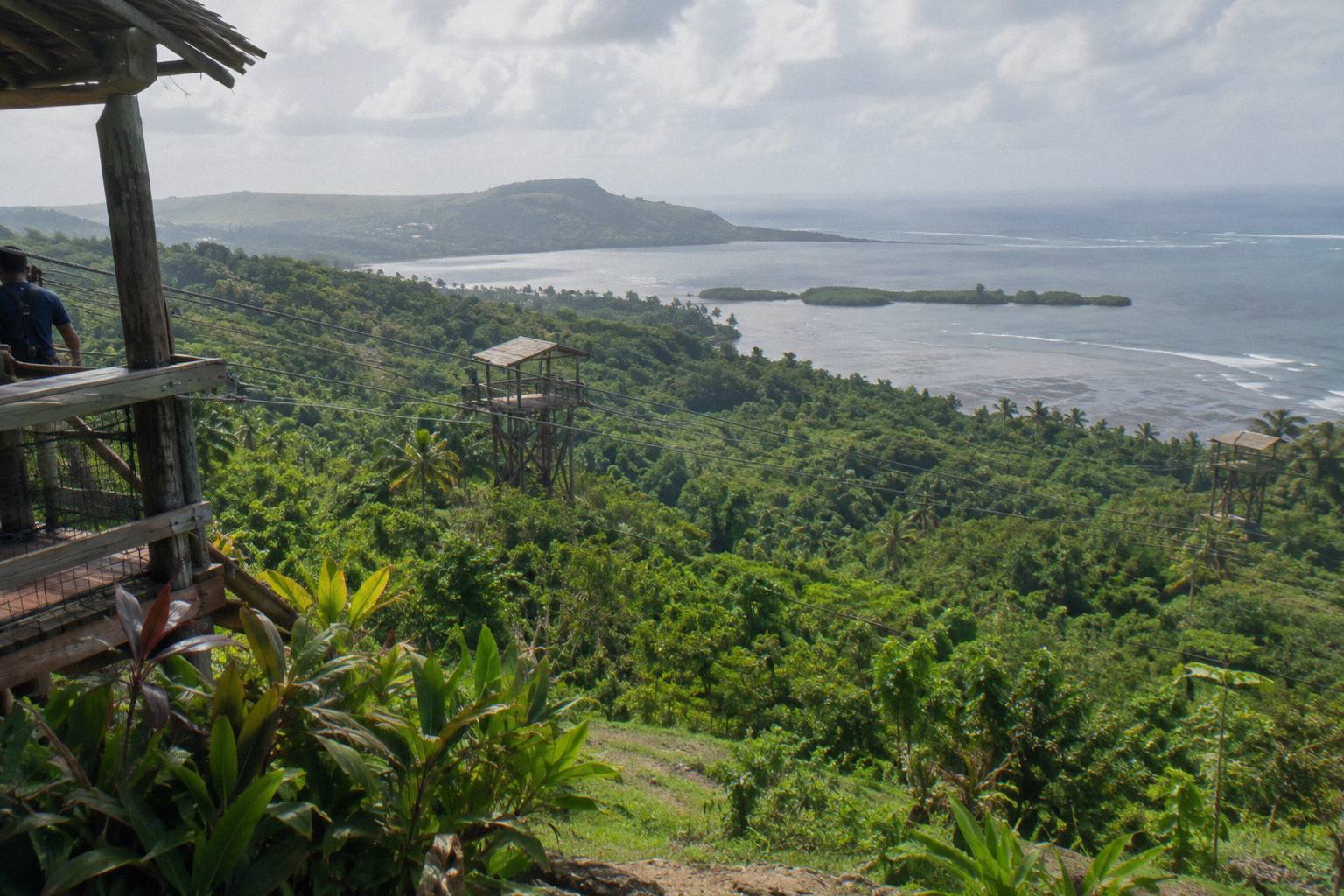
The third trap is treating a round number heard from another guest as a rule. Thresholds live on operator pages and booking pages, they change, and they differ between the two. The fourth is forgetting the mobility half of the rule: a rider who meets the weight figure but cannot manage the uphill walk, the stairs or the height has not cleared the requirement, and the FAQ lists those points in the same breath for a reason. The fifth is leaving the question until check-in, when the only person who can answer it is standing at a platform with a queue behind them.
The last practical note: it may not be possible to ride, and finding that out on the phone costs nothing but the call. Ziplines In Fiji exists to make that call easier, with the course facts and the booking pages in one place.
Common Questions About Weight Checks
Do You Get Weighed Before Ziplining?
No operator page for either Fiji course describes a weigh-in or a scale at check-in. What the operators publish are eligibility rules: Zip Fiji asks that riders weigh under 135 kilograms and fit the equipment, with the fit decided by the Head Guide on the day. Confirm your situation with the operator before booking.
Can A 300lb Person Zipline?
300 pounds is about 136 kilograms, just over the 135 kilogram figure in the Zip Fiji FAQ. The FAQ rule also requires fitting the equipment, so the practical step is to phone the operator and ask, quoting your weight in kilograms. At Sleeping Giant, the park FAQ and booking page carry different thresholds, so confirm with the park directly.
What Is The Weight Limit For Ziplining In Fiji?
The only printable figure is Zip Fiji's: under 135 kilograms and able to fit the equipment as the Head Guide determines, per the operator FAQ. Booking pages for the same course carry different thresholds, and no number is printable for Sleeping Giant because its park FAQ and booking page disagree. Phone the operator for your case.
Do Booking Pages And Operator Sites Show Different Limits?
Yes. Zip Fiji's FAQ states under 135 kilograms while booking pages for the same course state different thresholds, and at Sleeping Giant the park's own FAQ and its booking page differ. When the sources disagree, the operator's answer by phone is the one to rely on, and every booking-page listing carries free cancellation up to 24 hours before the start.
Why Do Ziplines Have A Minimum Weight Too?
A very light rider can stall short of the landing platform because they carry too little momentum, leaving them hanging mid-line until a guide pulls them in. Braking systems are tested at the extremes of rider weight and arrival speed, so the envelope runs both ways. Zip Fiji's own published minimum is age-based: riders from 3 years old, accompanied if under 18.
What Should You Tell The Operator Before Booking?
Your weight in kilograms, the exact product you want, and any relevant conditions such as pregnancy, back or heart problems, which the operators list as not suitable. Also confirm you can manage the uphill walk the course requires: 15 minutes at Momi Bay, or 10 to 15 minutes plus about 20 trail stairs at Sleeping Giant. One call settles the weight question and the fitness question together.