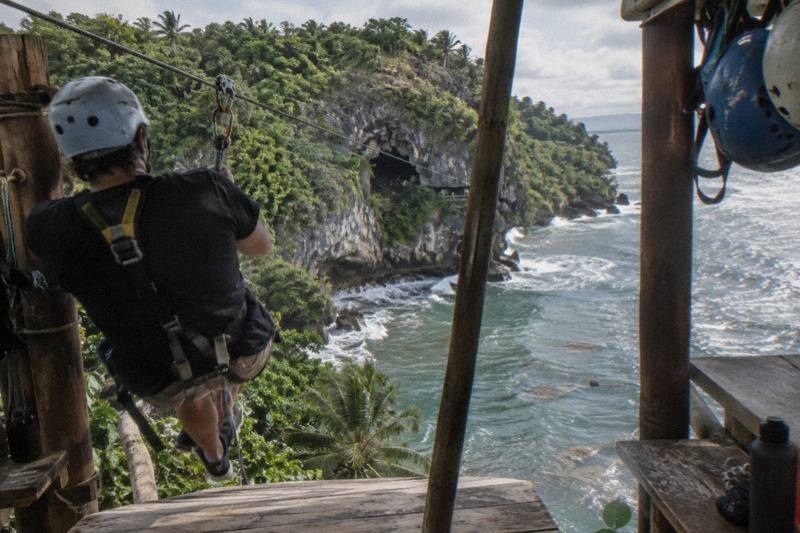
Do Heavier People Go Faster On Ziplines? Weight, Speed And Braking In Fiji
A plain physics answer to whether heavier riders go faster on ziplines, with what weight changes for speed, stalling and braking on the two Fiji courses near Nadi.
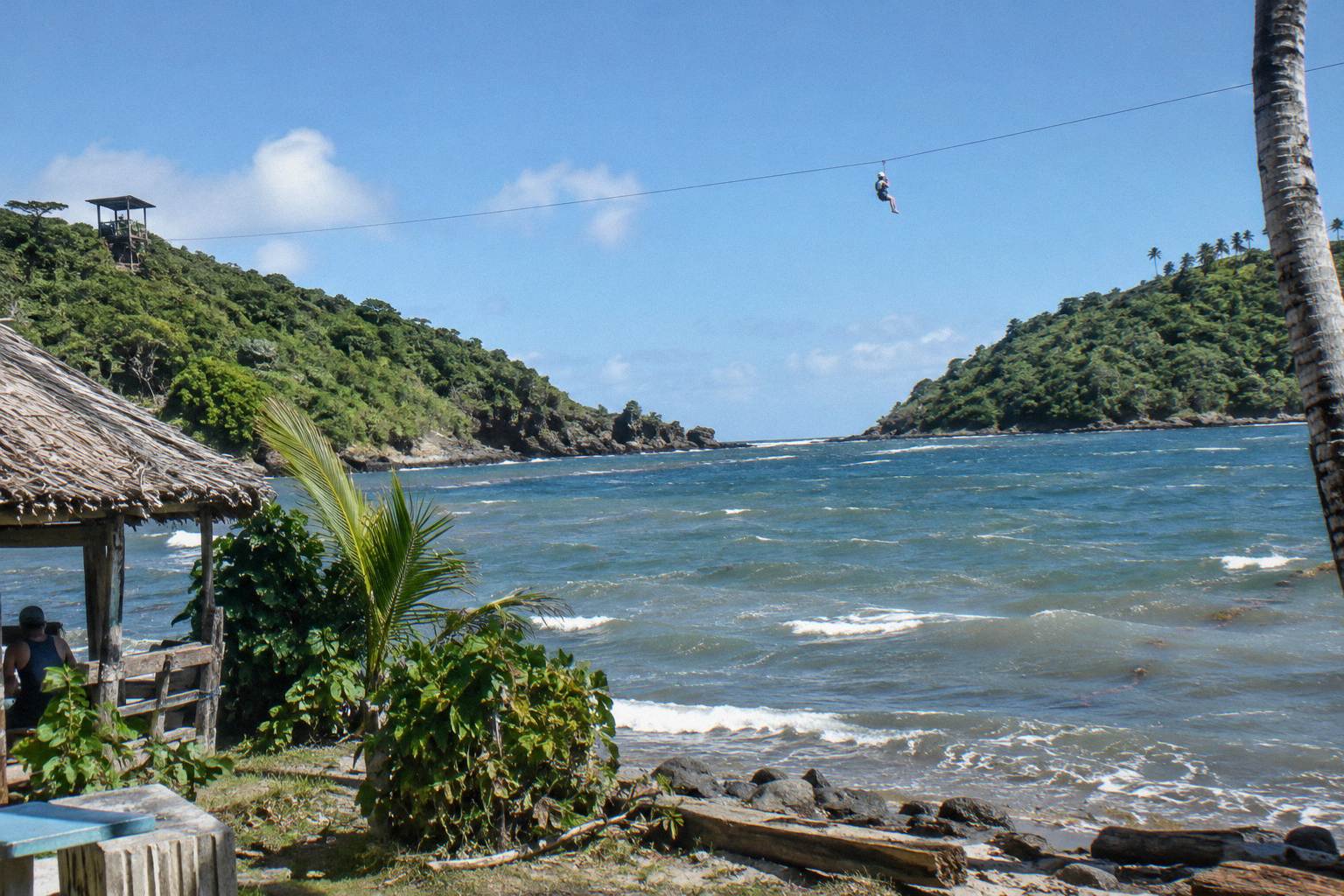
Weight is one of the first things a zipline operator checks, and one of the most misunderstood. People assume a heavier friend will rocket down the cable while a lighter one crawls, and the real answer is stranger and more useful than that. Before the detail, the ride most weight questions come up against near Nadi is the Nadi Zipline, Waterfalls, and Jungle Safari Tour with Lunch, the seven-line course at Sabeto.
| Fact | Detail |
|---|---|
| Does weight change speed? | Yes in principle, more momentum means a faster arrival, but not a simple doubling |
| Fastest published Fiji speed | Up to 40 km/h, stated by Sleeping Giant Zip Line |
| Longest single line near Nadi | 235 m on the Zip Fiji course at Momi Bay |
| Zip Fiji weight rule | Under 135 kg and able to fit the equipment, per the Zip Fiji FAQ |
| Sleeping Giant weight rule | No single figure, the park's own pages differ, confirm before paying |
| Why a minimum weight matters | A very light rider can stall short of the landing platform |
| Typical commercial zipline speeds | 40 to 64 km/h quoted by operators generally |
Do Heavier People Go Faster On Ziplines?
Yes, in principle. A heavier and a lighter rider on the same cable face the same slope, but gravity's pull on the heavier rider produces more force, and once rolling resistance and cable friction are overcome, the heavier rider tends to keep more of that speed through to the landing. The difference shows up most on long lines, and far less on short ones. It is not a doubling of speed for a doubling of weight.
The clean way to picture it is energy. On a slope, a rider trades height for motion, and the total energy available scales with mass. But the drag from the trolley, the cable sag and the air resistance push back, and some of those forces grow with weight while others do not. On a short line of 80 to 160 m, like the seven lines at the Sleeping Giant park in Sabeto, the acceleration phase dominates and riders of different weights arrive within a similar range. On a long line, such as the 235 m maximum on the Zip Fiji course at Momi Bay, the heavier rider has more time to build and hold speed, so the gap at the landing grows.
This is exactly why operators do not treat weight as a small detail. The general industry guidance, reflected in the ASTM F2959 standard page for aerial adventure courses, is that braking systems get tested at the extremes of rider weight and arrival speed, because the heaviest realistic rider and the lightest realistic rider are the two hardest cases for the brake at the far end. The question "will I go too fast" and the question "will I not get there at all" are the same engineering problem seen from two ends.
So the plain summary is this: heavier riders tend to arrive faster and with more momentum, light riders tend to arrive slower and sometimes stop short, and a well-run course is built with both ends of that range in mind. Neither Fiji operator publishes a per-weight speed figure, so anything more specific than that, for these courses, is a guess, and guessing is not useful for a booking decision.
For readers deciding between the two courses near Nadi, the cards below cover the three listings weight and speed questions come up against most often.
What Does Weight Actually Change On The Ride?
Weight changes three separate things, and only one of them is top speed. First, momentum: a heavier rider brings more of it into the landing, so the brake does more work. Second, cable sag: heavier riders bend the cable lower, which steepens the effective slope right under them and can add speed early. Third, arrival position: a very light rider may not carry enough energy to reach the far platform, which is why courses set a minimum weight at all.
Momentum is the one people feel. When a rider comes into the landing platform, the brake, whether it is a guide catching a rope, a passive brake block or a combination, has to absorb the rider's motion. Heavier rider, same speed, more energy to absorb. That is not a danger statement, it is an arithmetic one, and it is why the industry standard treats the heavy end of the weight range as a design case rather than an afterthought.
Cable sag is quieter and less obvious. A trolley on a cable is not a bead on a rigid rail; the cable dips under load. A heavier rider dips it more, which locally steepens the slope just ahead of the trolley. The effect is real but modest, and on the short lines at Sabeto it barely registers against the overall drop of each line.
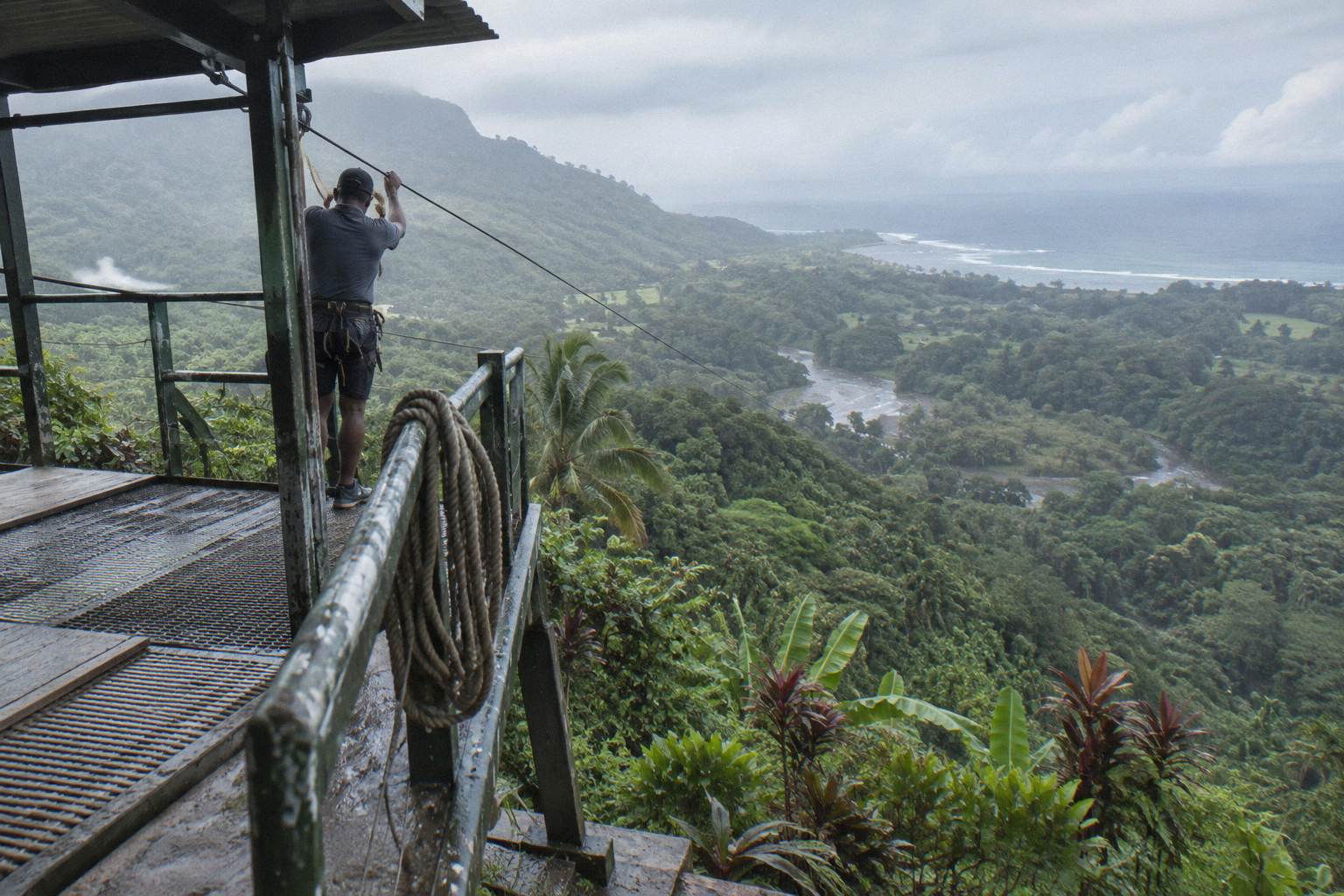
The light end of the range is where the physics surprises people. A rider who is too light can stall partway, sitting above the low point of the sagging cable with not enough remaining slope to keep rolling. Guides then pull the rider in with a rope from the platform, which is a routine move on any course, but it slows the day down and it is the reason minimum weights exist in the first place.
Here is how the three effects line up, in general terms:
| What changes | Heavier rider | Lighter rider |
|---|---|---|
| Momentum at the landing | Higher, brake absorbs more energy | Lower, easier stop |
| Cable sag under the rider | More dip, locally steeper slope | Less dip, shallower slope |
| Risk of stalling mid line | Very low | Higher below the course minimum |
| Typical guide action at arrival | Standard braking, more rope tension | Pull-in rope if short of the platform |
The practical takeaway is that weight is not a pass or fail question about speed alone. It is a question about whether a rider sits inside the range the course was built and tested for, which leads to the actual limits published in Fiji.
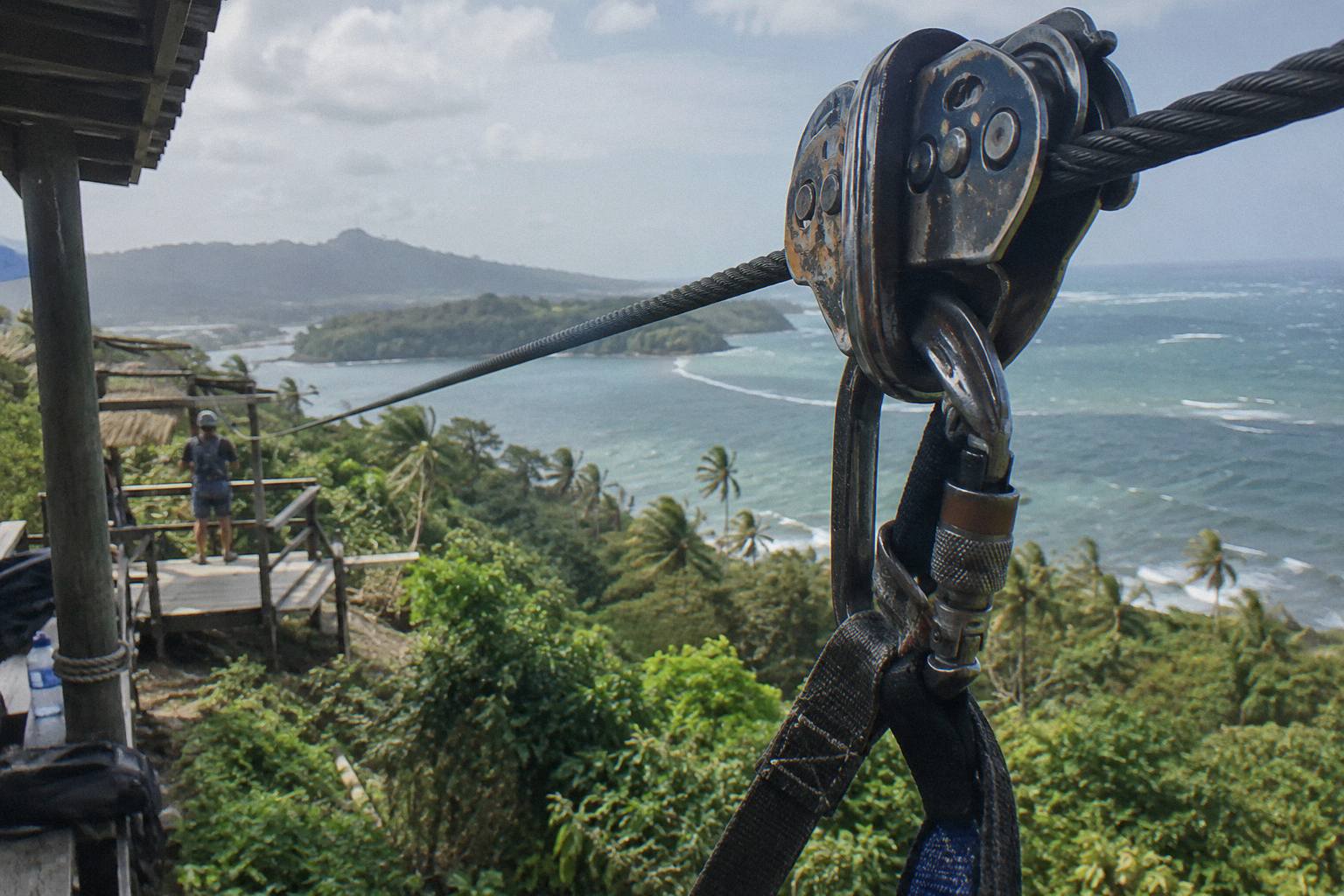
If the ride description, lunch and hotel pickup of the Sabeto park fit your group, the seven-line safari listing above is the one to compare against, and there is a fuller walkthrough in the Sleeping Giant Sabeto course guide.
How Fast Do The Fiji Ziplines Actually Go?
Sleeping Giant Zip Line states speeds of up to 40 km/h on its 7 lines, which run 80 to 160 m each over the Sabeto valley. Zip Fiji publishes no top speed for its 16-line Momi Bay course, only the layout: 27 platform stations and a longest line of 235 m. Neither operator publishes a speed by rider weight, so any per-weight figure for these courses is not from the operators.
The 40 km/h figure from Sleeping Giant is a ceiling, not a promise. Where in the 80 to 160 m range of line lengths a given rider lands on a given run depends on the line, the wind and the rider. The operator's own product page for the Zipline Safari Tour, and the park's operator FAQ page, are where those figures live, and they are worth a read before booking because they also cover the uphill walk and what to bring.
For Zip Fiji, the numbers that matter for speed expectations are structural. A 235 m line is long by any measure, and the course's 16 lines and 27 platforms mean riders step from line to line with short regrouping stops rather than one long descent. The operator describes the full experience, including the limestone cave stop, on the Zip Fiji site, and the tour runs about 3 hours with a shuttle from the Nadi area and a meal included.
For a sense of scale, operators generally across the industry quote commercial zipline speeds in the 40 to 64 km/h range, which puts the stated Fiji figure at the accessible end rather than the extreme end. Anyone comparing the two courses on thrill alone should note that a longer line does not automatically mean a faster ride; it means more time at speed and more distance for the weight differences described above to show up.
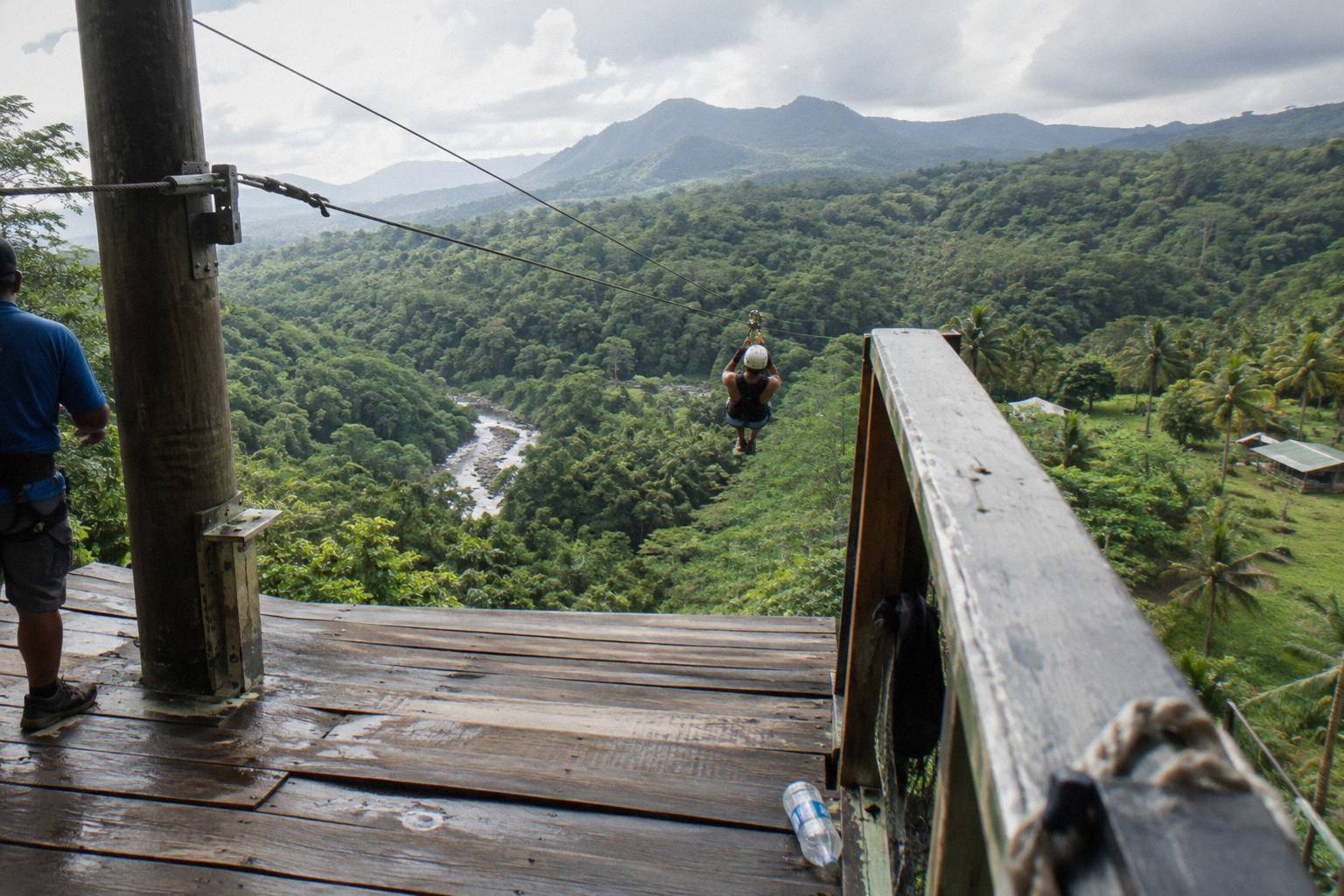
The two course profiles side by side:
| Detail | Zip Fiji, Momi Bay | Sleeping Giant, Sabeto |
|---|---|---|
| Lines | 16 | 7 |
| Line lengths | Longest 235 m | 80 to 160 m |
| Stated top speed | None published | Up to 40 km/h |
| Platforms | 27 | Park spans over 700 m total |
| Other stops | Limestone cave tour | 2 waterfalls, jungle safari walk |
| Time on tour | About 3 hours | About 4 hours of activity, about 6 hours with pickup |
The largest Momi listing, Fiji: Zipline Adventure and Cave Exploration, runs from US$100 per person and is rated 4.9 from 303 reviews. Amounts are US dollars, from prices per person, and the date and group size change the price. Check availability if the long-line profile is the one that fits.
What Is The Weight Limit On Each Course?
For the Zip Fiji course at Momi Bay, riders must weigh less than 135 kilograms and be able to fit the equipment as determined by the Head Guide, with no maximum age and a minimum age of 3. For Sleeping Giant, no single number should be trusted: the park's own FAQ and the booking page carry different thresholds, so confirm age and weight with the park before paying.
The Zip Fiji figures come straight from the operator's own Zip Fiji FAQ page, and they are the ones to rely on when planning. The 135 kg limit is about equipment fit and braking energy, tying directly back to the momentum discussion earlier: the harness, trolley and brake are engineered and tested around a stated range, and a rider outside it is outside the design case. Booking pages for the same course sometimes print different thresholds, so the operator's own FAQ is the anchored reference, and confirming with the operator settles any mismatch.
At Sleeping Giant, the disagreement between the park's own pages and the booking page is real and unresolved from the outside. Rather than pick a number, treat weight confirmation at this park as a pre-booking step: message the park with the rider's approximate weight and ask which figure applies. The same applies to age bands there. The rest of the planning pages sit on Ziplines In Fiji.
The wider context, covered in depth in the Fiji zipline weight limit explainer, is that per-product rules never cross over. A rule printed on the abseil combo booking page applies to that product only; the mud pool combo page lists people over 70, wheelchair users and people with heart, back or kidney problems as not suitable; the Coral Coast pickup and waterfall combo pages list back problems and fear of heights. Each listing carries its own not-suitable list, and weight sits inside that same per-product logic.
The Coral Coast pickup version of the Momi course, "Largest Zipline & Cave Exploration from Sigatoka Coral Coast", runs the same 16 lines with a van pickup from Coral Coast hotels, about 1 hour each way, and is rated 4.9 from 28 reviews from US$115. For riders staying on that coast, it is the same ride with a longer transfer built in, and the weight rules are the Zip Fiji course rules.
Why Light Riders Sometimes Stall Mid Line
A rider below the course's minimum weight can stop between platforms, because a sagging cable has a low point and a light rider may not carry enough speed to climb the far side of the sag. Guides handle it routinely with a pull-in rope or a mechanical-advantage system from the platform. It is an inconvenience of timing rather than an emergency, and it is the entire reason minimum weights exist on commercial courses.
The picture is worth holding in mind. A cable strung between two platforms is not flat; it hangs in a shallow curve. Gravity accelerates the rider down the first half, and the second half climbs slightly toward the far platform. A rider with enough energy arrives standing; a rider without enough rolls to a stop partway up the curve, below the platform. Heavier riders almost never see this, which is the mirror image of the braking discussion: the physics that makes the heavy end a braking case makes the light end a stalling case.
What happens next is standard practice. The guide at the landing platform extends a rope, clips it to the rider's trolley and pulls, or rigs a mechanical-advantage setup for a longer distance. The rider then completes the line at pull speed. Nobody is stranded, but the group's rhythm pauses, and on a busy day a stall can add minutes.
For families booking with young children, this is where the minimum age and minimum weight questions really bite. The Zip Fiji FAQ sets age 3 as the minimum for the Momi course, with children under 18 accompanied by an adult, and the equipment must fit as determined by the Head Guide. At Sleeping Giant, with no printable age or weight figure, families with small riders should ask the park directly whether a tandem arrangement or a minimum applies.
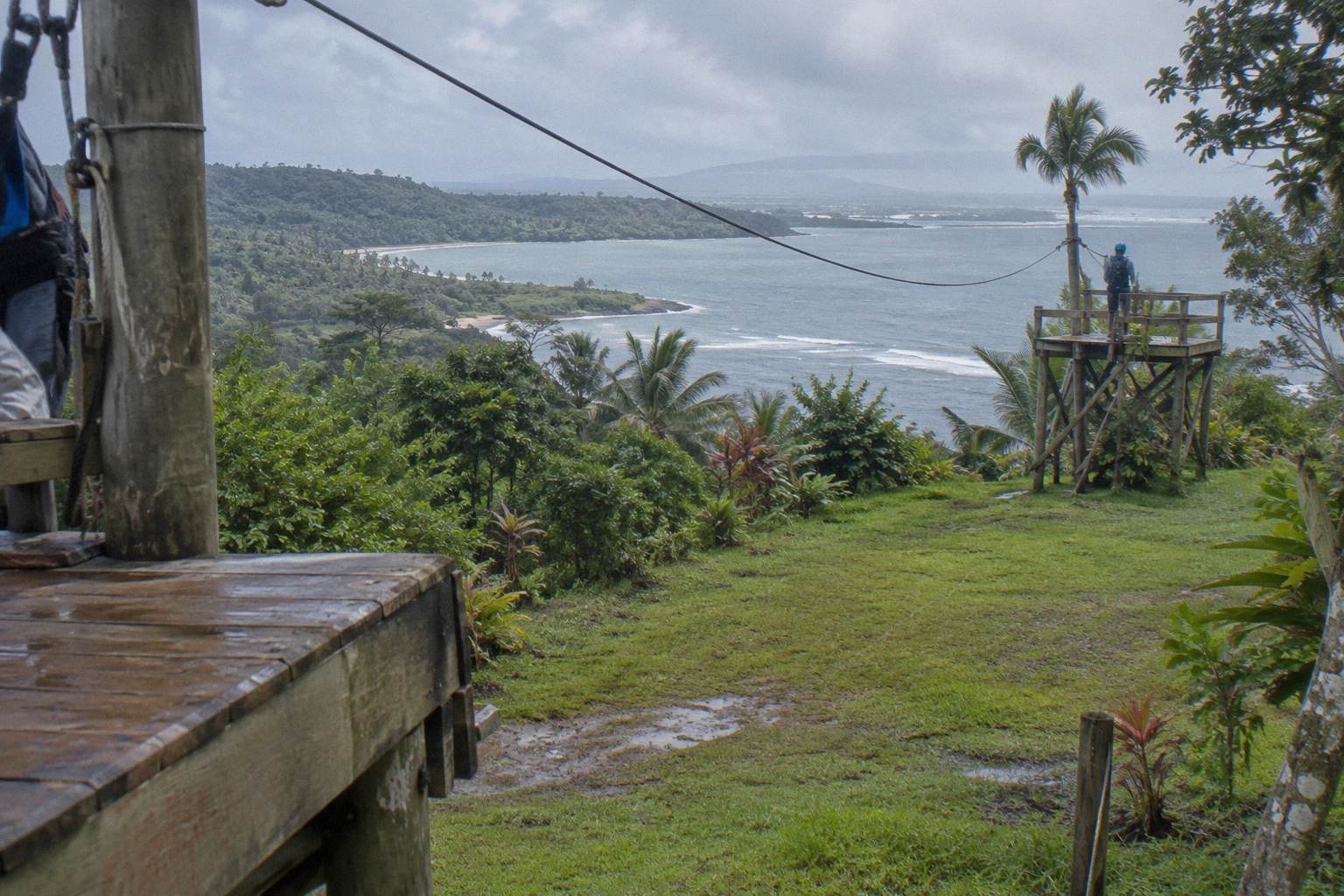
Does Weight Change How Braking Works?
Yes, and braking is where rider weight matters most to the operator rather than the rider. Standards for commercial zip lines call for a primary brake and a backup brake on faster lines, and the whole system is sized for the heaviest rider in the stated range arriving at the highest realistic speed. A heavier rider does not get a different brake; the same brake simply does more work absorbing more energy.
The design logic is set out in industry standards rather than in either operator's marketing. The ASTM F2959 practice covers design, operation, maintenance and auditing of commercial zip lines and canopy tours, and the ACCT standards cover inspection and staff training; both point at redundant braking on faster lines and documented pre-use checks. What a guest sees of all this is usually modest: a brake block near the platform, a guide with a rope, and a briefing before the first line.
Causes of serious zipline incidents named in the industry literature are operator error such as a failure to clip or belay, rider error, and equipment or braking failure, and the safeguards named against them are guide-clipped carabiners, double lanyards, redundant brakes and pre-ride checks. Weight is not on the cause list, because a rider inside the stated range is inside the design envelope. That is the whole point of the range.
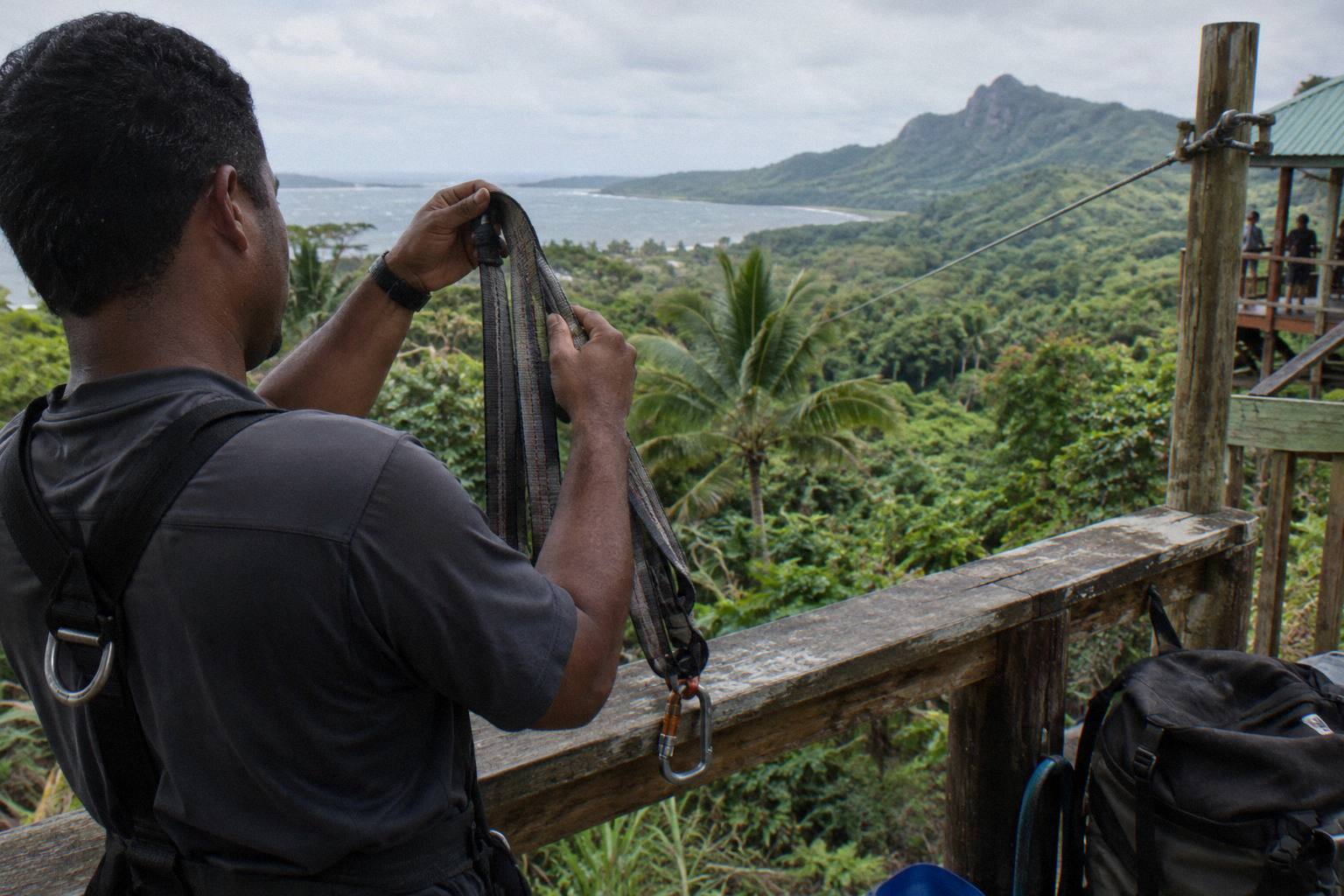
For guests, the practical version is simple. State your weight if asked, wear clothing that does not interfere with the harness, and follow the briefing. Zip Fiji asks for closed-toe sport shoes, allows cameras only on a strap, and bans backpacks and bottles on the course; Sleeping Giant asks for waterproof shoes and a glasses strap. The full clothing logic is laid out in the what to wear ziplining guide.
What Trips People Up Before You Book
The common mistakes are trusting one number for two different courses, trusting a booking-page threshold over what the operator states in its FAQ, and assuming a heavy rider will be refused or a light child will be fine without asking. The Zip Fiji FAQ figures apply to the Momi course listings; Sleeping Giant's own pages disagree on age and weight, so ask the park before paying. Rules are per product, never cross-course.
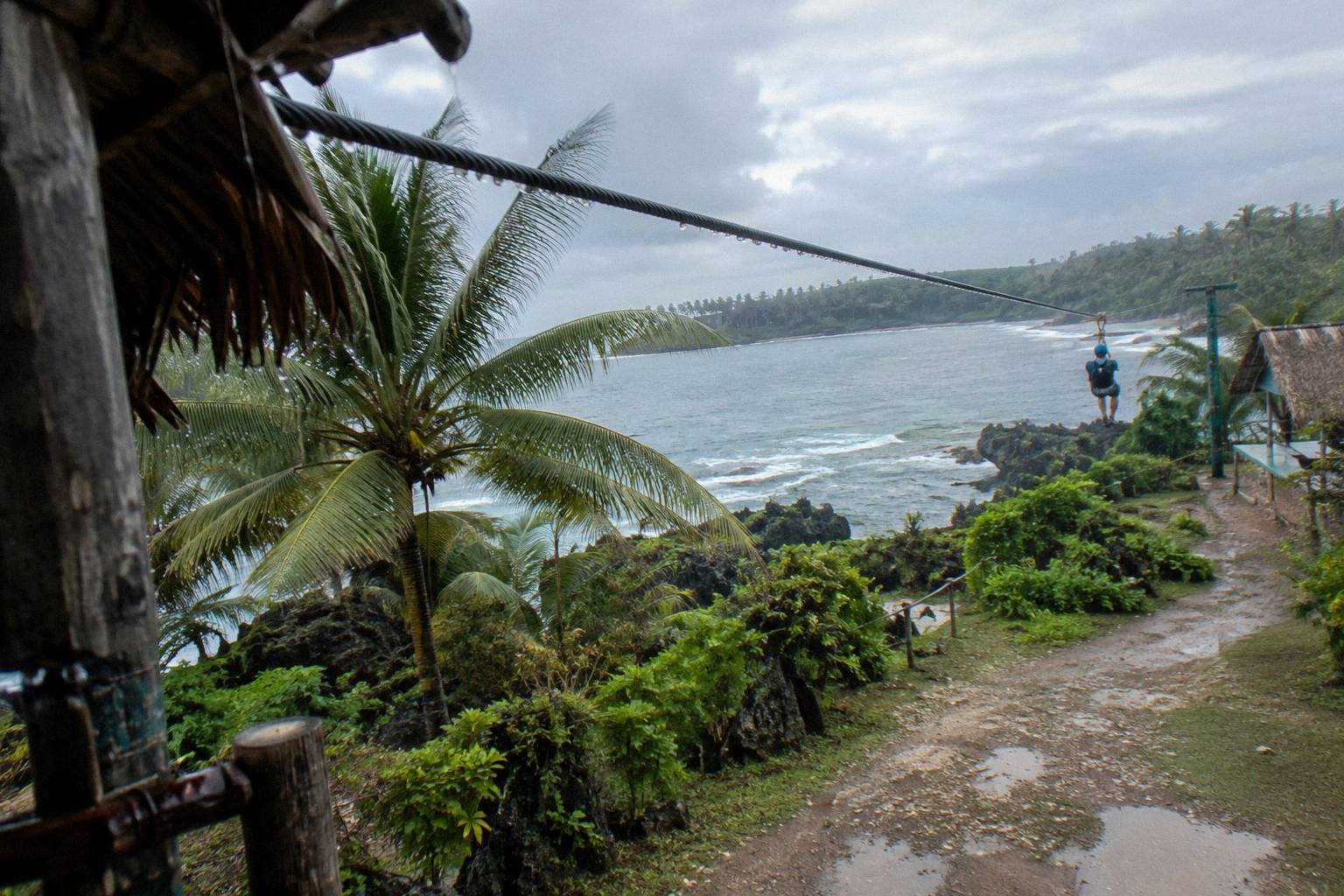
The second trap is speed expectations. People read a top speed like the 40 km/h figure and expect it every line, then find the short lines at the start of a course feel gentler. Top speed belongs to the longest, steepest line in the best conditions, and a rider's own weight shifts where in the range they land. Booking with a single number in mind sets up disappointment that the tour never promised.
The third trap is silence. Riders close to a limit sometimes say nothing on the assumption it will be fine, and the fitting check is exactly the wrong moment to discover a harness that does not close or a rider who cannot make the 15 minute uphill walk the Zip Fiji FAQ requires. Declaring up front, by message before booking, costs nothing and protects the refund window: every booking-page listing here carries free cancellation up to 24 hours before the start, and direct bookings with the operators carry different terms.
Finally, remember that weather, wind and the operator's guides decide whether a tour runs on the day. Zip Fiji runs in all weather except lightning overhead, high winds and especially heavy rain. No operator promises conditions, and no weight figure changes that.
For riders who want the longest lines plus an added challenge, the abseil combo "Nadi: Abseiling, Zipline, and Cave Tour with Meal" adds 3 abseils including a 40 m descent into the Tau Caves, and is rated 4.8 from 39 reviews from US$113. Its own not-suitable list names claustrophobia and fear of heights, separate from the standard course rules.
Common Questions About Weight And Speed
Do Heavier People Go Faster On Ziplines?
Yes, in principle. Heavier riders carry more momentum and tend to arrive at the landing platform faster, and braking systems are tested at the extremes of rider weight for that reason. The difference is most visible on long lines, like the 235 m maximum at Momi Bay, and smallest on short lines. Neither Fiji operator publishes a speed by rider weight.
How Fast Do The Fiji Ziplines Go?
Sleeping Giant Zip Line states speeds of up to 40 km/h on its 7 lines, which run 80 to 160 m each. Zip Fiji publishes no top speed for its 16-line Momi Bay course, whose longest line is 235 m. Commercial zipline speeds quoted by operators generally run 40 to 64 km/h.
What Is The Weight Limit For Ziplining In Fiji?
For the Zip Fiji course at Momi Bay, the operator FAQ says riders must weigh less than 135 kilograms and fit the equipment as determined by the Head Guide. For Sleeping Giant, the park's own FAQ and the booking page carry different thresholds, so confirm with the park before paying rather than trusting any single figure.
Can You Be Too Light For A Zipline?
Yes. A rider below a course's minimum weight can stall partway along the cable, short of the landing platform, because a light rider may not carry enough energy up the far side of the cable's sag. Guides retrieve stalled riders with a pull-in rope as a routine procedure. Minimum ages and weights exist to prevent this.
Does A Heavier Rider Need A Different Brake?
No. The same braking setup serves every rider in the stated weight range, and it is sized for the heaviest rider in that range arriving at the highest realistic speed. Industry standards call for a primary brake and a backup brake on faster lines, with pre-use checks before participants ride.
Do Heavier Riders Feel More Force At The Landing?
A heavier rider arrives with more momentum, so the brake absorbs more energy, but the stopping distance and the design of the brake keep the arrival within the range the course was built for. Riders inside the operator's stated weight range are inside the design envelope, which is the reason the range exists and the reason the fitting check happens before the first line.
Weight questions are really range questions, and the two courses near Nadi publish their ranges differently: a clear FAQ figure at Momi Bay, and a "confirm with the park" answer at Sabeto. Settle that one detail before paying and the physics takes care of itself on the cable.