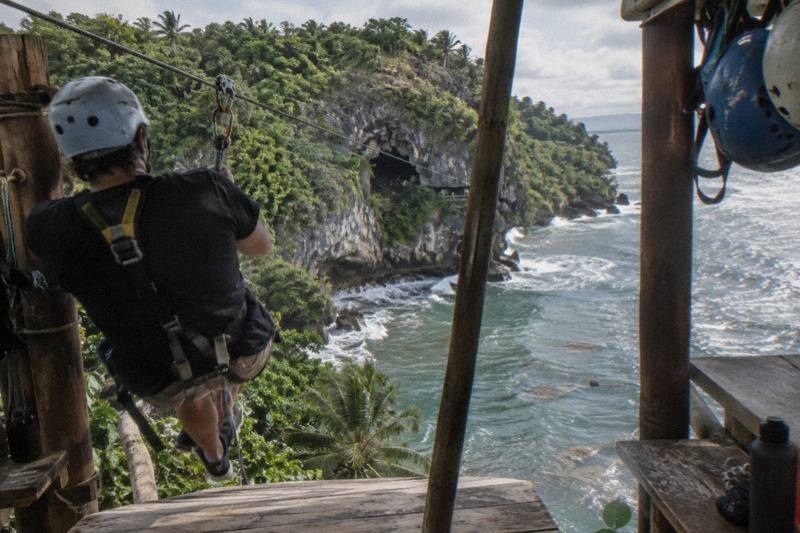
Do Zipline Tours Run In Fiji's Wet Season? Rain, Cancellations And Timing
Fiji's wet season runs most of the year around Nadi, and rain alone does not stop a zipline tour. What stops one is lightning overhead, high winds or especially heavy rain. Here is how the weather rule works, what cancellation terms cover, and how to time a booking so one wet morning does not cost you the day.
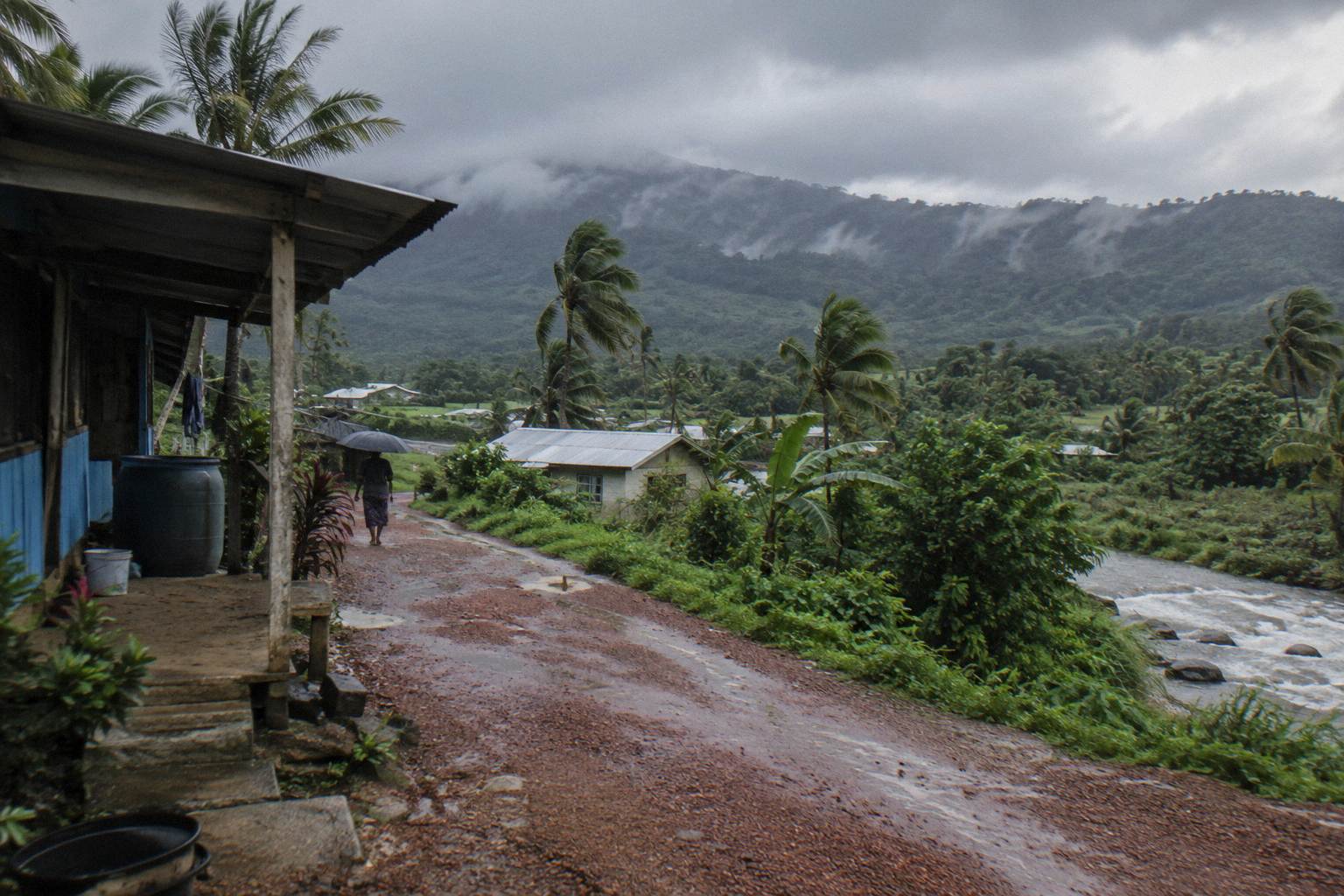
Short answer
Yes, zipline tours around Nadi generally run in rain: Zip Fiji says its tour runs in all weather except lightning overhead, high winds and especially heavy rain. Nadi's short dry season is July and August, with the wettest months January to March and cyclone season from 1 November to 30 April. Booking pages carry free cancellation up to 24 hours before the start.
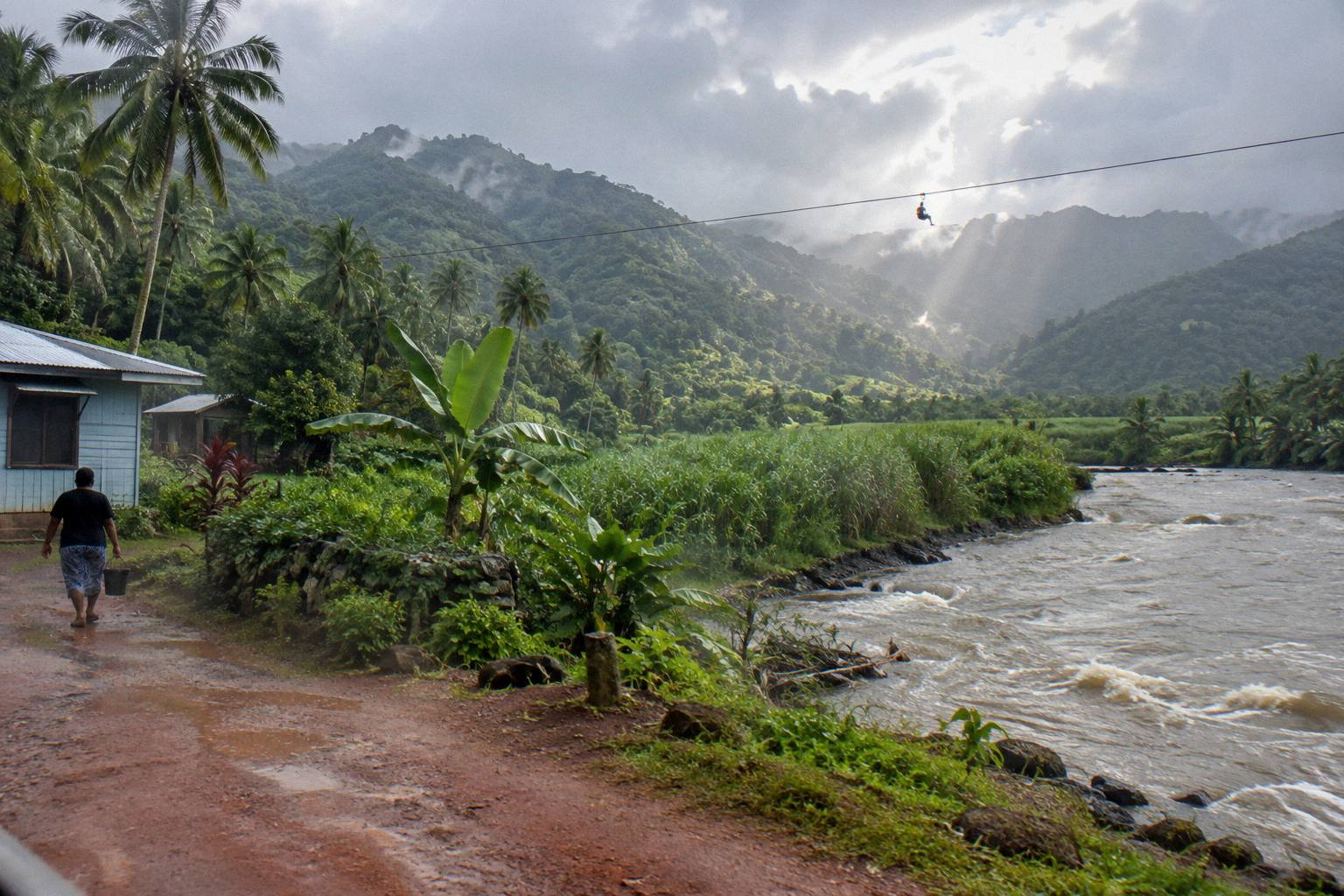
The two courses covered by the Momi Bay zipline and cave tour sit on the drier, western side of Viti Levu, which is why the weather question matters less than most visitors expect. Nadi receives much less rain than Suva on the windward side of the island, and the Momi Bay course at Tau Village and the Sleeping Giant park at Sabeto both sit within about an hour of the airport corridor. The article covers what the wet season actually looks like around Nadi, what the operators say about weather, what happens to your money when a tour is cancelled, and how to sequence a zipline booking inside a rainy week.
| Fact | Detail |
|---|---|
| Nadi's dry season | Short: July and August only |
| Wettest months around Nadi | January, February and March |
| January rainfall at Nadi Airport | 365.2 mm (1991 to 2020 normals) |
| Annual rainfall at Nadi Airport | 1,999.4 mm (1991 to 2020 normals) |
| Cyclone season | 1 November to 30 April |
| Zip Fiji weather rule | Runs in all weather except lightning overhead, high winds and especially heavy rain |
| Sleeping Giant weather rule | The operator states none |
| Free cancellation | On the booking page, up to 24 hours before the start |
| Mean daily maximum, Nadi | 30.2 degrees Celsius across the year |
What The Wet Season Actually Looks Like Around Nadi
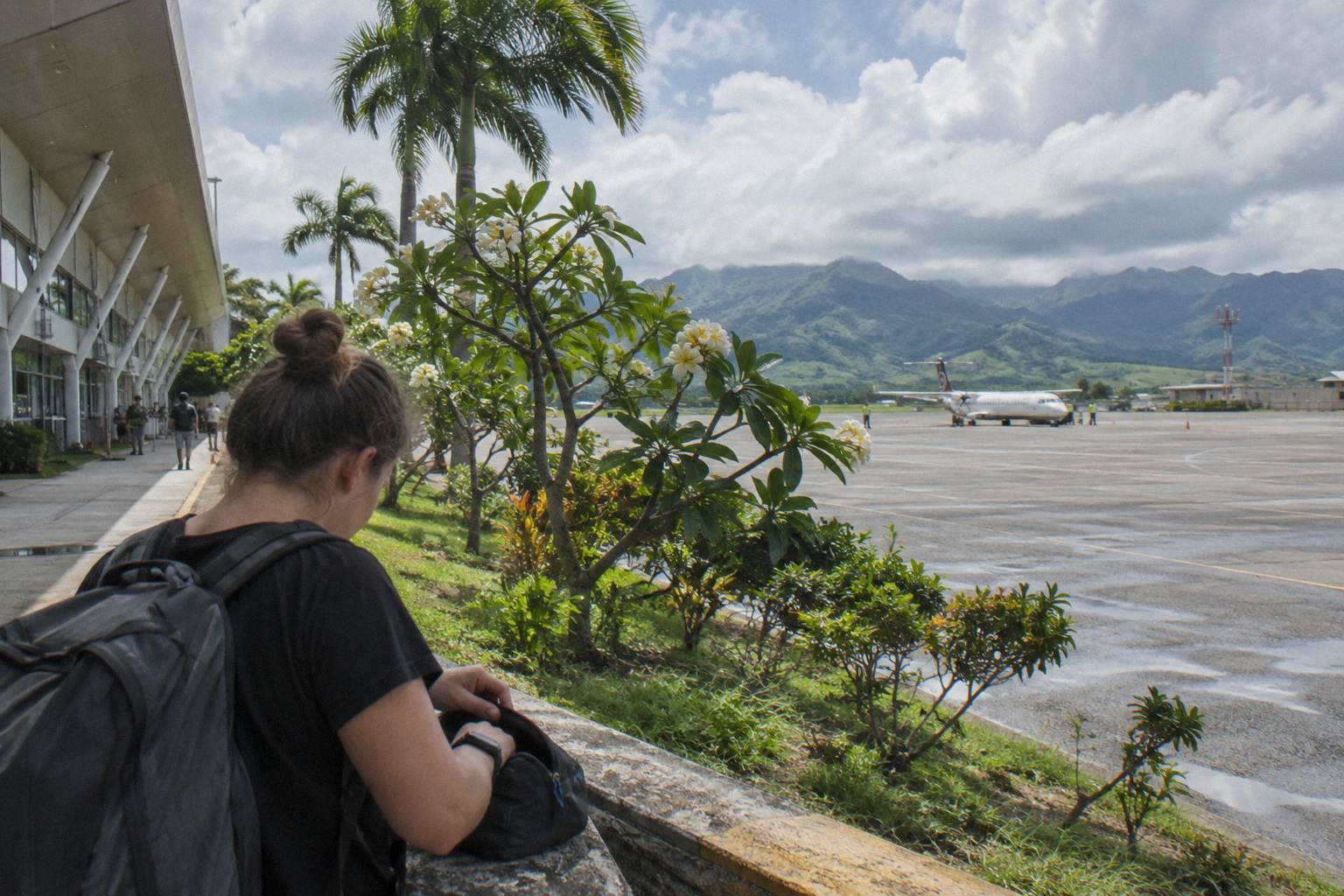
Nadi runs on a tropical monsoon rhythm, with only July and August as a short dry spell and wet conditions dominating the other ten months. Airport climate normals from 1991 to 2020 put annual rainfall at 1,999.4 mm, peaking between January and March at 365.2, 335.5 and 350.5 mm respectively, while mean daily maximums hold near 30.2 degrees Celsius all year, so expect heat and rain rather than cool relief.
The practical picture is wet-season showers rather than all-day rain. A tropical monsoon pattern concentrates much of the rain in heavy bursts, often in the afternoon, with long clear spells between them. That rhythm matters for ziplining because the Zip Fiji course runs two departures a day, 9:00 am and 2:00 pm from the Welcome Centre, and a morning start stands a better chance of beating the build-up that comes later in the day. The same logic applies to the Sleeping Giant park, whose Denarau pickups run at 10am or 12pm.
Rainfall figures are worth reading against the calendar you are actually travelling on. January is the wettest month of the year, yet the same month delivers plenty of rideable mornings. A visit in July lands in the short dry season, yet a squall can still pass through. The Fiji Meteorological Service publishes the forecasts worth watching in the days before your tour, and the general climate background is summarised on the Wikipedia page for Nadi.
For timing strategy beyond the wet season itself, the best time of day and year for ziplining near Nadi breaks the year into booking windows. The short version: the July and August dry window is the calmest gamble, the shoulder months trade a little rain for thinner crowds, and January to March asks for the most schedule flexibility.
Does Ziplining Run When It Rains In Fiji?
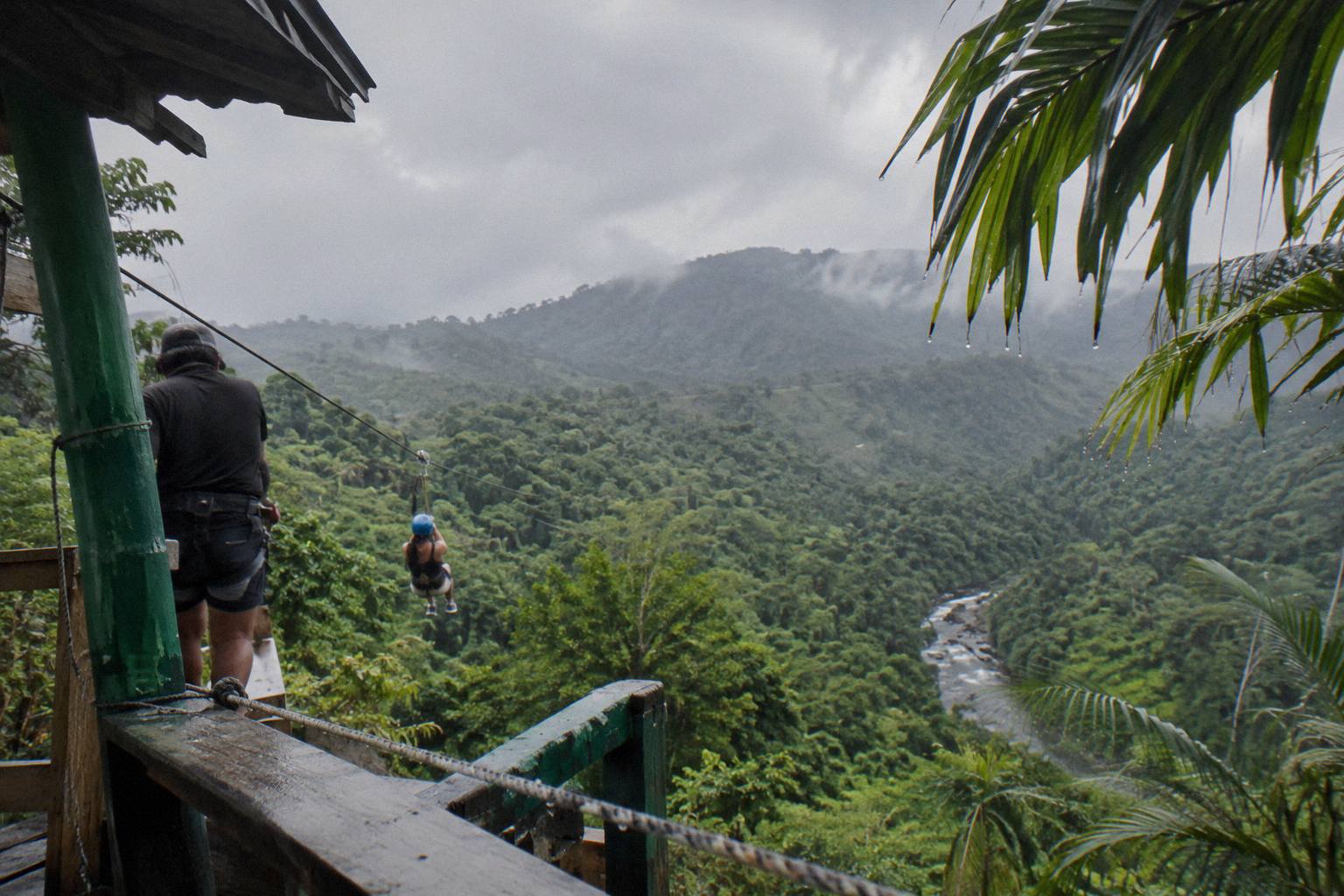
Yes, in ordinary rain. Zip Fiji states plainly that its tour runs in all weather except lightning overhead, high winds and especially heavy rain. A passing shower, a drizzly morning or a damp canopy does not cancel the day; only the three named conditions do, and the guides on the course make the call. No forecast can promise your tour runs, and the operator decides on the day.
The weather rule is published on the Zip Fiji FAQ, and it is more permissive than many visitors assume. Zipline equipment does not stop working in rain, platforms do not close for drizzle, and the 16 lines and 27 platforms at the Momi Bay course operate year round, daily including Sundays and holidays. What the rule protects against is specific: lightning directly overhead, wind strong enough to matter, and rain heavy enough to be classified as especially heavy by the operator's own standard.
The Sleeping Giant park at Sabeto states no weather rule at all, so nothing can be said here about its rain policy. What is known: the park is open 7 days from 10am to 5pm, runs 7 zip lines over 700 m with lines of 80 to 160 m, and its Zipline and Safari Tour runs about 6 hours with hotel pickup. If a storm is forecast for Sabeto, the question to ask the operator before paying is whether the tour runs in that weather and what happens if it does not.
Both operators' listings appear on booking pages that carry free cancellation up to 24 hours before the start, which is the financial backstop for a wet-season booking. If the forecast turns, you can still step aside inside that window; if the operator cancels because lightning is overhead, the cancellation is theirs, not yours.
Between the three tours above, the wet-season logic differs a little by course. The main Momi Bay listing, "Fiji: Zipline Adventure and Cave Exploration", from US$100 per person on the booking page, is a 3 to 4 hour commitment with shuttle, meal and cave tour included, rated 4.9 from 303 reviews. The Sleeping Giant safari listing, from US$88, runs about 5.5 hours with lunch and waterfall walk. The Coral Coast pickup version, from US$115, adds roughly an hour of van travel each way before you even reach the course, which widens the weather window you are exposed to on the same day.
What Happens To Your Booking When A Tour Is Cancelled?
Every booking-page listing for these zipline tours carries free cancellation up to 24 hours before the start for a full refund, so a cancellation you trigger yourself inside that window costs nothing. If the operator cancels because lightning, wind or heavy rain closes the course, the operator's terms apply and the booking page handles the refund. Direct bookings follow stricter terms, so the route you book through matters as much as the weather.
The 24 hour rule is the number to anchor on. It means the latest safe decision point for a self-cancelled booking is a day before your start time, which is usually outside the range of a reliable forecast for a specific afternoon. Booking earlier in your stay rather than at the end is the classic hedge: if a morning is washed out, a rebooking may still be possible on a later day of the trip, whereas a last-day tour that cancels is simply gone.
The operator-direct terms are different and worth knowing even if you never use them. If you book direct with Zip Fiji, a card is taken and charged 48 hours before the tour; cancellation is free over 48 hours out, carries a 50 percent fee 24 to 48 hours before, and 100 percent inside 24 hours. If you book direct with Sleeping Giant, cancellations inside 24 hours are non-refundable and a 20 percent deposit applies. Those terms only apply to direct bookings, and the booking pages remain the more flexible route for a wet-season date.
| Booking route | Cancellation terms | When it applies |
|---|---|---|
| Booking page, "Fiji: Zipline Adventure and Cave Exploration" | Free cancellation up to 24 hours before the start | The main Momi Bay listing, from US$100 |
| Booking page, Sleeping Giant safari listing | Free cancellation up to 24 hours before the start | The Sabeto listing, from US$88 |
| Booking page, Coral Coast pickup listing | Free cancellation up to 24 hours before the start | The Sigatoka pickup listing, from US$115 |
| Direct with Zip Fiji | Free over 48 hours; 50 percent fee 24 to 48 hours; 100 percent inside 24 hours | If you book direct with the operator |
| Direct with Sleeping Giant | Non-refundable inside 24 hours; 20 percent deposit applies | If you book direct with the operator |
Weather cancellations are the operator's call, and the Zip Fiji safety information page is where the operator's own operating position lives. Ziplining carries real risk in any weather, which is exactly why the lightning, wind and heavy-rain exceptions exist: the course closes for the conditions that change how a rider arrives at a platform.
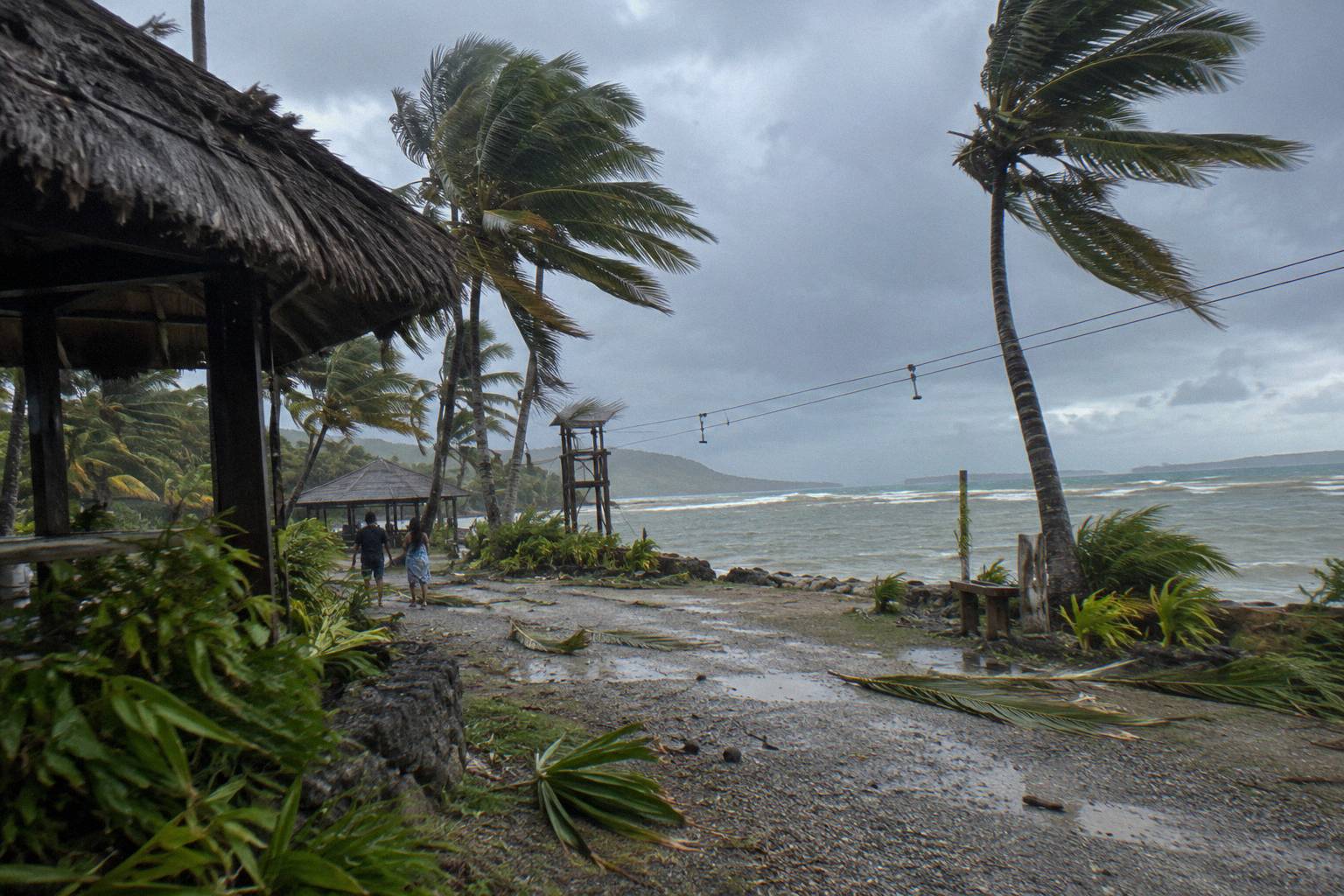
The standard Momi Bay tour is the one most wet-season visitors should hold, precisely because its terms and its schedule both bend. Zip Fiji says the tour runs about 3 hours, departs the Welcome Centre at 9:00 am and 2:00 pm, includes the round-trip shuttle from the Nadi area, a meal and soft drinks, and takes groups of up to 16 guests with 5 guides. A short tour with two daily departures is easier to rebook than a long one.
Momi Bay Or Sleeping Giant: Which Course Suits A Wet Week?
The Momi Bay course is the shorter, tighter commitment: about 3 hours on site, two departures a day, and a weather rule published by the operator. The Sleeping Giant safari is the longer day, about 6 hours with pickup, about 4 hours of activity plus about 2 hours round trip from Denarau, with two waterfalls and a jungle safari walk built in. In a wet week the shorter day is easier to protect.
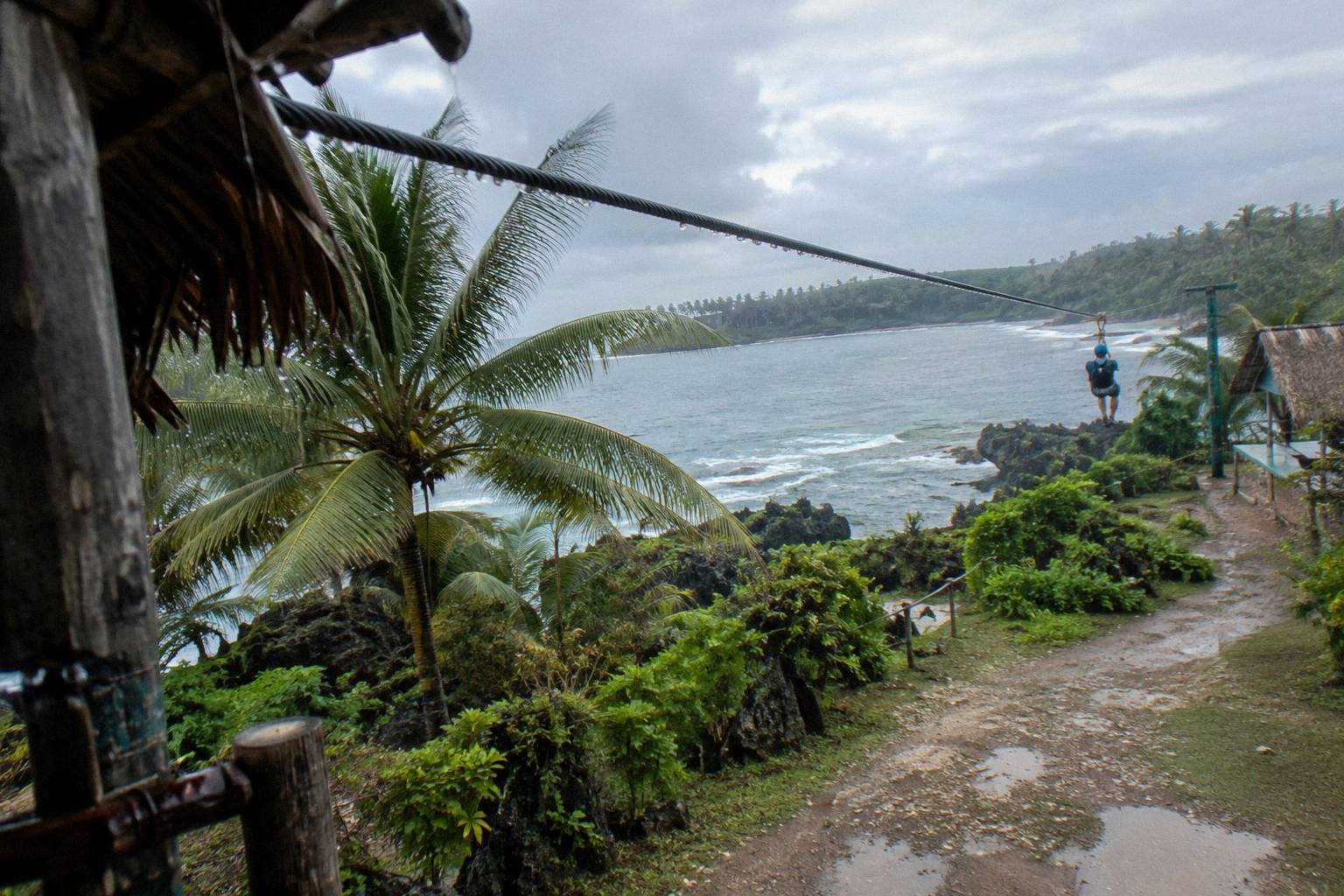
Consider the transfer exposure. Zip Fiji says Tau Village is 35 minutes from Nadi, though one booking page says 45 minutes, and a guest review reports about 2 hours when two hotel pickups are chained before the van leaves town; transfer time depends on how many hotels the van collects before yours. Sleeping Giant says it is just 20 minutes from Nadi, with Denarau pickups at 10am or 12pm and about 1 hour each way from Denarau, with drop-off about 4 to 4:30pm or 5:30 to 6pm. Neither drive is long, but both put you in a van during whatever the sky is doing.
The Coral Coast pickup listing is the one that changes the calculus most. Its itinerary includes about 1 hour of van travel each way from Coral Coast hotels such as the Shangri-La Yanuca, Naviti, Warwick, Outrigger and InterContinental, and the Momi pickup departs the Nadi area at least 2 hours before a 9 am Momi start. That is a wide window between leaving your room and clipping into a harness, in weather that can turn. The upside is the same 16-line course and cave, rated 4.9 from 28 reviews on that listing, from US$115 per person.
| Decision factor | Momi Bay course (Zip Fiji) | Sleeping Giant park |
|---|---|---|
| Lines | 16 lines, longest 235 m, 27 platforms | 7 lines over 700 m, lines 80 to 160 m |
| Stated speeds | Not given by the operator | Up to 40 km/h |
| Time on the day | About 3 hours, 3 to 4 hours on the Zip Fiji tour | About 4 hours of activity, about 6 hours with pickup |
| Departures | Welcome Centre 9:00 am and 2:00 pm | Denarau pickups 10am or 12pm |
| Weather rule | All weather except lightning, high winds, especially heavy rain | None stated by the operator |
| From price on the booking page | US$100 (main listing) | US$88 (safari listing) |
| Free cancellation | Up to 24 hours before the start, on the booking page | Up to 24 hours before the start, on the booking page |
The park at Sabeto rounds out its day with two waterfalls, a jungle safari walk and a deli lunch with a sandwich and soft drink, plus unlimited rounds on the 7 lines. If rain arrives mid-day, a walking-and-zipping mix has more shelter from tedium than a pure zipline loop; if rain arrives as a genuine storm, no activity mix saves the day. The full Sabeto picture is in the Sleeping Giant zipline and safari walkthrough, and the head-to-head is in choosing between the Momi Bay and Sleeping Giant courses.
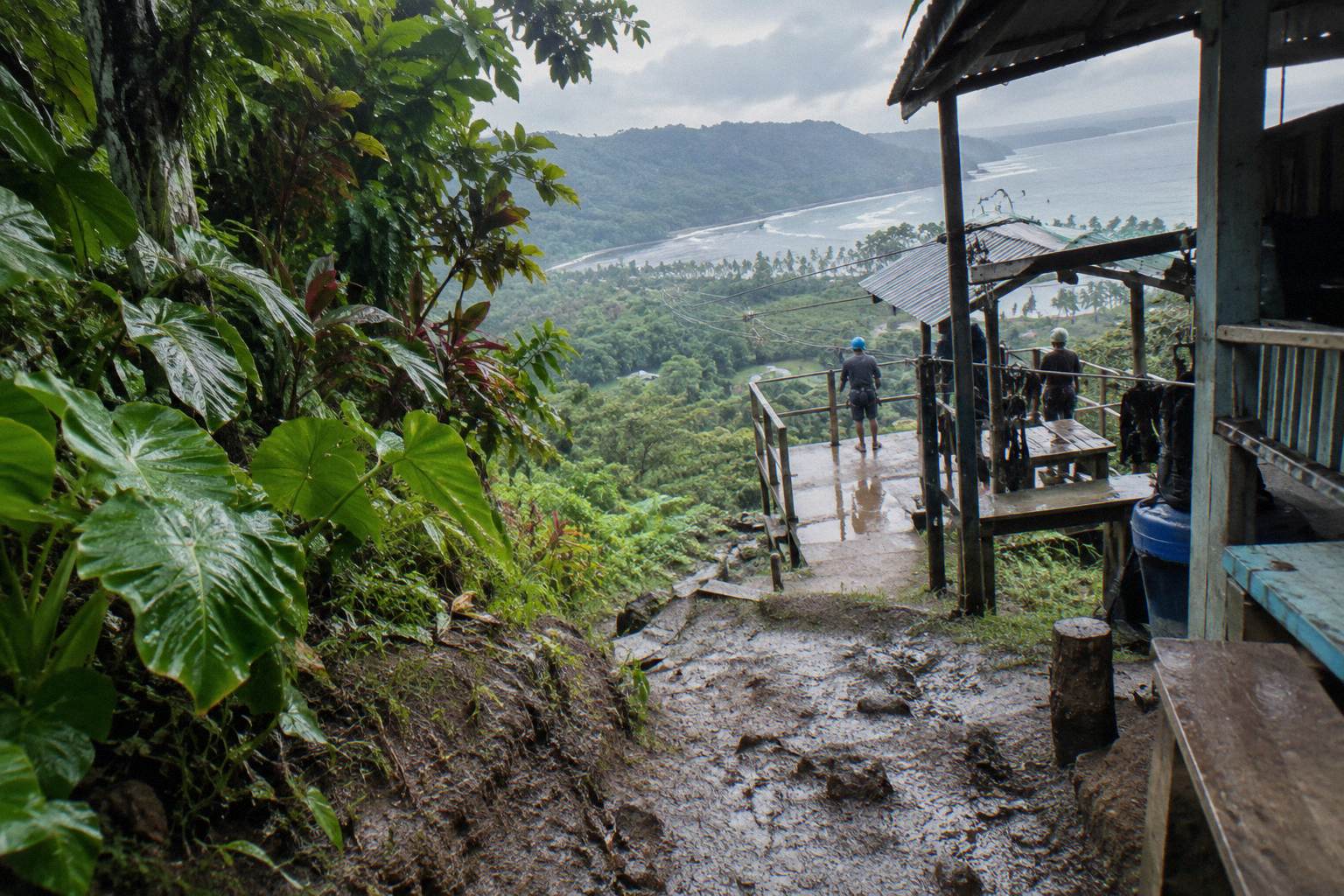
The "Nadi: Zipline, Waterfalls, and Jungle Safari Tour with Lunch" listing, rated 4.7 from 67 reviews, is the Sabeto day to hold if the longer format appeals. Its wet-week strength is the mix of activities and the fact that the zipline portion is only part of the ticket, so light rain does not diminish the whole value of the day. Check availability for your dates and read the pickup window against your hotel location before committing.
What Rain Changes On The Day: Clothing, Footwear And The Trail
Rain changes the ground more than the wires. Both operators require some uphill walking on uneven terrain, Zip Fiji about 15 minutes uphill, Sleeping Giant 10 to 15 minutes uphill plus about 20 trail stairs, and a wet trail is slicker underfoot than a dry one. Zip Fiji asks for closed-toe sport shoes as the best choice, with strap-on sandals acceptable and bare feet not allowed. Sleeping Giant asks for waterproof shoes, a towel, sunscreen and bug repellent.
The equipment side is straightforward. Zip Fiji asks for comfortable clothing that does not interfere with the harness, with shorts, a T-shirt and running shoes typical; skirts, dresses and bathing suits are not appropriate. Cameras are allowed only on a strap or a helmet strap, and no water bottles, backpacks or belt packs go on the course; a water break is included. Sleeping Giant simply says bring a camera and glasses strap. Wet gear rules do not change, they just matter more. The rest of the planning pages sit on Ziplines In Fiji.
The walk matters in both directions. Zip Fiji's eligibility includes being able to walk 15 minutes uphill over uneven ground unassisted, with full range of motion in arms, shoulders, neck and back, and standing on a platform about 5 stories high without severe anxiety or dizziness. Sleeping Giant's fitness note is the 10 to 15 minute uphill walk and comfort at heights over 100 ft. Rain makes both walks slower, so budget time and shoes accordingly; the full packing logic is in what to wear and bring for ziplining in Fiji.
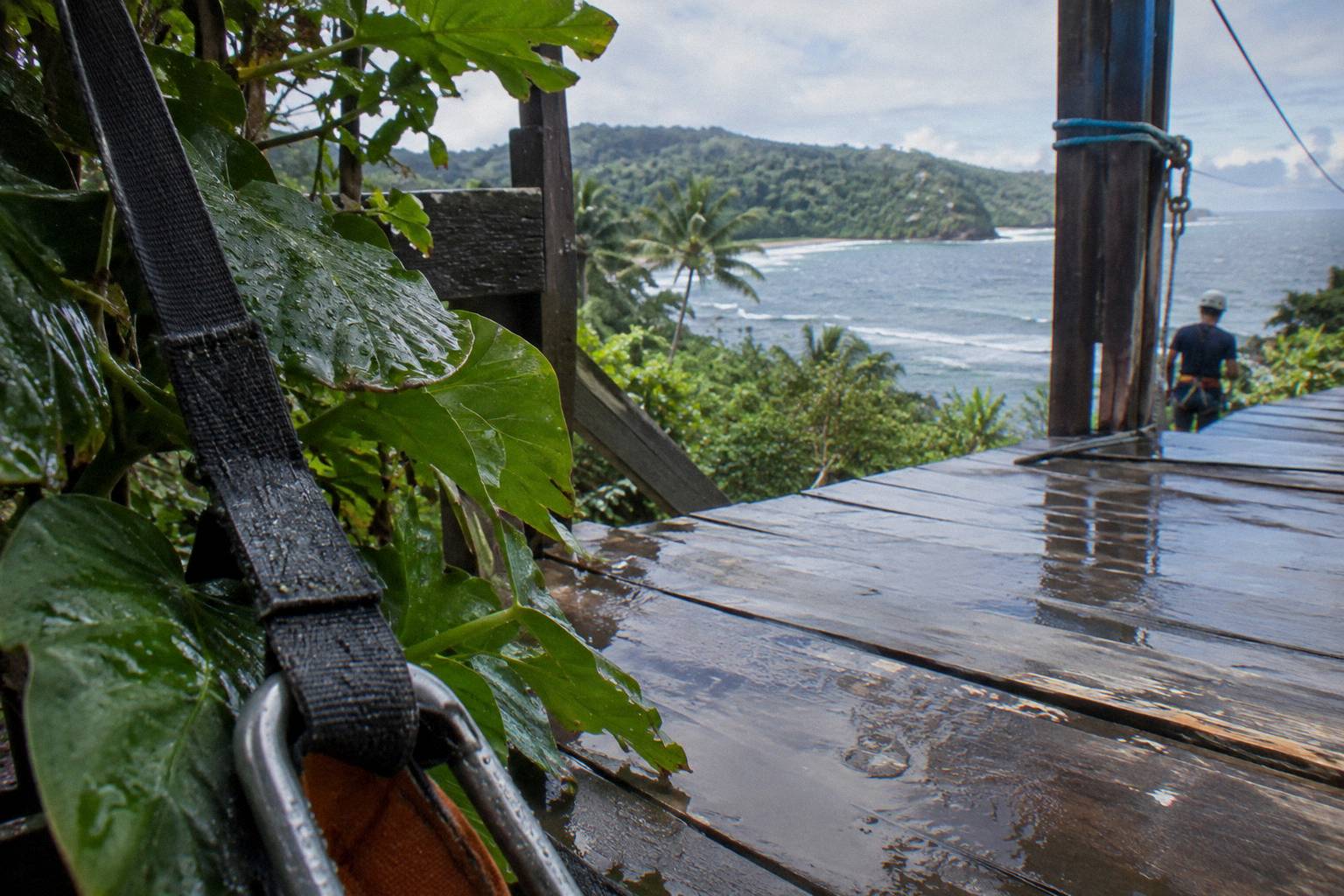
One wet-season comfort worth knowing: the Zip Fiji tour includes a guided tour of a large limestone cave chamber with a skylight, and the meal and soft drinks are part of the day on the main listing. The cave is an indoors-by-nature segment of the itinerary, which a mid-tour shower cannot spoil. The cave side of the day is covered in detail in the zipline and cave exploration guide.
Cyclone Season: When The Weather Risk Actually Peaks
The official South Pacific tropical cyclone season runs from 1 November to 30 April, overlaying almost the entire wet season around Nadi. A cyclone watch or warning is a different situation from an ordinary rain day: it grounds flights, closes roads and stops tours wholesale. If your dates sit between November and April, book with free cancellation and let the operator and the forecast make the call.
The distinction to hold onto is shower versus system. A shower is an hour of rain that the Zip Fiji rule absorbs without a cancellation. A system is a named or developing disturbance that changes transfer logistics, ferry schedules and airport operations across the whole western division. The Fiji Meteorological Service is the authority for watches and warnings, and Tourism Fiji publishes general travel information worth checking before a wet-season trip.
Within cyclone season, the deepest risk pocket aligns with the wettest months. January's 365.2 mm, February's 335.5 mm and March's 350.5 mm at Nadi Airport mark the stretch where both routine rain and system risk run highest. Shoulder months such as November or April can deliver excellent touring weather with fewer crowds; the trade is simply that the tail of the cyclone window is still open. June sits outside the season proper and outside the short dry season, often a quiet middle ground.
For a fixed travel date inside cyclone season, the sequence that protects you is: book a listing with free cancellation up to 24 hours before the start, schedule the zipline early in the stay rather than on the final day, and watch the forecast in the 48 hours before your slot. If a system is approaching, the decision to move or cancel is yours inside the window; if the operator cancels, the booking page handles the refund.
How To Sequence A Zipline Booking Inside A Rainy Week
Book the zipline for the first full day of your stay, not the last, and hold it on a listing with free cancellation up to 24 hours before the start. That one choice converts a weather cancellation into a rebooking. Prefer a morning departure, 9:00 am at Momi or the 10am Denarau pickup, because afternoon build-up is the recurring pattern and the two-departure schedule gives a same-day fallback.
The arithmetic is simple. A tourist with five days in Nadi who books the zipline on day one has four chances to rebook if the sky closes. The same tourist who books day five has none. The Zip Fiji schedule, daily at 9:00 am and 2:00 pm, plus the operator's rule that the tour runs in all weather except lightning overhead, high winds and especially heavy rain, means most mornings go ahead even in January. The main listing, from US$100 per person, includes the Nadi-area shuttle, meal, soft drinks and the cave tour, which is why it is the default wet-season hold.
The Coral Coast listing deserves the same sequencing discipline plus a margin for the drive. With roughly an hour of van each way from hotels between Yanuca and Sigatoka, and a Momi pickup departing the Nadi area at least 2 hours before a 9 am start, the day is longer and the weather exposure wider. It suits travellers staying on the Coral Coast who would otherwise not reach the Momi course at all; the details are in ziplining from the Coral Coast and Sigatoka.
| Your situation | Better hold | Why |
|---|---|---|
| Short trip, fixed dates | Main Momi Bay listing, morning slot | About 3 hours on site, two daily departures, free cancellation up to 24 hours |
| Staying on Denarau, wanting a full day | Sleeping Giant safari listing | Pickup at 10am or 12pm, about 6 hours with transfer, lunch included |
| Staying on the Coral Coast | Coral Coast pickup listing | Same 16-line course without self-driving to Momi |
| Travelling January to March | Any listing, booked early in the stay | Wettest months; the rebooking margin is the protection |
| Unsure about the forecast | Book, then watch the forecast inside the 24 hour window | Free cancellation on the booking page is the escape hatch |
The "Fiji: Zipline Adventure and Cave Exploration" listing is the related tour here because its terms, schedule and length line up with a wet-season plan better than any other card: 4.9 from 303 reviews, from US$100 per person, about 3 to 4 hours, free cancellation up to 24 hours before the start on the booking page. See the live dates for your travel window before you lock a day.
For Coral Coast visitors, "Largest Zipline & Cave Exploration from Sigatoka Coral Coast", rated 4.9 from 28 reviews and from US$115 per person, runs about 3 hours once on site. The longer van legs are the trade for not needing to reach Momi under your own steam. Check availability with your hotel name to hand, since the pickup list decides whether your property is covered.
What Trips People Up Before You Book
The mistakes are predictable: booking the zipline on the last day of the trip, assuming rain cancels the tour when the operator's rule only names lightning, high winds and especially heavy rain, booking direct with an operator and then reading the stricter direct cancellation terms, and treating a cyclone-season week like an ordinary wet week. Each one costs either the activity or the refund. Reading the weather rule and the cancellation window before paying removes all four.
The first trip is sequencing. A last-day zipline in January is a coin toss with no second chance, and the fix costs nothing: hold an early slot and keep the tail of the trip free for a rebooking. The second trip is over-cancelling: travellers see rain in the morning forecast and cancel inside their free window when the tour would have run, because ordinary rain is inside the operator's stated rule. Only lightning overhead, high winds and especially heavy rain stop the Momi tour.
The third trip is route confusion. Booking direct with Zip Fiji means a card charged 48 hours out, a 50 percent fee 24 to 48 hours before and nothing back inside 24 hours; direct with Sleeping Giant means a 20 percent deposit and no refund inside 24 hours. Those are the operators' direct terms, and they are stricter than the booking pages' free cancellation up to 24 hours before the start. For a weather-exposed date, the booking page is the flexible route. Zip Fiji's own site also lists FJ$245 per person for the direct standard tour, a different currency and a different set of terms.
The fourth trip is scale: a rain squall and a cyclone watch are not the same event, and the 24 hour window is built for the first, not the second. In cyclone season, watch the official forecasts, talk to the operator early if a system approaches, and keep your plans movable at the trip level, not just the activity level. Beyond that, the plain advice on whether ziplining in Fiji is safe covers the equipment and standards side of the question.
Common Questions About Wet Season Bookings
Do Zipline Tours In Fiji Run In The Rain?
Ordinary rain, yes. Zip Fiji states its tour runs in all weather except lightning overhead, high winds and especially heavy rain, so a shower or drizzly morning does not stop the Momi Bay course. The Sleeping Giant park states no weather rule, so confirm with that operator if rain is forecast for Sabeto.
What Is The Wet Season In Nadi?
Nadi has a tropical monsoon climate with a short dry season in July and August and a long wet season across the remaining months. Nadi Airport records 365.2 mm of rain in January, 335.5 mm in February and 350.5 mm in March, against 1,999.4 mm a year.
When Is Cyclone Season In Fiji?
The official South Pacific tropical cyclone season runs from 1 November to 30 April. It overlays most of the wet season, and a cyclone watch affects transfers and flights as well as tours, so it calls for trip-level flexibility rather than a simple activity decision.
Can I Cancel A Zipline Booking If The Forecast Turns Bad?
On the booking page, yes, with free cancellation up to 24 hours before the start for a full refund. Direct bookings follow different terms: with Zip Fiji a card is charged 48 hours out and fees apply closer to the start; with Sleeping Giant cancellations inside 24 hours are non-refundable.
Is A Morning Or Afternoon Zipline Slot Better In The Wet Season?
A morning slot is the better hold. Monsoon rainfall often builds later in the day, and the Momi Bay course runs two departures, 9:00 am and 2:00 pm, so a morning start leaves a same-day fallback. Sleeping Giant pickups run at 10am or 12pm from Denarau hotels.
What Should I Wear Ziplining In The Rain?
Closed-toe sport shoes are the best choice at the Momi course, with strap-on sandals acceptable and bare feet not allowed; comfortable clothing that does not interfere with the harness, and cameras only on a strap. Sleeping Giant asks for waterproof shoes, a towel and bug repellent. Both courses involve a 10 to 15 minute uphill walk on ground that is slicker when wet.