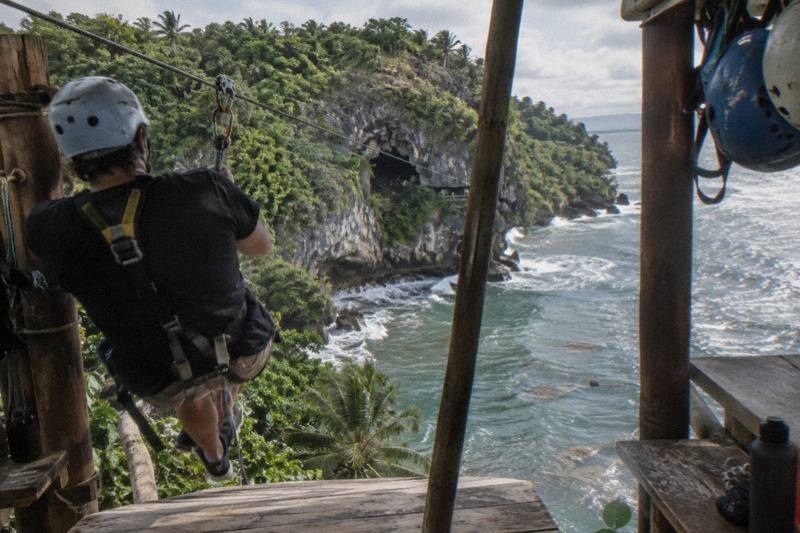
Is Ziplining As Scary As Roller Coasters? What A Fiji First-Timer Faces
A plain comparison of what a zipline asks of you versus a roller coaster, using the real figures from the two Nadi-area courses: platform height, line counts, speeds, and the option to stop after the first line.
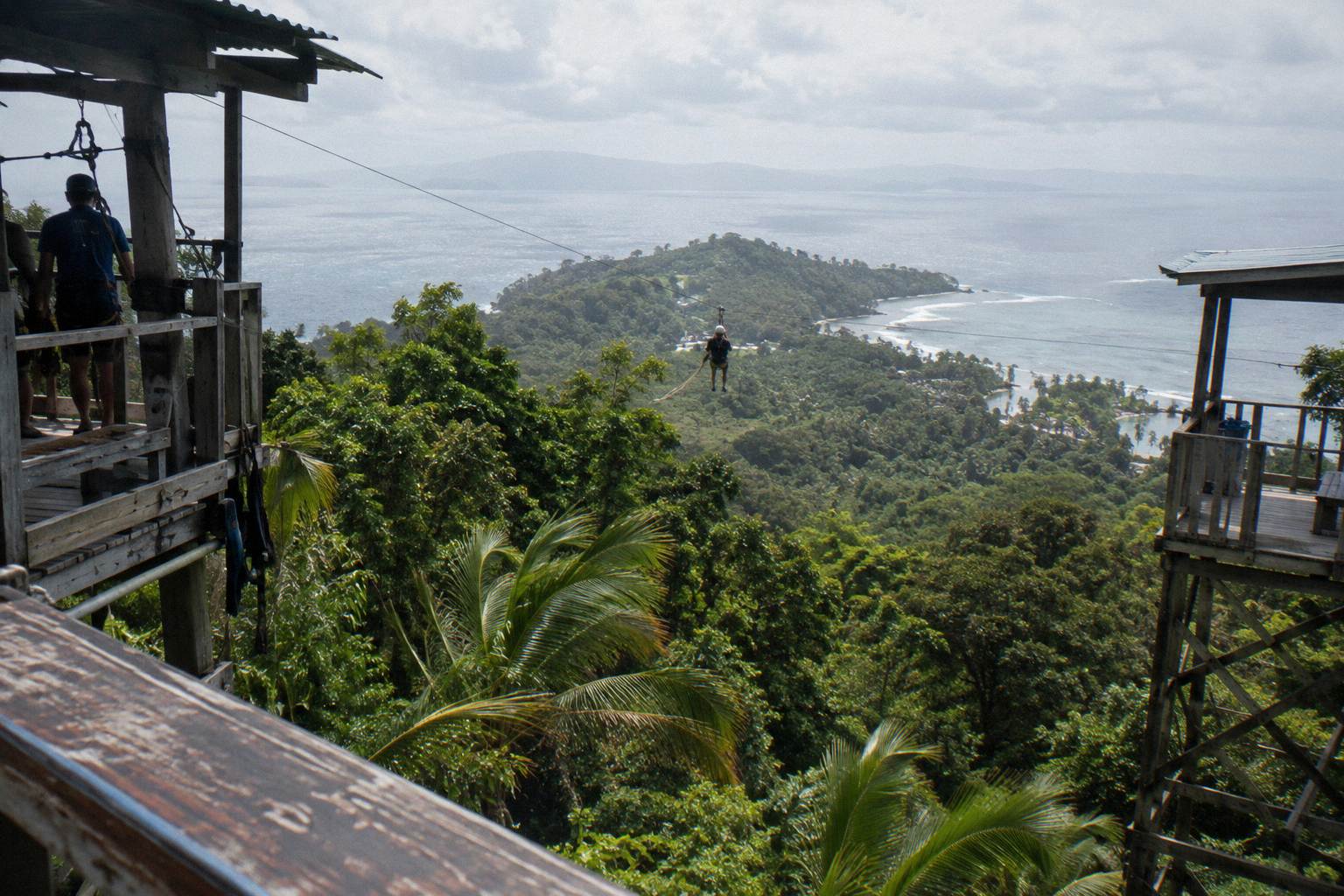
If the question is whether your body treats the two rides the same way, start with the one structural difference that matters: a roller coaster locks the restraint over your shoulders and the machine does everything after that, while a zipline hands you the final decision. Gravity does the travelling, but you take the step off the platform. For a nervous first-timer weighing a Fiji booking, that difference decides more than any speed figure, and both Nadi-area courses publish enough detail to size it up before paying. The Momi Bay zipline and cave tour runs the 16-line course at Tau Village, and everything below draws on what the two operators themselves publish.
| Fact | Detail |
|---|---|
| Highest point named | A platform about 5 stories high at the Zip Fiji course (operator FAQ) |
| Lines per course | 16 at Zip Fiji Momi Bay, 7 at Sleeping Giant in Sabeto |
| Longest single line | 235 m at the Zip Fiji course |
| Stated speeds | Up to 40 km/h at Sleeping Giant (operator); no speed figure stated by Zip Fiji |
| Opt-out rule | Zip Fiji walks guests back to the Welcome Centre after the first zip if they cannot continue |
| Who cannot ride | Pregnancy is listed as not suitable on every operator and booking page consulted |
| Commitment per ride | Roller coasters commit you until the train stops; a zipline asks for a step each line |
| From price, US dollars | US$100 per person for the largest Momi listing, US$88 for the Sleeping Giant safari listing |
Is Ziplining As Scary As Roller Coasters?
No available source compares the two rides, so no answer can declare either one scarier. What can be compared is structure: a coaster restrains you and runs a fixed circuit at speeds you never control, while a zipline asks you to step off a platform about 5 stories high at the Zip Fiji course, once per line. The fear is real in both cases, but it arrives differently, and the zipline version is one you can act on.
The comparison people usually want is a fear ranking, and that ranking does not exist in any sourced form. What exists is equipment, height, speed and duration, all published by the operators themselves. A roller coaster in a theme park typically runs a train on a fixed track with a shoulder or lap restraint, and the rider's only job is to sit still. A zipline rider is clipped to a trolley on a cable, and the ride begins because the rider steps off a platform. Zip Fiji's own FAQ frames the height requirement plainly: you must be able to stand on a platform about 5 stories high without severe anxiety or dizziness, per the Zip Fiji FAQ. That is the single most concrete fear fact either course publishes.
The second structural difference is repetition. A coaster is one commitment: the train finishes the circuit whether you enjoy it or not. The Zip Fiji course is 16 lines and 27 platform stations, so the experience is 16 separate decisions rather than one long one. That cuts both ways for a nervous rider. Sixteen launches is a lot if every one costs you nerve. But the first line is also the trial: Zip Fiji says that after the first zip, guests who cannot continue are walked back to the Welcome Centre. No roller coaster offers an exit after the first drop.
Speed is where the two genuinely diverge, and not in the direction most people assume. Sleeping Giant Zip Line states speeds of up to 40 km/h on its own pages, which is gentle by coaster standards; a modern roller coaster can run several times that. Zip Fiji states no top speed at all, though its longest line, 235 m, gives a longer ride than any single Sleeping Giant line of 80 to 160 m. If raw speed is what frightens you, the stated numbers favour the zipline. If height and self-launch frighten you, the zipline is the harder ask.
For a first-timer whose stomach turns at the word coaster, the practical takeaway is that the two fears need different preparation. Coaster fear is surrender fear: you board, and it happens to you. Zipline fear is action fear: you clip, you step, you repeat. Some people find action fear worse because there is no moment where the decision is taken from them. Others find it easier for exactly the same reason, because the step is theirs and it ends the waiting. Only you know which camp you fall into, but the walk-back rule at Momi Bay caps your worst case at one line.
What Actually Happens At Height On A Zipline
At the Zip Fiji course you stand on platforms up to about 5 stories high, clipped by a guide, and travel a cable rather than a track. Sleeping Giant's park asks for comfort at heights over 100 ft, with 7 lines and a jungle walk between them. Neither operator publishes a sensation description, so this section sticks to what each one states: heights, platform counts, and the procedures that govern the moment before launch.
Start with the platform, because that is where the fear actually lives. The Zip Fiji FAQ sets the bar as standing on a platform about 5 stories high without severe anxiety or dizziness, and the course has 27 of them connected by 16 lines. Five stories is roughly the height of a mid-rise hotel balcony, and you stand on it, in a harness, waiting your turn while guides clip and check. The anticipation is not a design flaw; it is simply how a canopy tour works, since every launch needs the rider positioned and attached.
The clip itself is worth understanding, because standards shape it. Industry practice, set out in the ASTM F2959 standard page for aerial adventure courses, covers design, installation, operation and maintenance of zip lines used commercially, and the safeguards named in the industry literature include guide-clipped carabiners, double lanyards, redundant brakes and pre-ride checks. Zip Fiji runs groups of up to 16 guests with 5 guides, so the clipping is done by staff, not by you. A nervous first-timer is not asked to manage their own attachment at height; they are asked to stand, breathe, and step.
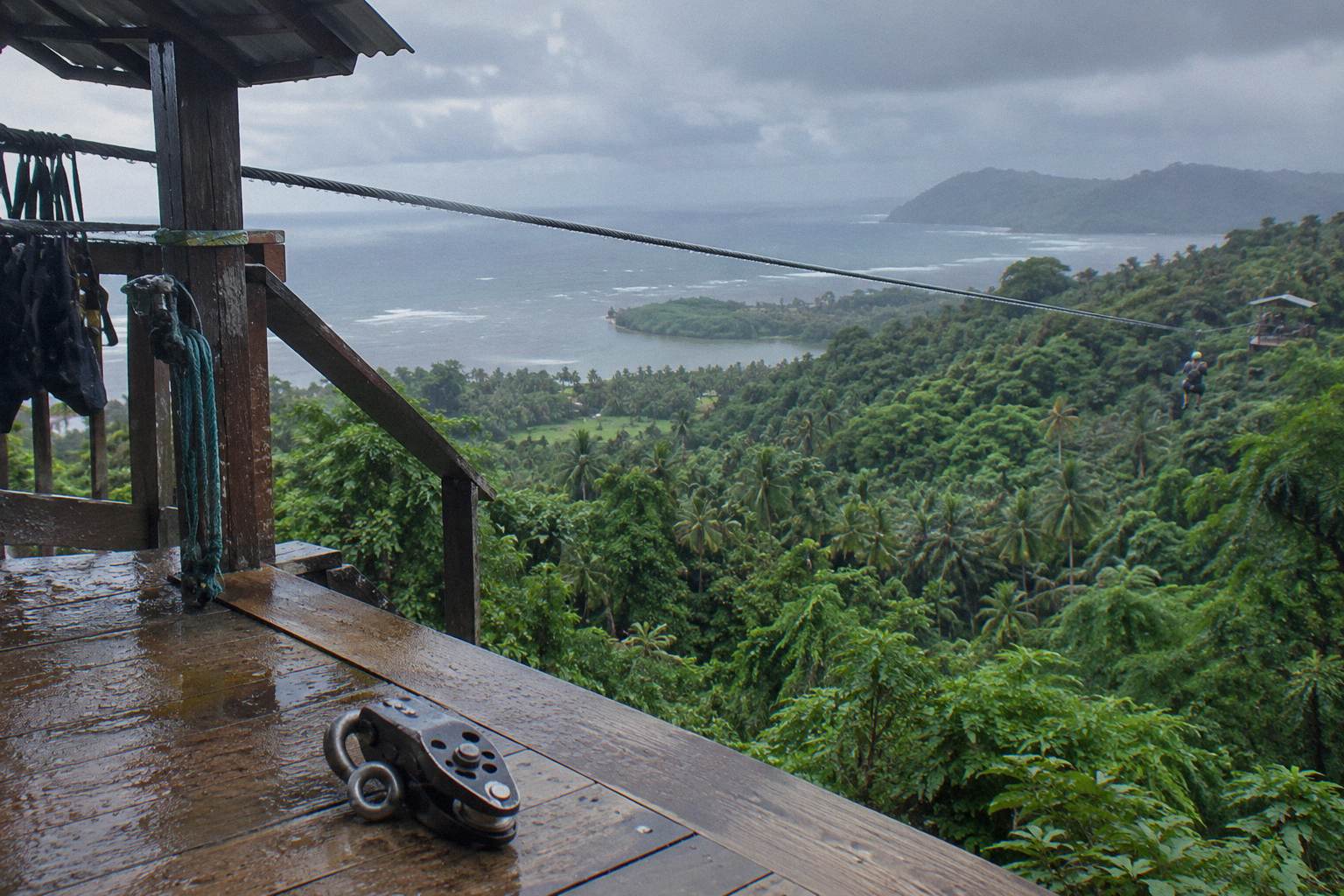
What happens between platforms is gravity and cable. The rider travels seated in a harness, and the arrival is managed at the far platform by the guide team there. When a rider stops short mid-line, the industry practice is a pull-in rope or a mechanical-advantage rescue system operated from the platform. Nothing in the sourced material describes the feeling of the ride, and no claim about it appears here. What the material does say is that the longest single line at Momi Bay is 235 m, so the longest sustained stretch between launch and arrival is a fraction of the length of a coaster circuit.
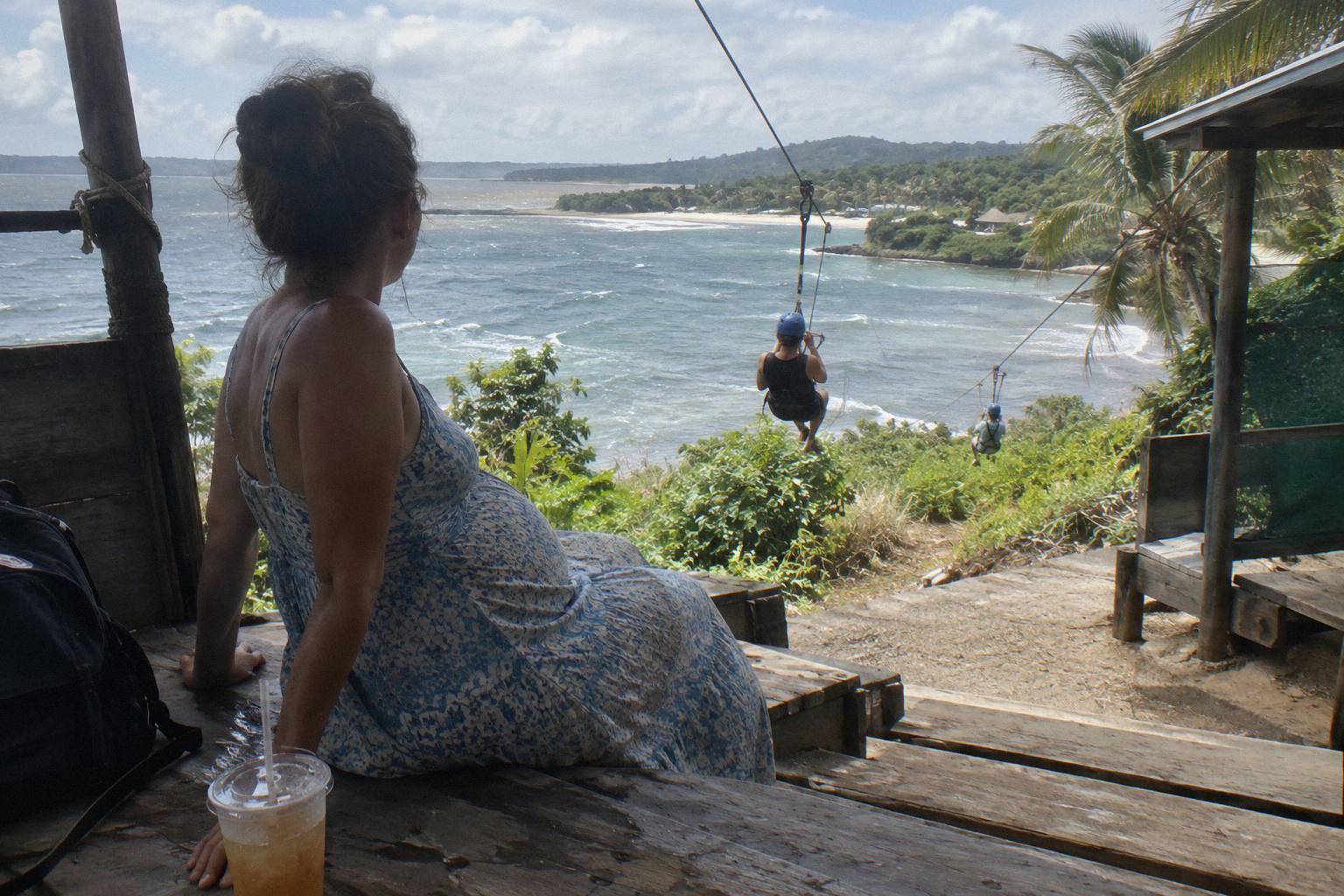
At Sleeping Giant the height ask is worded differently: the operator asks riders to be comfortable at heights over 100 ft, able to walk 10 to 15 minutes uphill over uneven ground, and able to manage about 20 trail stairs. The lines run 80 to 160 m at up to 40 km/h, and the park sits on 35 acres with two waterfalls and a jungle safari walk built into the tour. The rhythm differs from Momi Bay: fewer, shorter lines, with walking in between, which for some nervous riders makes the day feel less like a sustained height experience and more like a hike with flying sections.
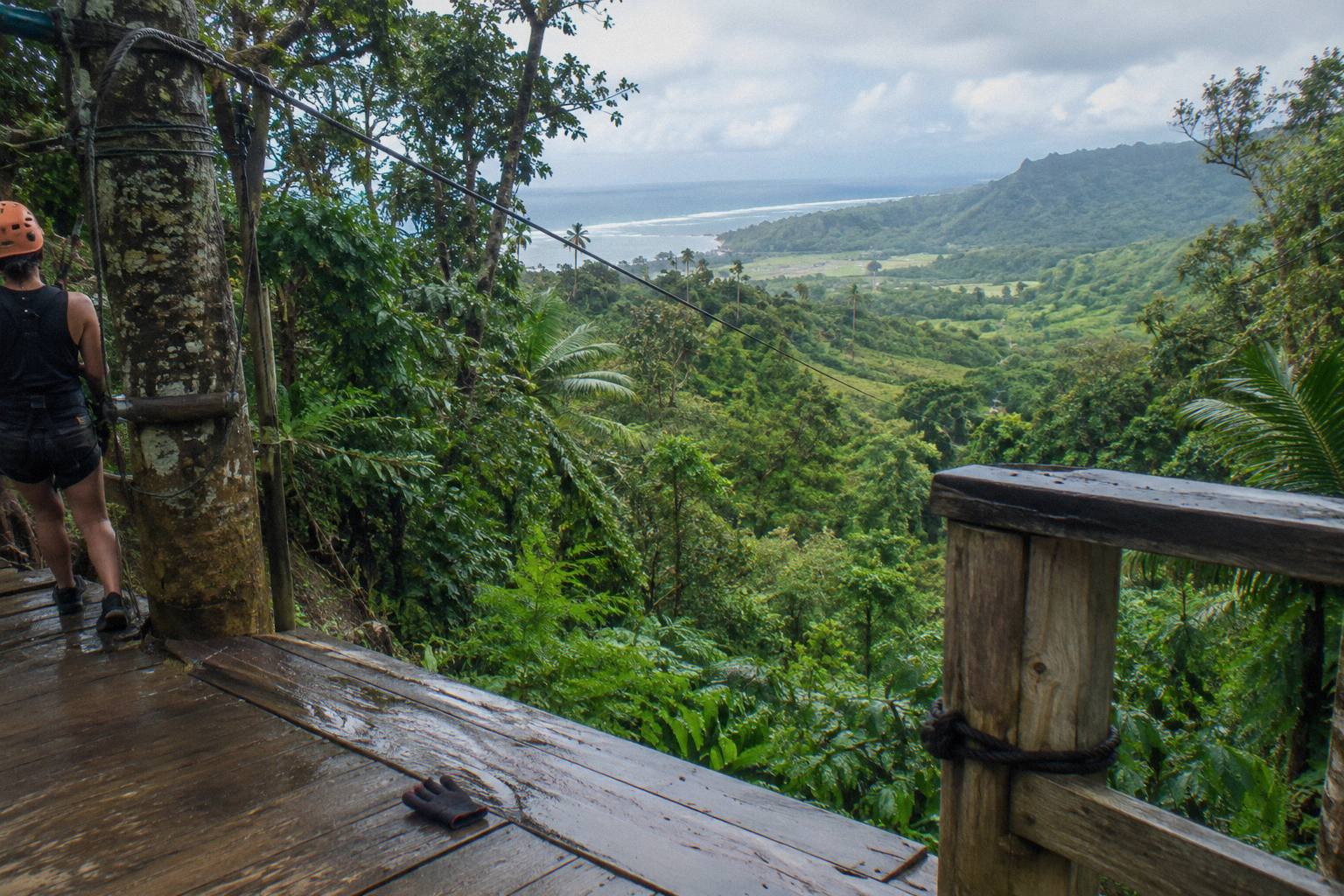
The clothing rules also tell you something about the experience. Zip Fiji asks for closed-toe sport shoes, comfortable clothing that does not interfere with the harness, no skirts, dresses or bathing suits, and no water bottles, backpacks or belt packs on the course. Cameras are allowed only on a strap, a GoPro only on a helmet strap. These are not fear rules, but they matter to one: loose items and unsuitable shoes are small stressors you can remove entirely before the first platform. If you want the full packing picture, the what to wear and bring ziplining guide covers both operators' lists in detail.
Sixteen Lines Or Seven: How The Two Fiji Courses Differ
The Momi Bay course runs 16 lines, the longest at 235 m, with 27 platforms and about 3 hours on the tour. The Sabeto course runs 7 lines over 700 m in total, each 80 to 160 m long, at speeds up to 40 km/h, on a tour of about 6 hours including hotel pickup and a deli lunch. Neither is a coaster circuit, so what matters for a nervous booking is how many times you launch, not speed.
Here is the comparison table, built only from what the operators state:
| Detail | Zip Fiji, Momi Bay | Sleeping Giant, Sabeto |
|---|---|---|
| Lines | 16 | 7 |
| Total zipline length | "5km of ziplines" per the operator | Over 700 m |
| Longest line | 235 m | 160 m |
| Stated top speed | None stated by the operator | Up to 40 km/h |
| Platforms | 27 | No count given |
| Height ask | Platform about 5 stories high, no severe anxiety | Comfortable at heights over 100 ft |
| Tour length | About 3 hours | About 6 hours with pickup, activity about 4 hours |
| Extra inclusions | Cave tour, meal, soft drinks, shuttle | Two waterfalls, jungle safari walk, deli lunch |
| Walking requirement | 15 minutes uphill unassisted | 10 to 15 minutes uphill, about 20 trail stairs |
Read that table as a nervous rider, not as a shopper. Sixteen lines at Momi Bay means sixteen launches and twenty-seven platform waits. If each launch costs you a minute of nerves, that is a real budget. Seven lines at Sleeping Giant means seven launches, but each line is shorter, and the walking in between gives your pulse somewhere to go. The stated speed, 40 km/h, is the ceiling at Sabeto, and it is modest: it is the speed of a car on an urban street, not a coaster drop. Zip Fiji publishes no top speed, so no comparison of the two courses' speeds can be made here.
The 235 m line deserves its own paragraph, because it is the single number at Momi Bay that gives pause. A 235 m run is a long time in the air on one line, longer than any single Sleeping Giant line by a wide margin. If your fear is sustained exposure rather than the launch itself, that is the line to think about before booking. The course is also the same across every Momi Bay tour; the variants differ by pickup area, add-ons and transfers, never by being a different ride. The largest listing, Fiji: Zipline Adventure and Cave Exploration, is rated 4.9 from 303 reviews, from US$100 per person, amounts in US dollars, from prices that vary by date and group.
Sleeping Giant's listing, Nadi: Zipline, Waterfalls, and Jungle Safari Tour with Lunch, is rated 4.7 from 67 reviews, from US$88 per person. Its tour structure is different in kind: unlimited rounds on the 7 lines, so a rider who warms up can go again rather than moving on. For a first-timer who fears the accumulation of launches, that structure rewards the ones who settle in. For a first-timer who fears the launch itself, more rounds is not obviously a gift. Neither course is the soft option in any sourced sense; they distribute the fear differently across the day.
Can You Back Out Mid-Tour?
Yes, at the Momi Bay course, in a specific way: Zip Fiji says guests who cannot continue after the first zip are walked back to the Welcome Centre. No equivalent walk-back rule is published for Sleeping Giant, so if a trial-and-retreat option is what makes the booking feel possible, the Momi course is the one that states it. This policy caps a first-timer's worst case at one line.
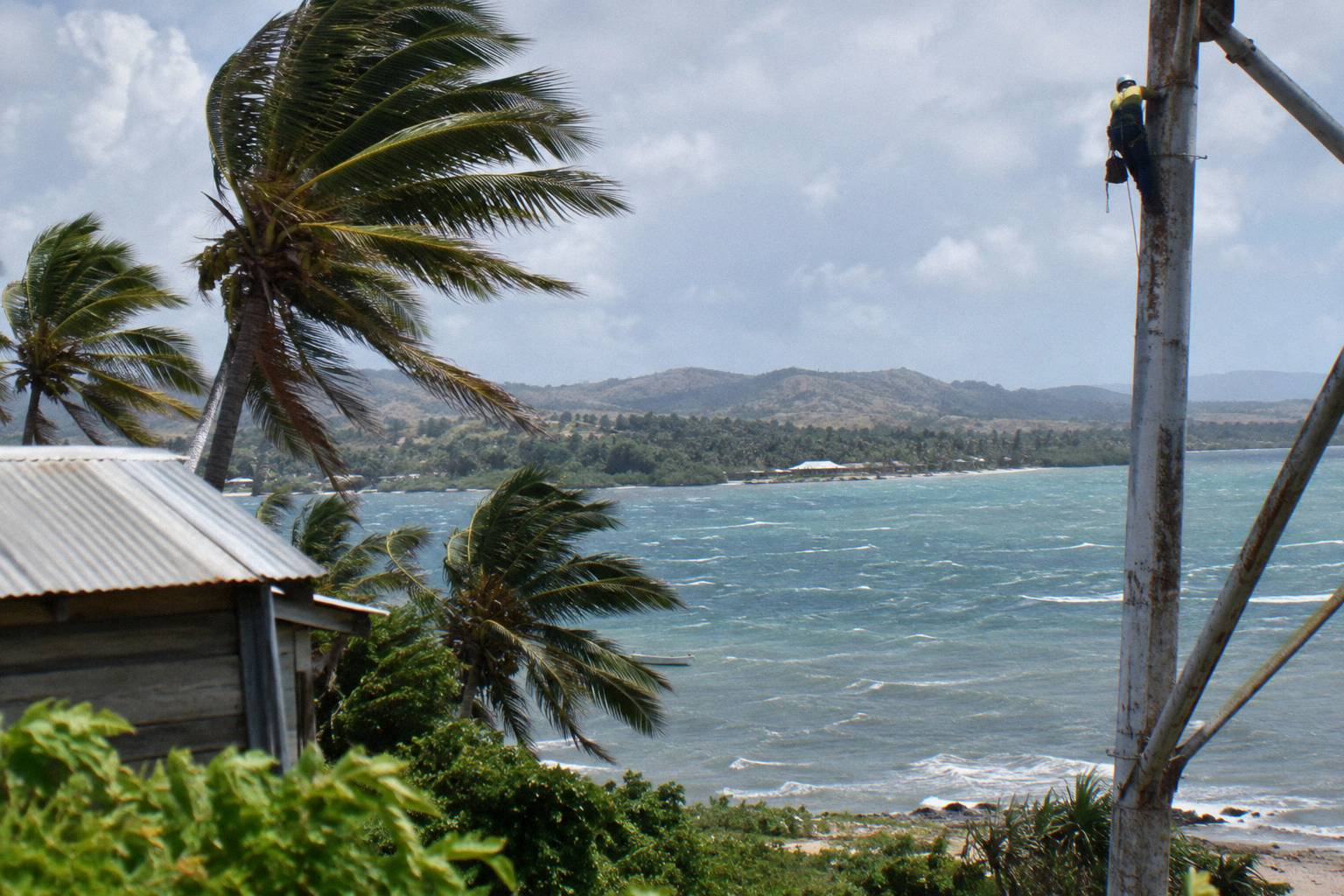
Think about what that rule means in practice. Your commitment at Momi Bay is one line. If the first zip tells you the day is not for you, the guides walk you back and the tour continues without you. No roller coaster on earth offers that, and no coaster can: the train stops when the circuit ends, not when you ask. The comparison in the page title resolves differently for different people, but on the question of exit, the zipline is strictly more humane than the machine.
There are boundaries to the rule worth stating plainly. The walk-back option sits after the first zip, which means you still have to get up to the first platform, and at Momi Bay that involves a 15 minute uphill walk over uneven ground, unassisted, per the operator's fitness requirement. The opt-out also does not extend to the booking: cancelling is a separate matter, and every Zip Fiji tour carries free cancellation up to 24 hours before the start, or free cancellation for the variants without a stated from price. If you book direct with an operator, different terms apply. The safe structure for a nervous first-timer is simple: check availability while cancellation is still free, ride the first line, then decide.
Sleeping Giant publishes no walk-back policy, so nothing can be said about one. What the park does publish is a different kind of pressure valve: rounds on the lines are unlimited, so the tour does not push you through a fixed sequence at a fixed pace in the same way. And its activity sits inside a wider day, about 4 hours of activity with about 2 hours of round-trip travel from Denarau, with a deli lunch and a jungle walk. For some riders the softer pacing is the better anxiolytic; for others, a longer day at height is worse, not better. The facts support either reading, and the choice is yours.
One more exit-shaped fact belongs here because it is about retreat in the other direction: the weather clause. Zip Fiji runs the tour in all weather except lightning overhead, high winds and especially heavy rain. That is an operator decision, not a rider one, but it tells you the course is not run in conditions the operator considers unsafe for its own guests. Sleeping Giant states no weather rule, so none is described here.
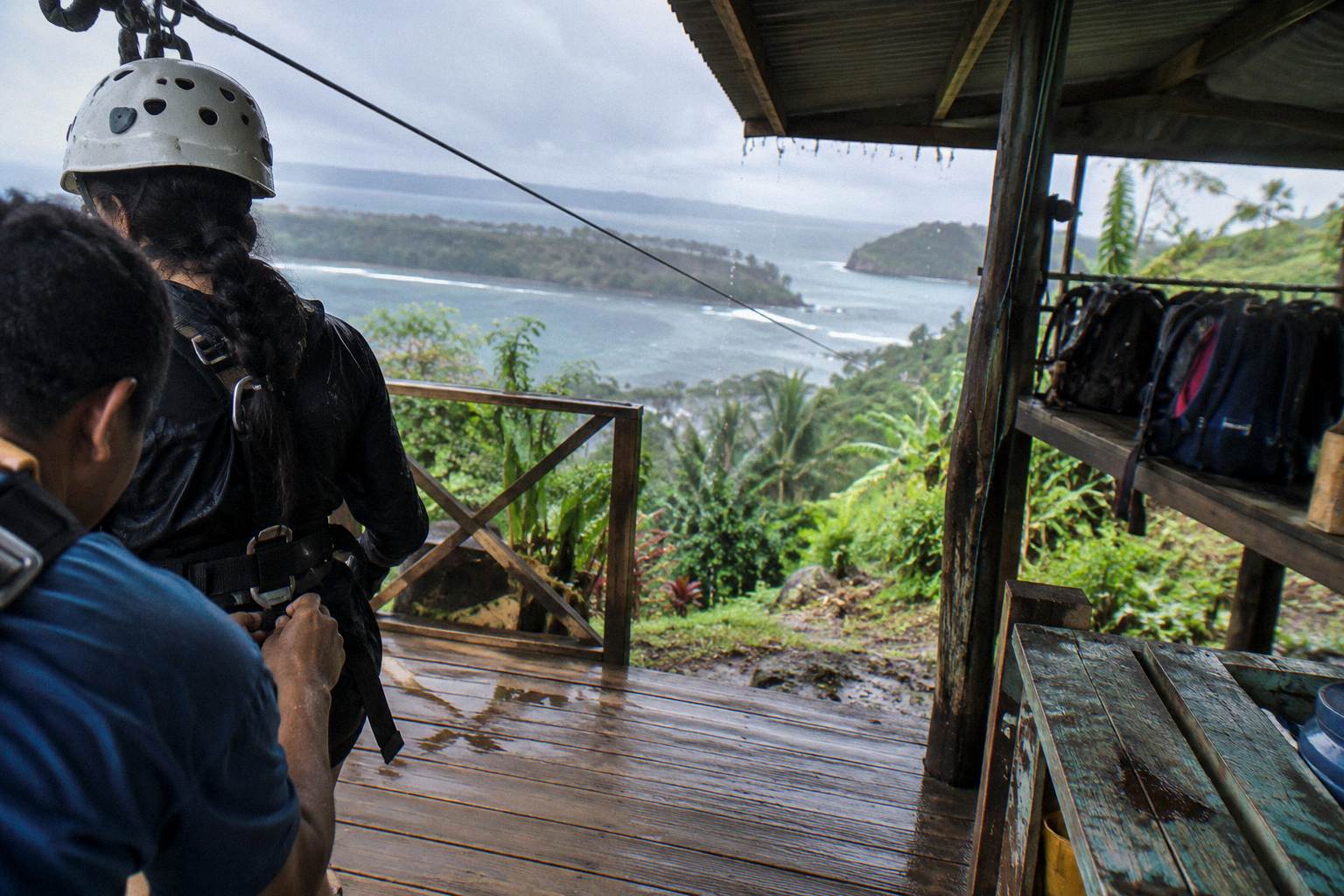
Who Should Think Twice Before Riding
Every operator and booking page consulted lists pregnancy as not suitable, and Zip Fiji's FAQ lists asthma, balance problems, epilepsy, heart problems, some disabilities, back, neck or shoulder problems and pregnancy as reasons not to ride, plus intoxication. The combo listings add their own lists per product. This is not fear, it is eligibility, and checking it before paying saves both money and a hard conversation at the Welcome Centre.
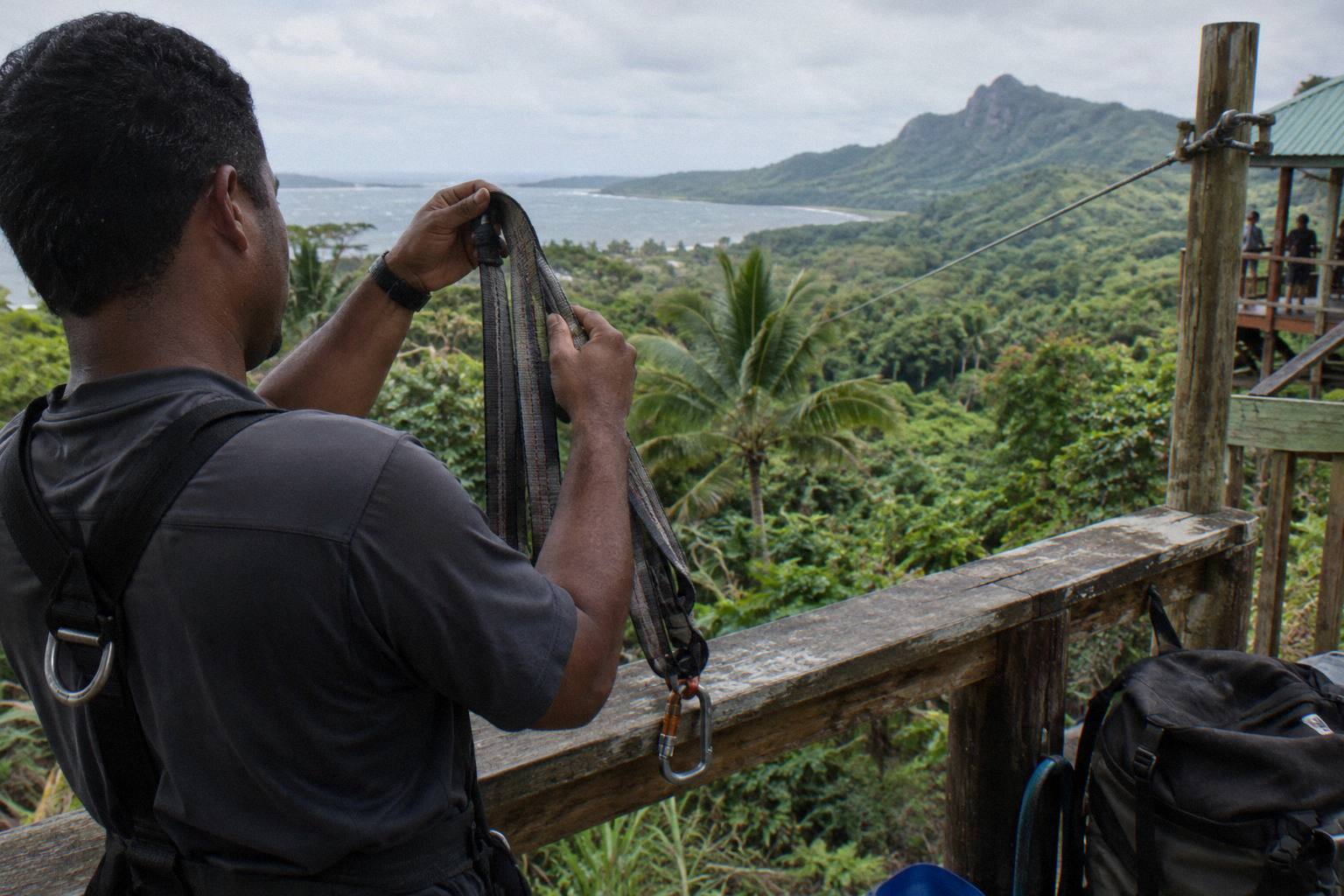
The Zip Fiji FAQ figures are printable because the operator states them: riders must be at least 3 years of age, children under 18 accompanied by an adult, no maximum age, under 135 kilograms and able to fit the equipment as the Head Guide determines. Beyond the numbers sit the health conditions above. None of this is medical advice, and the operator's own wording is the authority: if any listed condition applies, the question to ask is not how scared you will be, but whether you should ride at all.
The combo products carry their own not-suitable lists, and they do not transfer between products. The mud pool combo lists people over 70, wheelchair users and people with heart, back or kidney problems. The abseil combo lists claustrophobia and fear of heights, which matters here: fear of heights is written into that product's own exclusions, so a rider choosing it is choosing a product that names the condition. The Biausevu waterfall and Coral Coast pickup listings list back problems and fear of heights among their not-suitable groups. If fear of heights is a live issue for you, the who should not go ziplining post walks the full set of exclusions product by product.
At Sleeping Giant, the operator FAQ and the booking page list different age and weight thresholds, so no age or weight number for that park can be printed at all, and the practical instruction is to confirm age and weight with the park before paying. Its booking page lists pregnant women, altitude sickness and recent surgeries as not suitable. The park also asks for comfort at heights over 100 ft and the ability to walk uphill unassisted, which for a hesitant rider is a useful self-test before any money changes hands: if a 100 ft height and a 15 minute uphill walk both sound manageable in the abstract, the eligibility picture is likely clear.
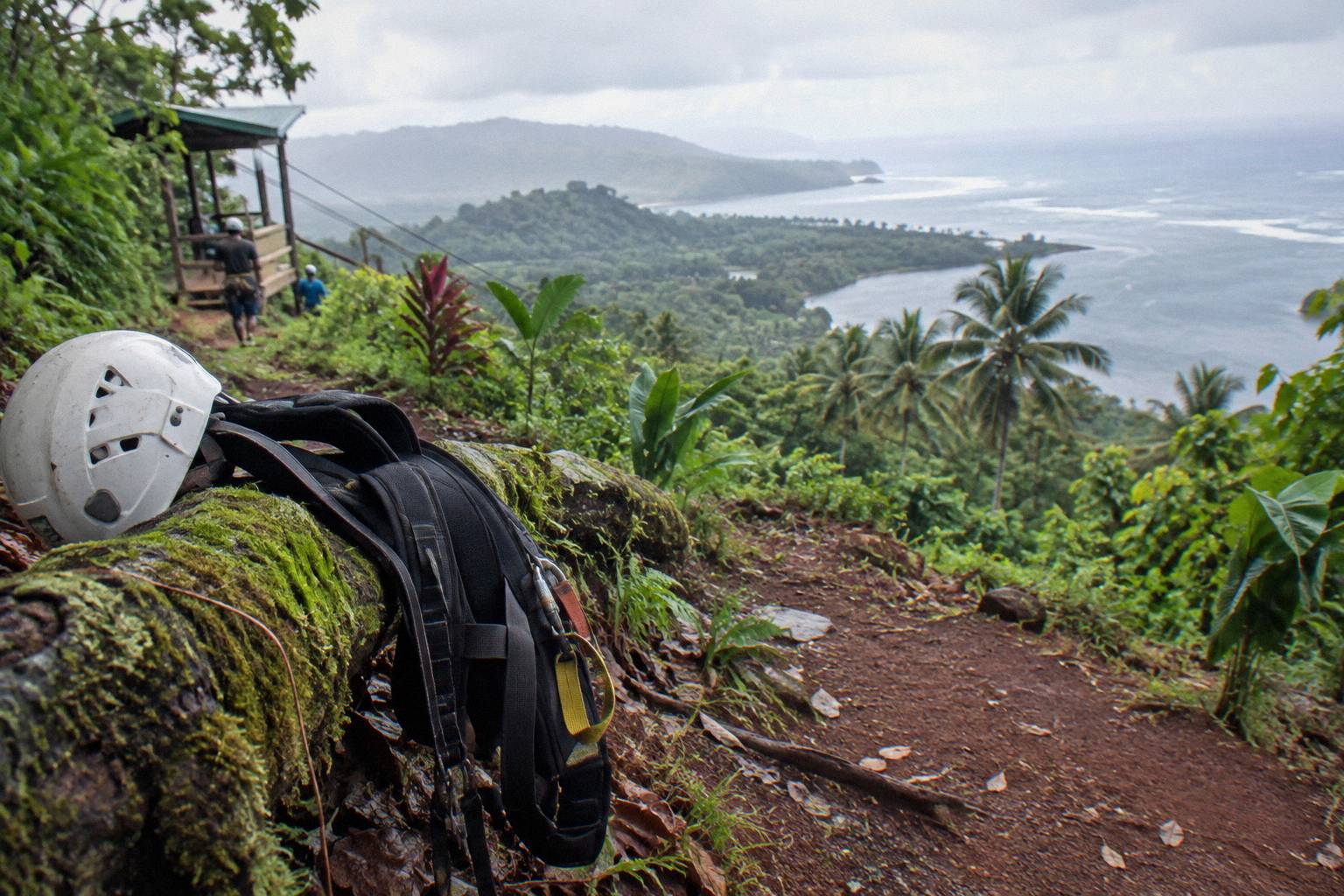
What The Numbers Say About Zipline Risk
The only injury figures available are United States data, and they cover ziplines generally, not these courses: one study estimated 16,850 zipline-related injuries treated in US emergency departments from 1997 through 2012, and a review of 2000 to 2024 data estimated 46,572 in total. No Fiji statistic, no commercial-tour fatality rate and no comparison with roller coasters exists in the sources, so none is printed. Falls, not speed, dominate the mechanism.
The US figures deserve their labels. A study in the American Journal of Emergency Medicine estimated 16,850 zipline-related injuries treated in US emergency departments across 1997 to 2012, with falls the mechanism in 77.3 percent of cases and fractures 46.7 percent, per the journal's study page. A Journal of Pediatric Surgery study of 2009 to 2015 estimated 9,397 US zipline injuries, and notably 45.9 percent occurred on home-made ziplines and 54.1 percent on playground ziplines, not commercial tours. A review of 2000 to 2024 US emergency-department data estimated 46,572 zipline injuries in total, 17.1 percent of them lower-extremity.
| US figure | Value | Period |
|---|---|---|
| Zipline injuries in US emergency departments | 16,850 estimated | 1997 to 2012 |
| Annual rate per million population | 11.64 in 2012, up 52.3 percent from 2009 | US data |
| Children 0 to 9 as a share | 45.0 percent | Same study |
| Falls as mechanism | 77.3 percent | Same study |
| Injuries on home-made ziplines | 45.9 percent of a 9,397 estimate | 2009 to 2015 |
| Total estimated injuries | 46,572 | 2000 to 2024 |
The pattern inside those numbers is the useful part for a nervous adult. Falls dominate, children are over-represented, and a large share of the pediatric injuries happened on home-made and playground rigs rather than commercial courses. None of that says a commercial tour is risk-free, and no such claim appears here. Ziplining carries real risk, and the safeguards named in the industry literature, guide-clipped carabiners, double lanyards, redundant brakes and pre-ride checks, exist because that risk is real. The standards that govern the equipment are published: the ACCT standards body covers design, inspection, operation and staff training for zip lines and canopy tours, alongside the ASTM F2959 practice.
For the coaster comparison, the limit is this: no sourced study compares zipline injury rates with roller coaster injury rates, and inventing one would be worse than silence. What the standards material does offer is a description of what happens when a rider stops short mid-line: guides at the platform use a pull-in rope or a mechanical-advantage rescue system. That scenario, the stall, is the zipline's distinctive failure mode in a way a coaster's circuit is not, and it is planned for in training and equipment.
What Trips People Up Before You Book
The mistakes that cost nervous first-timers money and nerve are concrete: assuming the age or weight rules are the same at both parks when they are not, booking a combo whose own exclusions name fear of heights, budgeting a transfer time the operator does not promise, and reading marketing superlatives as facts. Each of these is checkable in minutes, on the operator's own pages, before any card is charged.
The first trap is rule bleed. Zip Fiji's FAQ figures, age from 3, under 135 kilograms and fitting the equipment, belong to the Momi Bay course and are printable only because Zip Fiji states them. Sleeping Giant's own FAQ and booking page carry different thresholds, so no number for that park is printed here, and the instruction is to confirm with the park. Booking pages for the Momi course also carry different thresholds from the operator FAQ, so the number to trust is the operator's own, confirmed when booking. A rider who checks one park's rules and assumes the other matches has checked half a fact.
The second trap is combo selection. The abseil combo lists fear of heights among its not-suitable groups, and the Coral Coast pickup and waterfall combo listings list it too. A nervous first-timer who books a longer, cheaper-per-hour combo to feel efficient can end up on a product that names their exact condition in its exclusions. The standard Momi listing carries no such named exclusion. Start simple, ride once, then upgrade to combos on a later trip if the first one lands well; the how to book a Fiji zipline guide sequences that decision properly.
The third trap is transfer arithmetic. The operator says Tau Village is 35 minutes from Nadi, one booking page says 45 minutes, and a guest review reported about two hours when two hotel pickups were chained. Sleeping Giant says 20 minutes from Nadi but about 1 hour each way from Denarau. None of these is wrong; they measure different trips. Budget the worst of the stated range, not the best, especially for a day with a flight behind it. And remember every booking page here carries free cancellation up to 24 hours before the start, which is the window in which all of these traps can still be undone for free.
The fourth trap is vocabulary. Marketing pages call courses the largest, the ultimate, the unforgettable; none of that is a fact about fear, height or safety, and a first-timer booking on adrenaline language is booking a feeling nobody can promise. The weather decides part of the day, the guides decide part, and you decide the step. Book on the numbers you have read here, not on the adjectives.
The quad bike combo exists in the same decision space for a different reason: it spreads the day across two activities, with the zipline as one part rather than the whole. Nothing about its suitability can be printed beyond what appears above, so treat it as an option to ask about rather than a soft-entry product, and check dates and pickup details on its booking page before comparing it to the two core courses.
For the fear question itself, the summary offered by Ziplines In Fiji is the one the sources support: the two rides are not comparable on a scariness scale, because no scale exists. They are comparable on structure. A coaster takes your consent once, at the boarding gate, and spends it in ninety seconds. A Fiji zipline asks for it up to sixteen times, from platforms up to about five stories high, at speeds the operators state modestly, with a walk-back option after the first one at Momi Bay. For plenty of nervous riders, that last clause is the whole answer, and check availability while the free-cancellation window is open costs nothing but a calendar decision.
Common Questions About Fear And First Rides
Is Ziplining As Scary As Roller Coasters?
No sourced comparison exists, so there is no agreed ranking between them. Structurally they differ: a coaster commits you for the whole circuit once you board, while a zipline asks you to step off a platform about 5 stories high at the Zip Fiji course, once per line. Stated speeds at Sleeping Giant reach 40 km/h, gentle next to coaster speeds, but the self-launch is the harder ask for many riders.
Can I Try One Line And Stop?
At the Momi Bay course, yes: Zip Fiji says guests who cannot continue after the first zip are walked back to the Welcome Centre. Sleeping Giant publishes no equivalent rule, so confirm with the park if that option matters to your decision.
How High Are The Platforms?
Zip Fiji's FAQ asks riders to be able to stand on a platform about 5 stories high without severe anxiety or dizziness. Sleeping Giant asks riders to be comfortable at heights over 100 ft. Both are stated comfort requirements, not measured platform heights.
How Fast Do The Lines Go?
Sleeping Giant states speeds up to 40 kmh on its own pages. Zip Fiji states no top speed; its longest line is 235 m against Sleeping Giant's 80 to 160 m lines. No comparison between the two courses' speeds can be made beyond those stated figures.
Is Fear Of Heights A Reason I Cannot Ride?
Zip Fiji's standard tour lists no fear-of-heights exclusion in its FAQ, but asks that you stand on a platform about 5 stories high without severe anxiety. The abseil combo, the Coral Coast pickup listing and the waterfall combo each name fear of heights among their not-suitable groups, so the product you pick matters as much as the course.
Can I Cancel If I Lose My Nerve Before The Day?
Every booking for the tours carries free cancellation up to 24 hours before the start for a full refund, and the variants without a stated from price carry free cancellation on the booking page. Booking direct with an operator brings different terms, so read them before choosing that route.