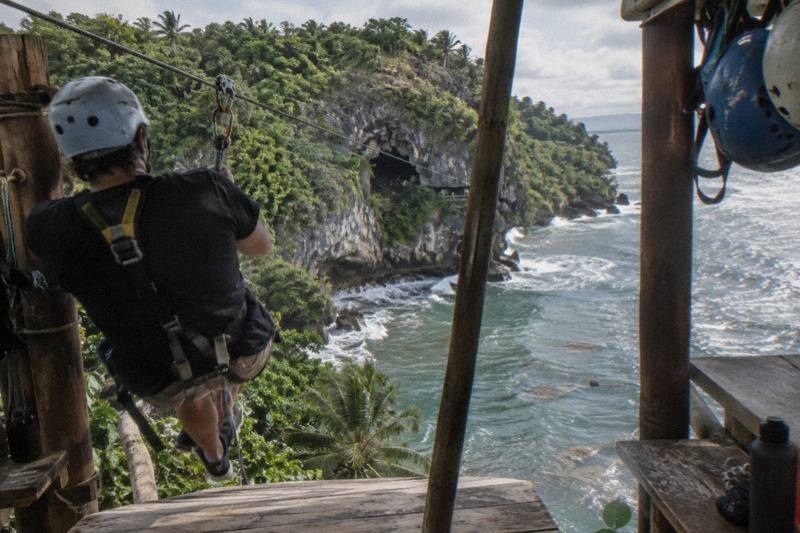
Can You Hurt Your Back By Ziplining? Fitness Checks Before A Fiji Tour
Back pain and ziplines: what the injury data shows, what Zip Fiji and Sleeping Giant Zip Line list as fitness rules, and what to settle with a doctor before booking a Fiji zipline tour.
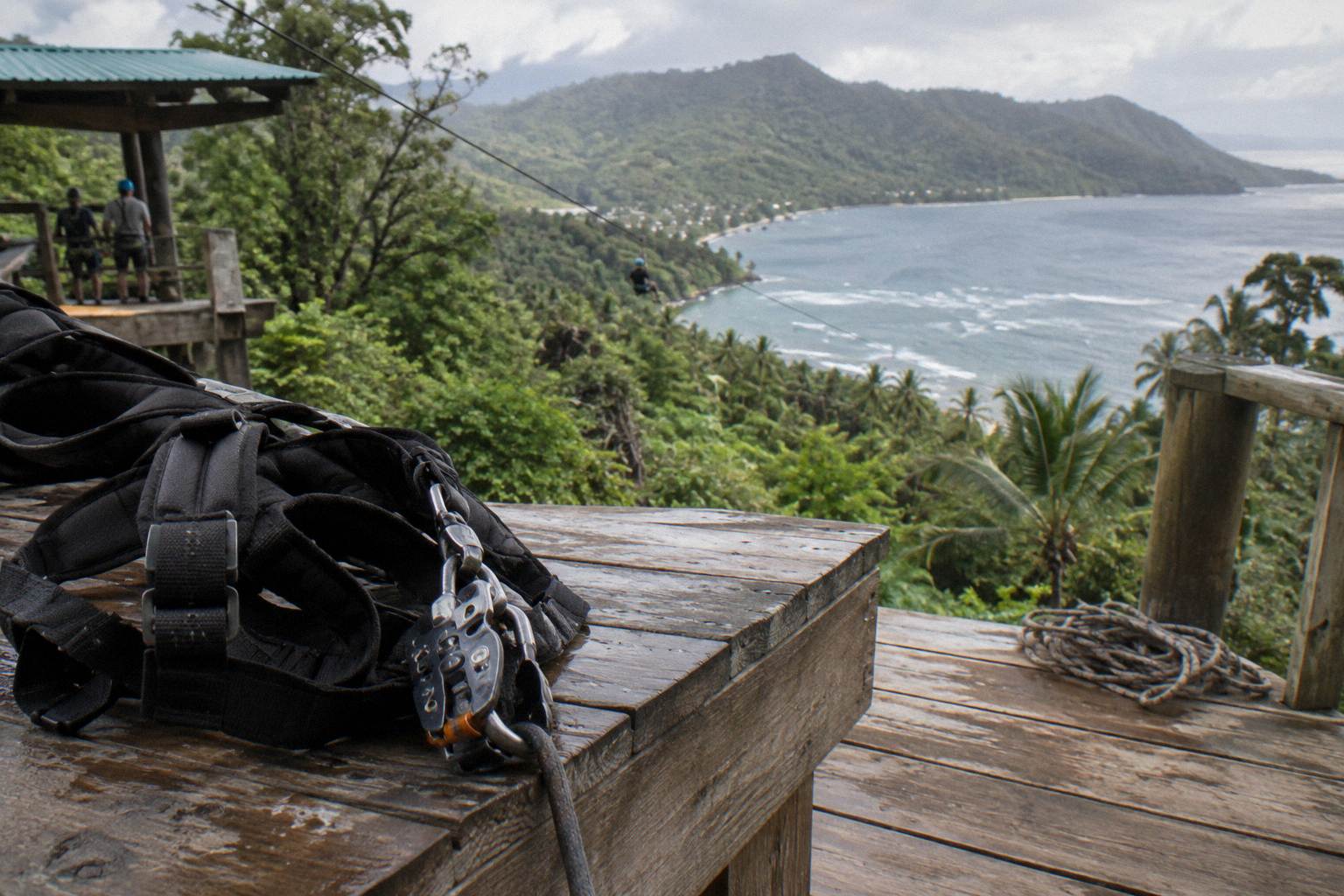
In short: Yes, hurting your back on a zipline is possible, but the recorded US injury picture points most often at arms and legs rather than the spine, and the biggest back-specific risk factor is a condition you already have. Harness load and sudden stops place compressive and shear forces on the spine at launch and landing. Both Fiji operators publish fitness rules that touch the back directly, and every booking page here carries free cancellation up to 24 hours before the start.
If the question is whether a Fiji zipline tour fits your body, start with the full course rundown on the Momi Bay zipline and cave tour, where the 16-line course near Nadi is laid out pickup by pickup. The tour works through the mechanics, the injury record and each operator's own rules in order.
| Fact | Detail |
|---|---|
| Main injury mechanism in US data | Falls, 77.3 percent of zipline injuries in one US emergency-department study |
| Most injured body region | Upper extremities, 44.1 percent of cases, US data |
| Spine-specific risk on the ride | Compressive and shear loads on the spine at launch and landing |
| Zip Fiji rule | Not recommended for back, neck or shoulder problems |
| Sleeping Giant rule | Walk 10 to 15 minutes uphill unassisted, about 20 trail stairs |
| Cancellation on the booking page | Free cancellation up to 24 hours before the start |
Can You Hurt Your Back By Ziplining?
Yes, ziplining can hurt your back. The harness carries your full weight at launch, and braking at the end of the line decelerates your body through that same harness, placing compressive and shear loads on the spine. Operators themselves flag riders with existing back problems, recent spinal surgery, or unresolved neck issues. Zip Fiji lists back, neck, and shoulder problems among the conditions it does not recommend for its course.
The real framing is not "ziplines break backs" but "ziplining loads a spine that may already be compromised." A rider with a healthy, flexible back faces the same launch and landing forces as everyone else on the platform, and those forces are what the course equipment is designed around, with standards calling for primary and backup brakes on faster lines so arrivals stay controlled. The rider with a bulging disc, a fused vertebra or a shoulder that dislocates under load is the one whose body has less margin, and that is exactly who the operator rules are written for.
Falls are the dominant injury mechanism in the US record, and falls are also the scenario where a back injury becomes most plausible: a fall from a platform or a landing gone wrong puts the spine at risk in a way a normal, braked arrival does not. That is why the rules about being comfortable at height matter for back safety too. Tension, gripping and jerky body positions at arrival change how loads pass through the harness and into the torso.
So the practical answer splits in two. If your back is healthy and you can walk uphill unassisted, the ride itself is not a documented cause of routine back injury in the sources consulted. If you have an active back condition, a recent injury or a surgical history, treat the operator's not-recommended list as a real boundary and talk to a doctor who knows your case before paying. That conversation is cheaper than any tour.
The injury numbers themselves are worth reading closely, because they do not say what most people assume. The next section puts the US emergency-department record on the table, body region by body region.
How Launch And Landing Load Your Spine
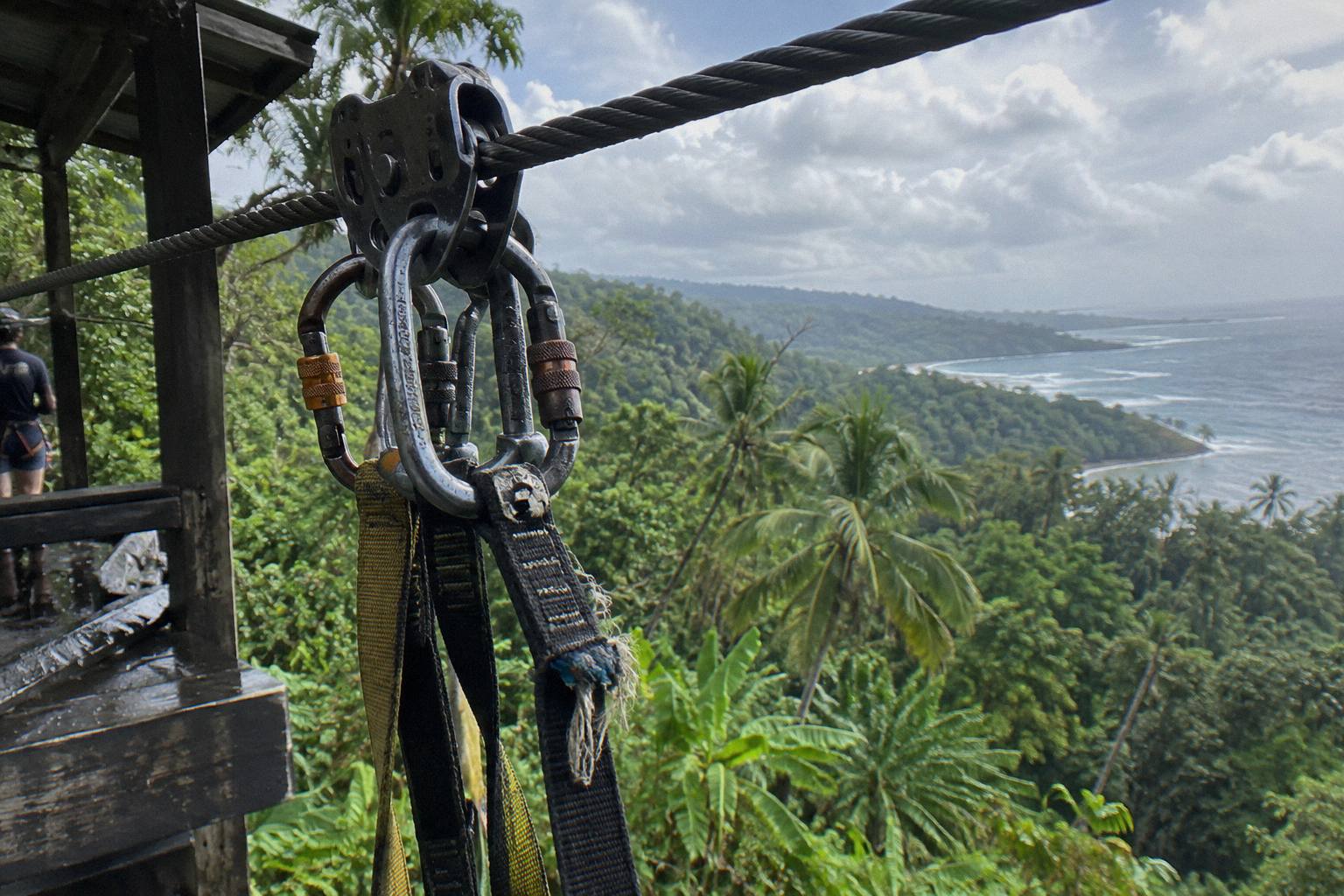
At launch, the harness swings your whole body weight into the cable in one motion, and at landing the brake brings that moving weight to a stop, so the spine sees two distinct loading events on every single line. General industry guidance notes that harness load and sudden stops put compressive and shear forces on the back at exactly these moments, which is why riders with active back problems or recent spinal surgery are advised against riding.
Break the ride into its pieces. On a 16-line course you launch 16 times and arrive 16 times, plus you stand on platforms, walk uphill between stations and hold your posture while a guide clips and checks your lanyards. Each arrival is the sharper of the two events: the brake catches the trolley and your body keeps moving, folding the load through the hip attachment points of the harness and up the torso. Riders who arrive tense, with the back arched or twisted, feel it more than riders who sit into the harness and let it hold them.
The physics of why braking matters is also why weight and speed rules exist. Heavier riders carry more momentum and arrive faster, so brakes are tested at the extremes of rider weight and arrival speed, and a minimum weight keeps a lighter rider from stalling short of the platform. None of that protects a spine from itself; it protects the system from a rider arriving too fast or stopping dead. A smooth, braked arrival is the design case, and the standards call for a primary brake backed by a second one on faster lines precisely so a single failure does not turn a landing into a hard stop.
For a rider weighing a back condition, the useful questions are concrete. Can you hang upright in a harness for a few minutes at a time without pain? Can you absorb a firm but controlled stop without bracing hard? Can you walk 15 minutes uphill over uneven ground, which is the actual fitness bar both Fiji operators set for their courses? If any answer is no, the spine is being asked to work on a day it may not appreciate, whatever the injury statistics say about body regions.
What The US Injury Data Shows About Body Regions
The clearest picture comes from US emergency-department data, and it does not center on the back. A study in the American Journal of Emergency Medicine estimated 16,850 zipline injuries treated in US emergency departments from 1997 through 2012: falls caused 77.3 percent, and the upper extremities, the arms and hands, were the most injured region at 44.1 percent. These figures are US numbers and cover all zipline settings, not only commercial tours.
The lower body has its own record. Lower Extremity Review reports an estimated 46,572 zipline injuries treated in US emergency departments across 2000 to 2024, of which 7,962, or 17.1 percent, were lower-extremity injuries. Within that group, fractures were the most severe diagnosis in 31 percent of cases, and the lower leg at 33.3 percent and the ankle at 31.9 percent were the most affected body parts. The spine does not headline either dataset. The injuries that bring riders into US emergency rooms are, in order of prominence, arms and hands, then legs and ankles, consistent with falls and awkward arrivals rather than spinal trauma from normal riding.
| US injury measure | Figure | Source detail |
|---|---|---|
| Total estimated injuries, 1997 to 2012 | 16,850 | US emergency departments, American Journal of Emergency Medicine study |
| Falls as the mechanism | 77.3 percent | Same study |
| Upper extremities as top body region | 44.1 percent | Same study |
| Fractures as a share of cases | 46.7 percent | Same study |
| Total estimated injuries, 2000 to 2024 | 46,572 | US emergency-department data reported by Lower Extremity Review |
| Lower-extremity share of those | 17.1 percent | 7,962 cases |
| Lower leg and ankle within lower-extremity cases | 33.3 and 31.9 percent | Lower leg and ankle respectively |
Two cautions apply to this data. First, much of the US record mixes commercial tours with homemade and playground ziplines: a Journal of Pediatric Surgery study of 2009 to 2015 estimated 9,397 US zipline injuries and found 45.9 percent occurred on homemade ziplines and 54.1 percent on playground ziplines, with commercial tours a minority setting. Second, none of it is Fiji data. No Fiji zipline injury or fatality statistic exists in the sources consulted, so the US numbers are the only reference point available and they are labelled as such. The Lower Extremity Review coverage of zipline injuries and the emergency-medicine journal study carry the full breakdowns.
For a back-focused reader, the takeaway is narrower than the headlines suggest. The recorded injuries concentrate where the body catches itself in a fall, the wrists, forearms, lower legs and ankles, and the mechanism is overwhelmingly falling rather than riding. Your back's stake in the data is indirect: preventing the fall, through the height-comfort and fitness rules, is what keeps every body region out of the statistics.
Zip Fiji's Rules For Backs, Necks And Shoulders
Zip Fiji's own FAQ is direct: the course is not recommended for riders with back, neck or shoulder problems, and it adds that you must walk 15 minutes uphill over uneven ground unassisted and have full range of motion in arms, shoulders, neck and back. The FAQ also lists asthma, balance problems, epilepsy, heart problems, some disabilities and pregnancy as not recommended, and intoxicated people may not take part.
Read that list as a single fitness picture rather than a set of unrelated exclusions. The 15-minute uphill walk is the endurance test. The full range-of-motion requirement is the joint test, and it names the back and neck explicitly, which tells you the operator expects riders to move those areas freely under harness load. The platform-height requirement is the composure test, because a rider who freezes or grips hard at height loads the body differently and moves badly on arrival. A back condition can fail any of the three tests on its own.
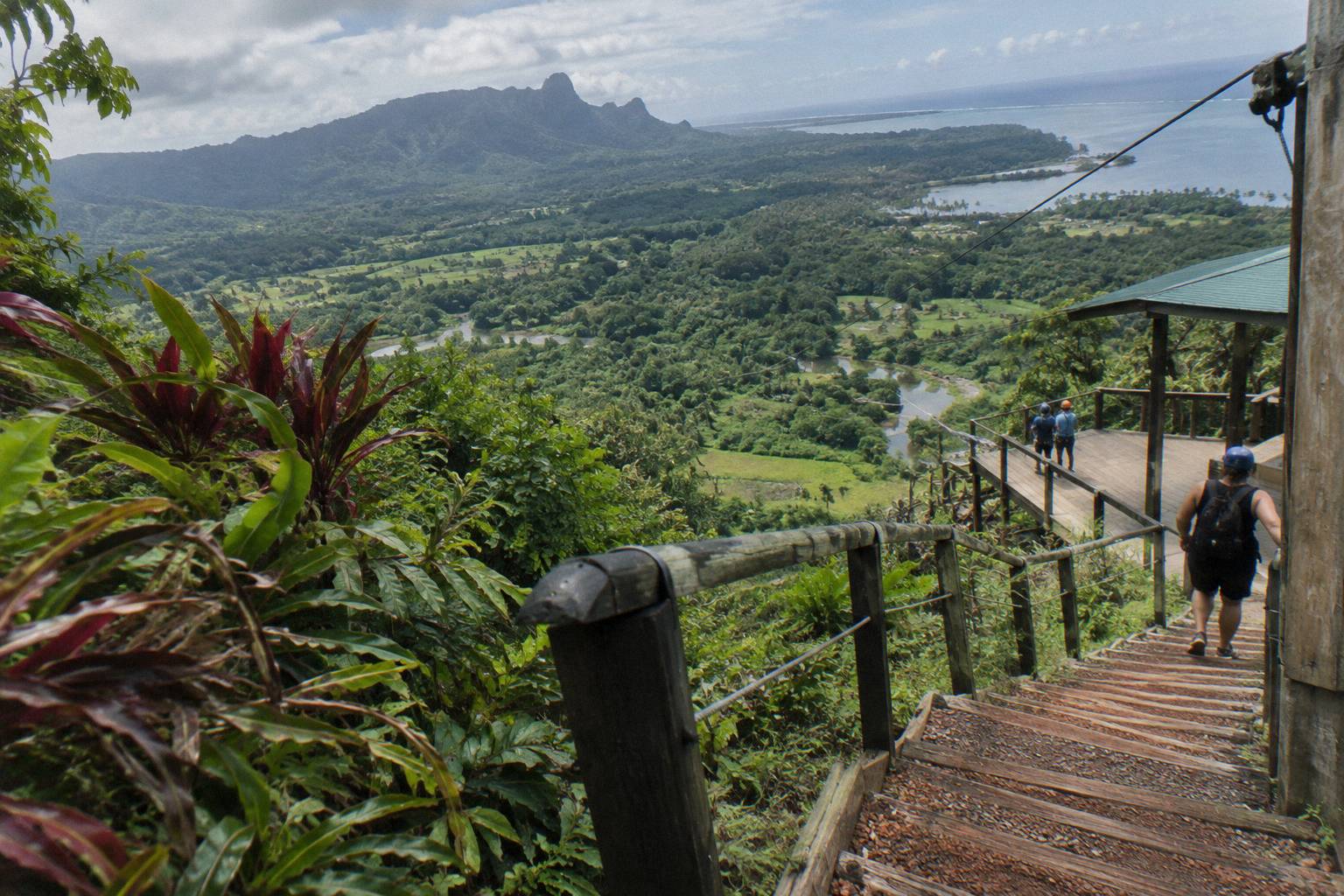
The age and weight figures on the Zip Fiji FAQ page are separate from the back question but worth knowing alongside it: riders must be at least 3 years old, children under 18 need an accompanying adult, there is no maximum age, and riders must weigh less than 135 kilograms and fit the equipment as the Head Guide determines. Booking pages for the same course carry different thresholds, so confirm age and weight with the operator before paying.
If your back history is borderline rather than clearly excluded, the question to put to a doctor is not "is ziplining safe" in the abstract but "can this spine absorb a harness swing and a braced stop, and walk 15 minutes uphill first." Zip Fiji also says that after the first zip, guests who cannot continue are walked back to the Welcome Centre, so there is a real exit after the ride has started. For a fuller treatment of operator practice, the guide on whether ziplining in Fiji is safe works through the same rules from the safety angle.
The 16-line course with cave tour that anchors Ziplines In Fiji coverage runs about 3 hours with a shuttle from the Nadi area and a meal included, rated 4.9 from 303 reviews, from US$100 per person on the booking page. Before you compare prices, though, the second course has its own back-relevant rules.
Sleeping Giant's Fitness Requirements
Sleeping Giant Zip Line in Sabeto asks riders to walk 10 to 15 minutes uphill over uneven ground unassisted for the zipline or Orchid Falls, handle about 20 trail stairs, and be comfortable at heights over 100 feet. The operator's tour runs about 6 hours with hotel pickup, unlimited rounds on the 7 lines and a deli lunch, and its booking page lists pregnant women, altitude sickness and recent surgeries among those not suitable.
The back story here is the terrain more than the ride. Twenty trail stairs and a sustained uphill walk are a leg-and-spine workload before you clip into anything, and the park's two waterfalls and jungle safari walk add standing and walking time across a roughly 4-hour activity inside a 6-hour door-to-door day. A back that tolerates a seated, braced arrival may still object to the walking volume, so weigh the two demands separately.
The park's lines are shorter than the Momi course, 80 to 160 meters across 7 lines, with speeds the operator gives as up to 40 km/h, which sits at the low end of the 40 to 64 km/h range typical commercial ziplines quote. Shorter lines mean shorter run-ups and gentler arrivals on average, but no operator promises a soft stop, and the same harness-load physics applies at both courses. On age and weight, the park's own FAQ and the booking page list different thresholds, so confirm age and weight with the park before paying rather than relying on either figure.
Sleeping Giant also asks riders to bring waterproof shoes and, for the falls, swimwear, which matters for footing: uneven, wet ground is where a slip happens, and a slip is the mechanism the US injury data says actually hurts people. Good shoes are a back-protection decision dressed as a packing decision. The deeper side-by-side is in the guide comparing Zip Fiji versus Sleeping Giant for which to book.
Which Products List Back Problems As Not Suitable
The combo booking pages each carry their own not-suitable lists, and back problems appear on several of them. The mud pool combo page lists people over 70, wheelchair users and people with heart, back or kidney problems. The Coral Coast pickup and Biausevu waterfall combo pages list back problems and fear of heights. The abseil combo lists claustrophobia and fear of heights. Each list belongs to its own listing and none transfers to another.
That per-product detail matters because riders often shop by price or duration and miss that the add-on, not the zipline, is what tightens the medical filter. The Biausevu waterfall combo adds a 45-minute hike to the waterfall and a kava ceremony across an 8-hour day, from US$190 per person. The mud pool combo adds about an hour at the Sabeto hot springs and mud pool with lunch at the zipline, from US$180. The abseil combo adds three abseils including a 40-meter descent into the Tau Caves, from US$113, rated 4.8 from 39 reviews. All amounts are US dollars, from prices per person, and the date and group change them.
| Product | Add-on beyond the 16-line course | Back-relevant not-suitable entry | From price per person |
|---|---|---|---|
| Mud spa combo | Sabeto hot springs and mud pool, about 1 hour | Heart, back or kidney problems; over 70; wheelchair users | US$180 |
| Biausevu waterfall combo | 45-minute hike, kava ceremony, about 8 hours | Back problems, fear of heights | US$190 |
| Coral Coast pickup listing | 1-hour van transfer each way from Coral Coast hotels | Back problems, fear of heights | US$115 |
| Abseil combo | 3 abseils including a 40 m descent into Tau Caves | Claustrophobia, fear of heights | US$113 |
Notice the pattern: the products that add hiking, hot pools or long transfers are the ones naming backs specifically. That tracks with the mechanics section above, where walking and standing, not the ride itself, are the sustained loads. If a doctor clears you for the zipline but flags long walks, the plain 16-line tour with a Nadi-area shuttle is the filter to apply, not the longest combo. If you want the full picture on who should sit a zipline day out entirely, the post on who should not go ziplining collects the exclusions across the products.
Pricing-out a decision? See the live dates and the price for your travel window on the booking page, where every listing here carries free cancellation up to 24 hours before the start, which turns a medical question you cannot answer today into one you can answer closer to the date.
Should You Ask A Doctor Before Ziplining?
Yes, if any of the operator-listed conditions apply to you, ask a doctor before booking rather than after, and the operators themselves point the same way, with general industry guidance advising riders with pregnancy, recent injuries or serious heart and back conditions to seek medical advice first. Bring specifics to the appointment: the 15-minute unassisted uphill walk, the platform height, the harness swing, the braked stop and, for combos, the added hikes or descents.
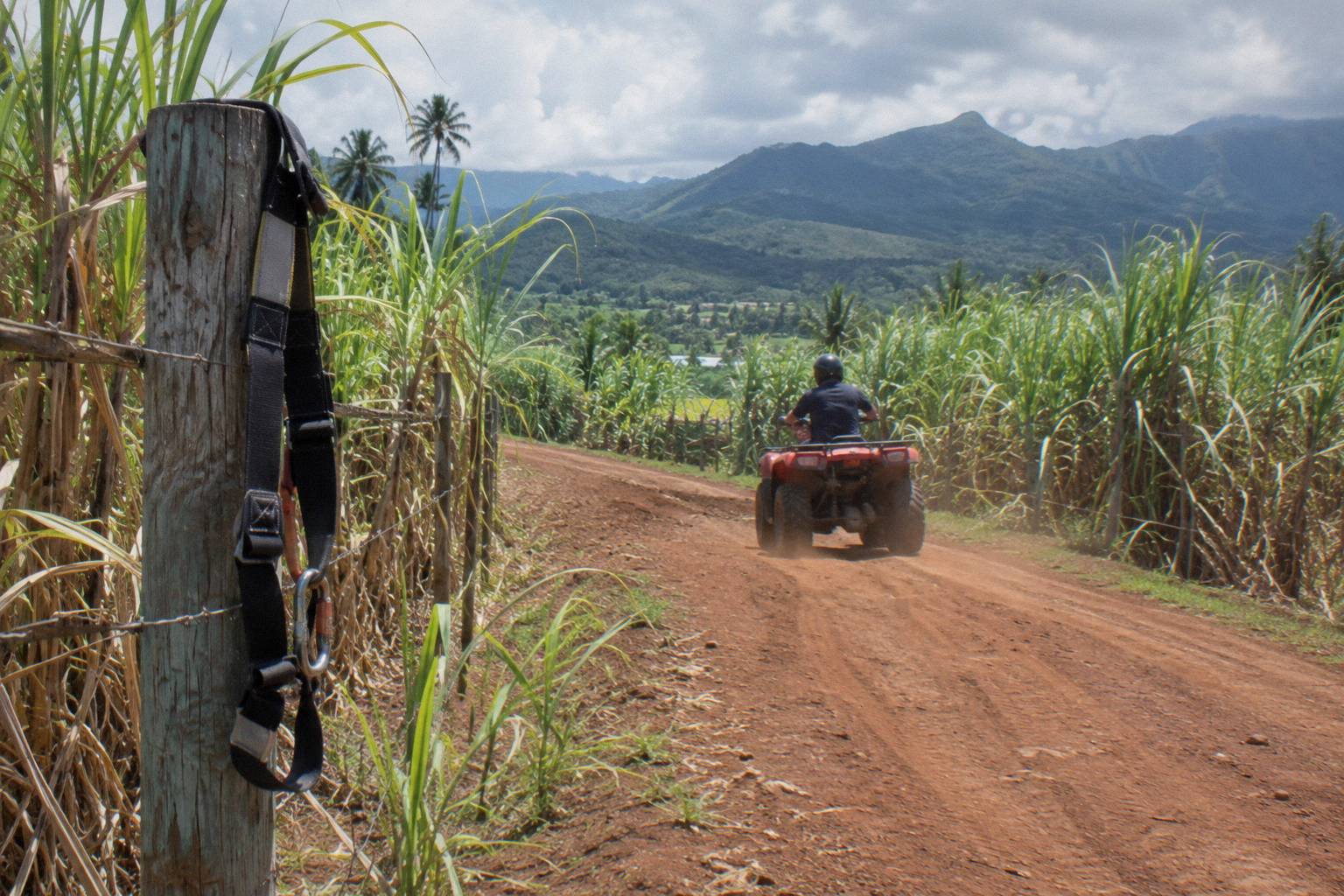
The appointment works best when it is concrete. "Is ziplining safe?" invites a generic answer; "can my back take a harness catch, a firm stop and an uphill walk" invites a useful one. Write the five demands down. For the Momi course they are the walk, the roughly five-story platform height, the swing into the cable, the braked arrivals and, if you are booking the abseil combo, a 40-meter controlled descent on rope, which loads the body in its own way and is listed as not suitable with claustrophobia or a fear of heights.
Timing the booking around the appointment is easy here. Free cancellation on the booking page runs up to 24 hours before the start for a full refund on the main listings, so you can hold a date while the medical question resolves, then keep or release it. Do not read that as permission to book first and think later: cancellation windows close, and a medical answer that arrives on day-of is an answer you paid for. Check availability, see the dates, and let the refund window do its job while the doctor does theirs.
One boundary on what a page like this can do: no treatment advice belongs here, and none is given. What a doctor says about your specific back outranks any statistic about everyone else's arms and ankles. The US data says the spine is rarely the injured part; your MRI, if you have one, says whether that comfort applies to you. Those two sources do not compete, they answer different questions.
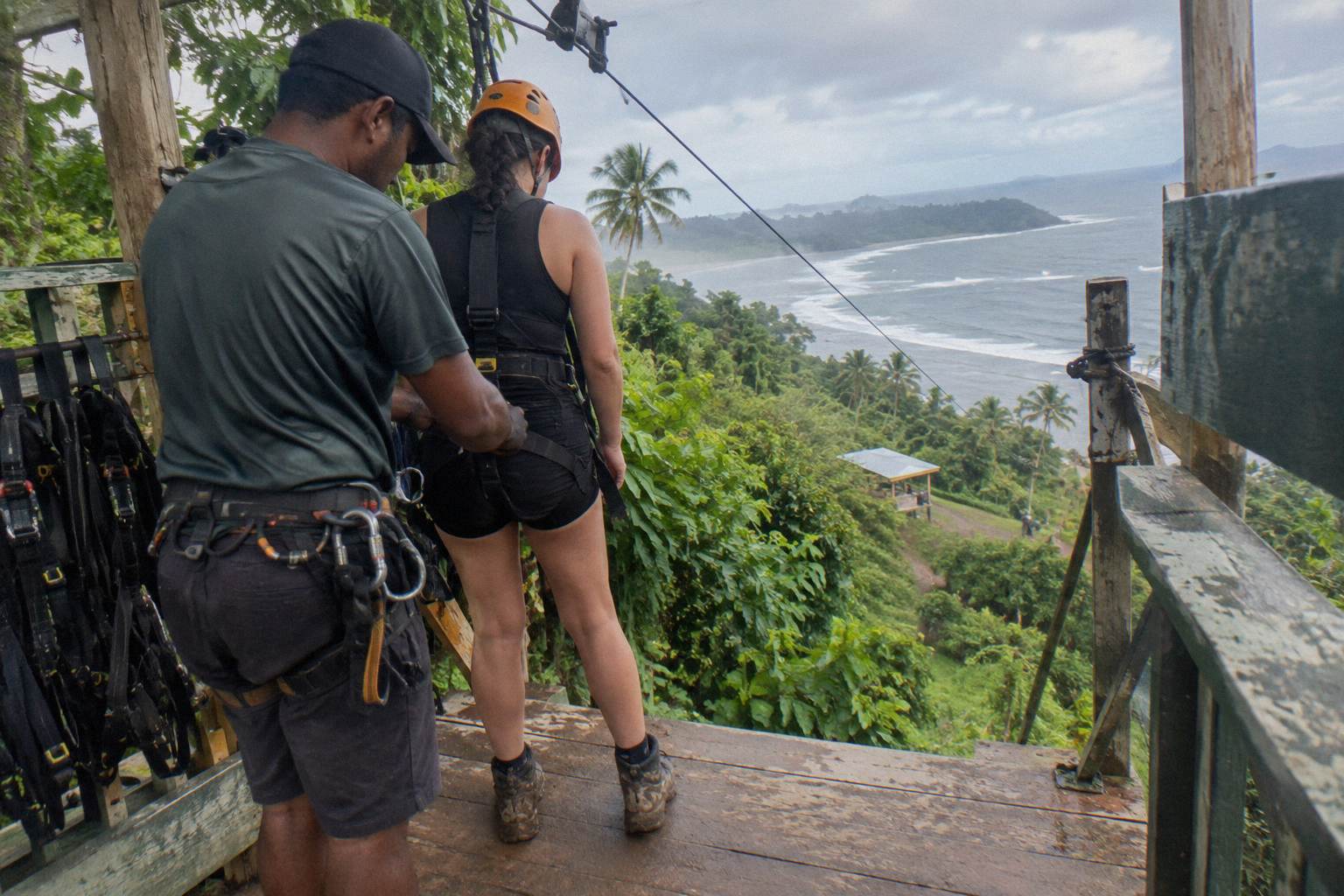
What Trips People Up Before You Book
The most common pre-booking mistakes are reading one course's rules as if they applied to both, assuming the ride is the only physical demand, and treating pre-trip optimism as a medical clearance. Zip Fiji's 135-kilogram limit and age-3 minimum appear only in its FAQ, while Sleeping Giant's thresholds differ between its own FAQ and booking page, so no single number is reliable for it, and combos add hikes, stairs and descents the base tour never requires.
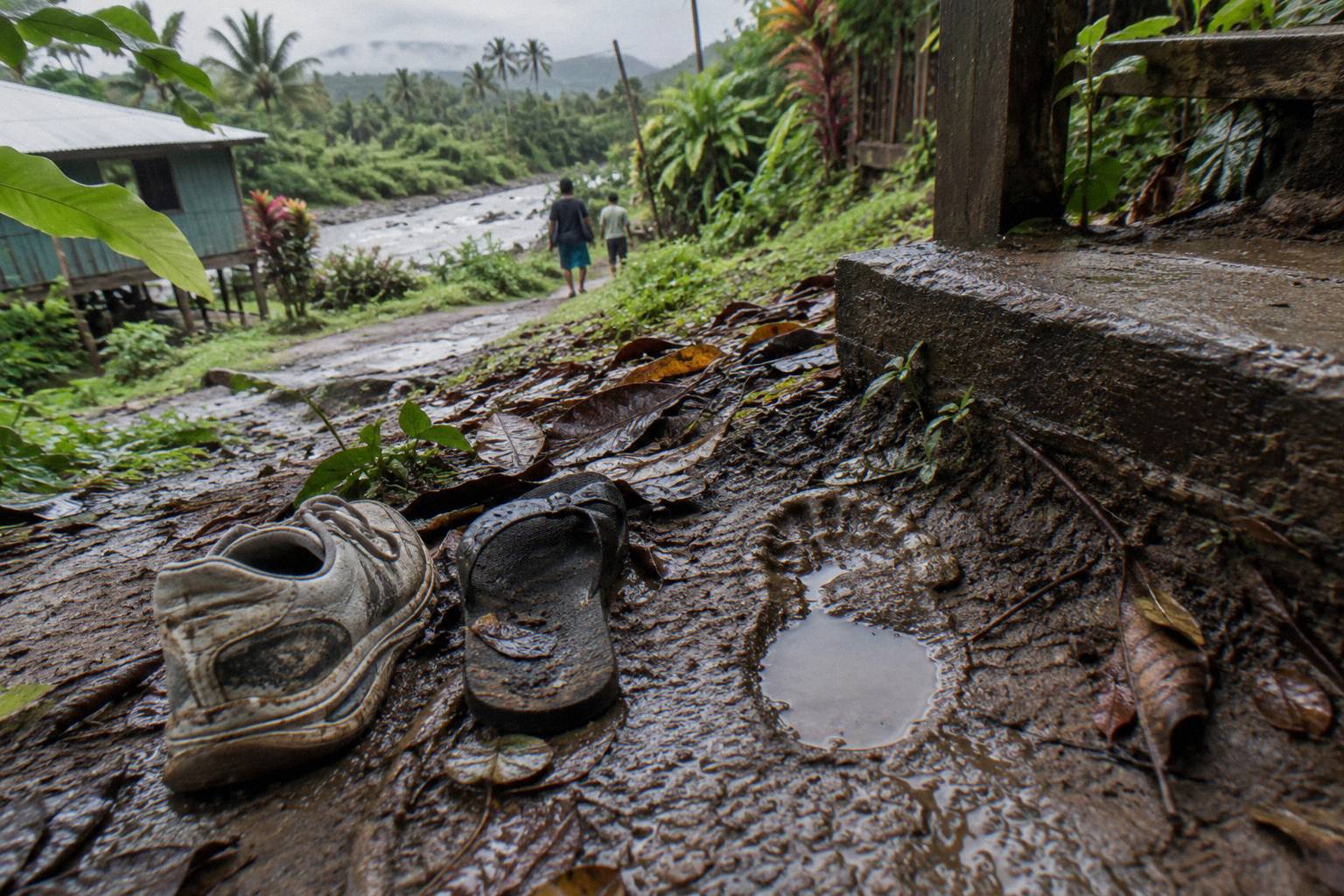
People also miss the walk. Both courses open with an unassisted uphill stretch, 15 minutes at Momi, 10 to 15 minutes plus about 20 stairs at Sabeto, and it is the part of the day a sedentary traveler is least prepared for. Book the tour for the morning you can actually walk it. On top of that, weather shapes the footing: Nadi sits in a tropical monsoon climate with a short dry season in July and August and rain through most of the rest of the year, wet boards and stairs raise slip risk, and the Fiji Meteorological Service is the place to read the forecast before choosing a date.
A third trip-up is booking a combo to feel you got more for the money when the base tour matches your body and the add-on does not. The mud pool combo's not-suitable list is stricter than the plain tour's, and the waterfall combo adds a 45-minute hike that no zipline ride trains you for. Match the product to the spine, not the price per hour. And when a fact you need, an exact weight threshold for Sleeping Giant, say, cannot be pinned down, ask the operator directly before paying rather than assuming the strictest or the loosest number you have seen.
The related question of what a first-timer should actually expect, minute by minute from check-in to the last platform, is covered in the walkthrough of what happens on a Fiji zipline tour, which is useful reading once the medical question is settled.
Common Questions About Backs And Booking
Can You Hurt Your Back By Ziplining?
Yes, it is possible, and the mechanism is the compressive and shear load the harness places on the spine at launch and at each braked landing. The recorded US injuries, though, concentrate in the arms and hands, with the upper extremities at 44.1 percent of cases, and falls as the mechanism in 77.3 percent. Riders with existing back or neck conditions are the group both Fiji operators flag, so ask a doctor before booking.
Is Ziplining Bad For A Herniated Disc?
No source here answers that question for a specific diagnosis, and none should. Zip Fiji lists back problems among conditions it does not recommend for the course, and general guidance advises riders with active back problems or recent spinal surgery against riding. The decision belongs to a doctor who knows your case, taken with the concrete demands: the uphill walk, the platform height and the braced stop.
Does The Harness Hurt Your Back On The Landing?
The harness carries your weight at launch and through braking, which places compressive and shear loads on the spine, so a firm arrival is felt through the lower back and hips. Standards call for primary and backup brakes on faster lines so arrivals stay controlled. Sitting into the harness rather than bracing against it is the technique operators expect.
Which Fiji Zipline Course Is Easier On Your Back?
Neither course is designed as a gentler option, and no comparison is promised here. Sleeping Giant's lines run 80 to 160 meters with speeds up to 40 km/h, while Momi runs 16 lines with a longest of 235 meters. The walking differs too: 15 minutes uphill at Momi, 10 to 15 minutes plus about 20 stairs at Sabeto. Match the demands to your body with your doctor.
Can I Ride If I Had Back Surgery Years Ago?
General guidance advises riders with recent spinal surgery against ziplining, and Zip Fiji lists back problems among its not-recommended conditions without defining how old an injury must be. Only a doctor who knows your surgical history can say whether a harness swing and a braked stop are safe for you. Ask before booking; the booking pages carry free cancellation up to 24 hours before the start.
Do The Combo Tours Have Different Back Rules?
Yes. The mud pool combo lists heart, back or kidney problems among its not-suitable groups, the Coral Coast pickup and Biausevu waterfall combos list back problems and fear of heights, and the abseil combo lists claustrophobia and fear of heights. Each list belongs to its own product and the base tours carry their own operator rules.